Collections Care Project: Hanger Making
How’s It Hangin’?
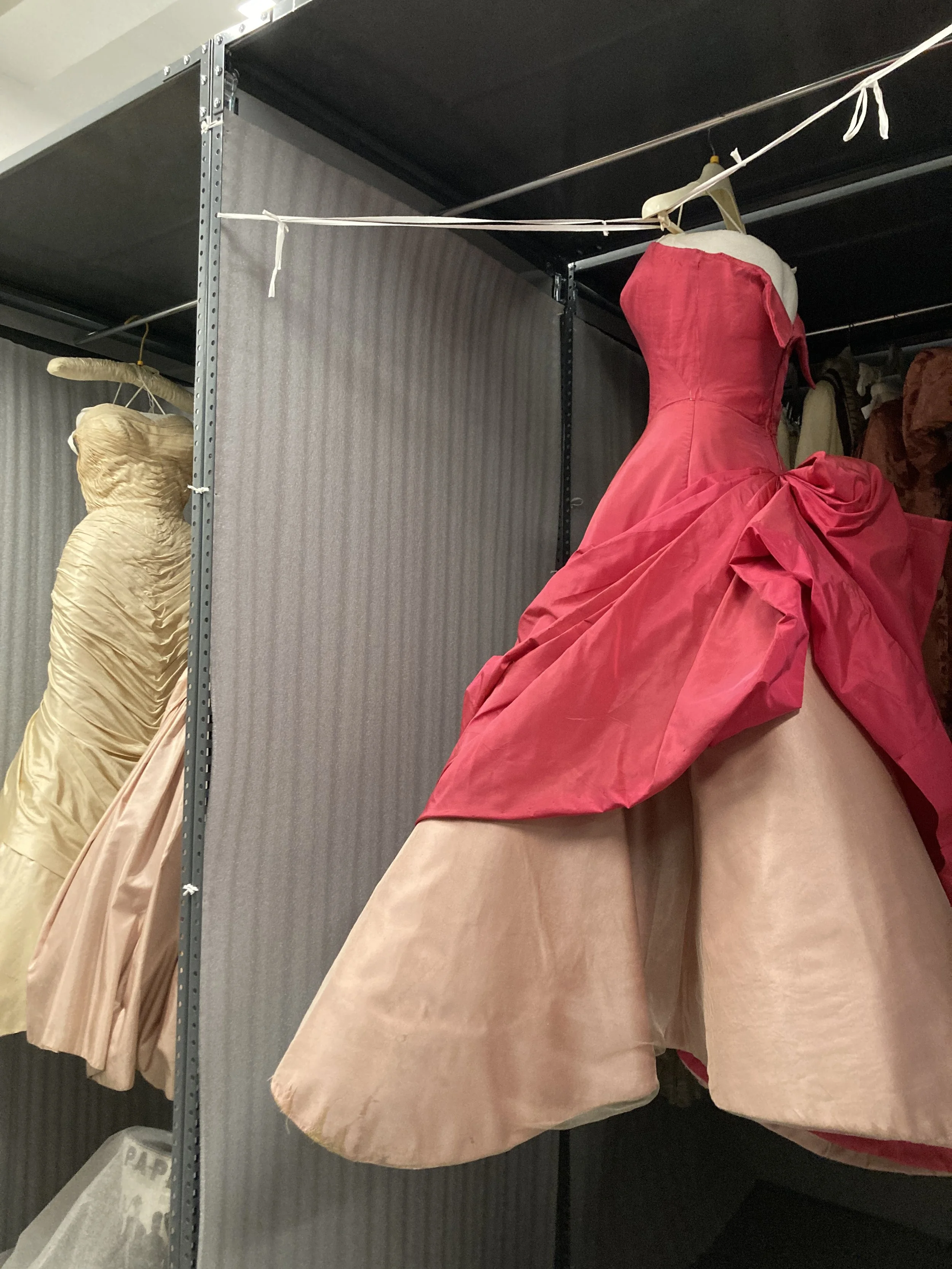
MFIT stores its entire collection onsite in Midtown Manhattan. They have two storage areas plus a small room for the museum’s study collection. Hanging storage is not only a great way to maximize space but it also helps in storing dimensional costumes. There is some flat storage for heavy and/or fragile garments and accessories. This is an important preventive conservation step to ensure the longevity of the collection!
In order to store hanging objects in the safest way, padded hangers need to be created for each object. This is an ongoing project at MFIT and is completed for newly accessioned objects, objects coming off exhibit, and in lull periods.
There are 9 types of padded hangers/supports.
-Standard hangers
-Wooden hangers
-Sloped Hangers
-Mens Hangers
-Clip hangers
-Body hangers
-Velvet/Piled supports
-Child’s hangers
-Misc. Supports
Additionally, synthetic vinyl and polyurethane garments are covered with parchment paper so they do not stick to themselves or other objects. Garments with sequins, beading, or any other embellishment that may catch on other objects are covered with a silk habotai garment cover.
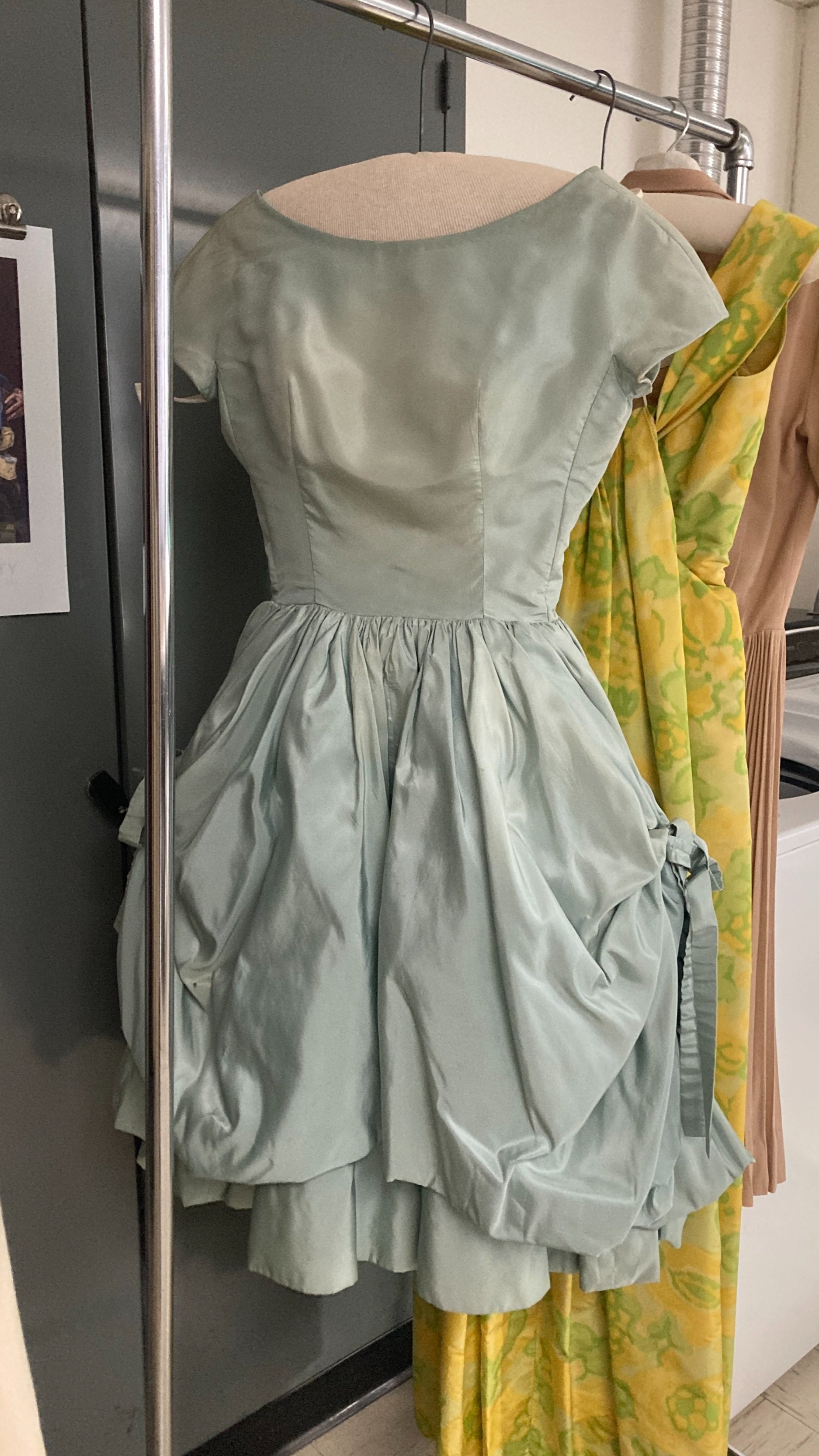
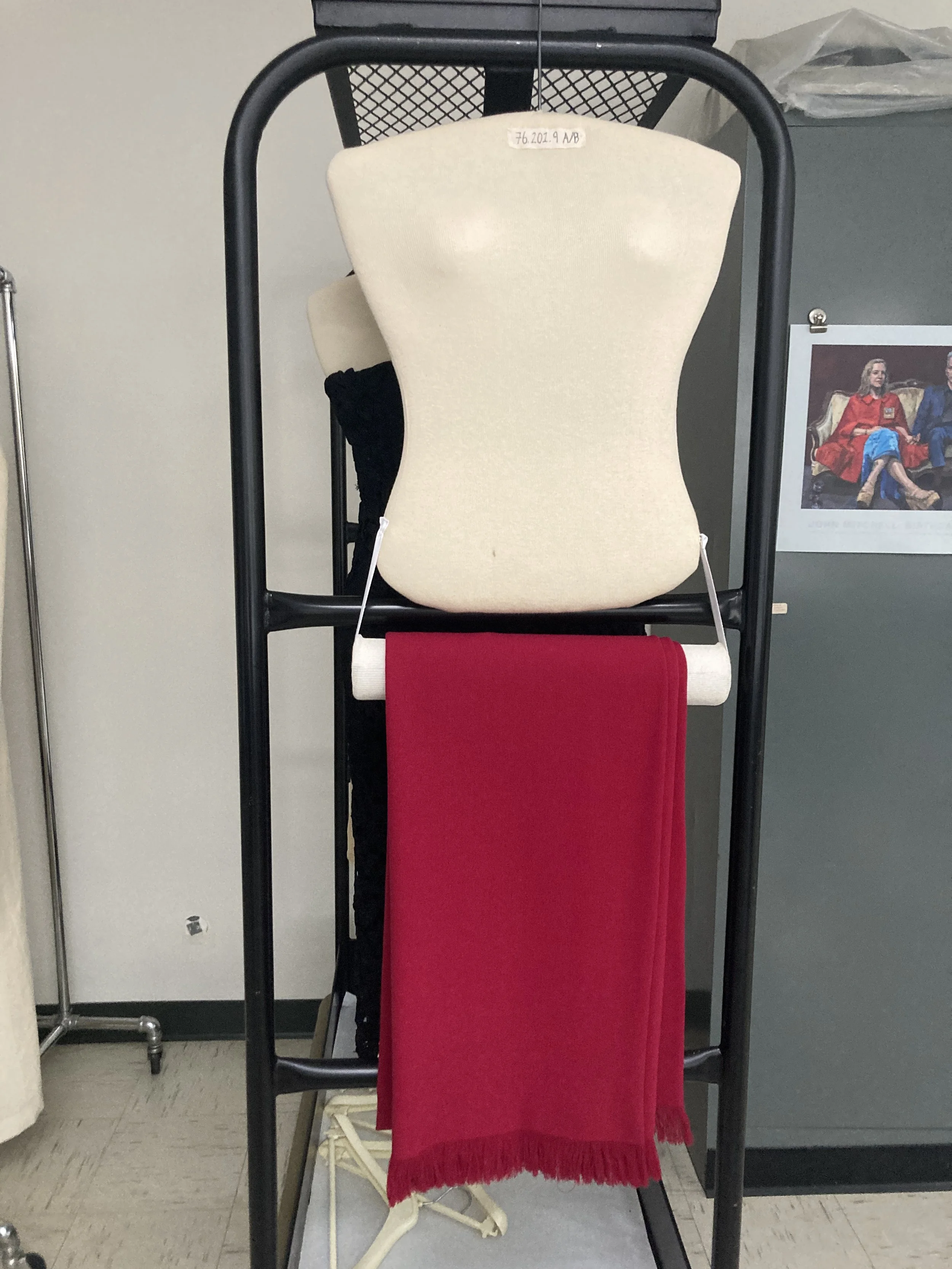
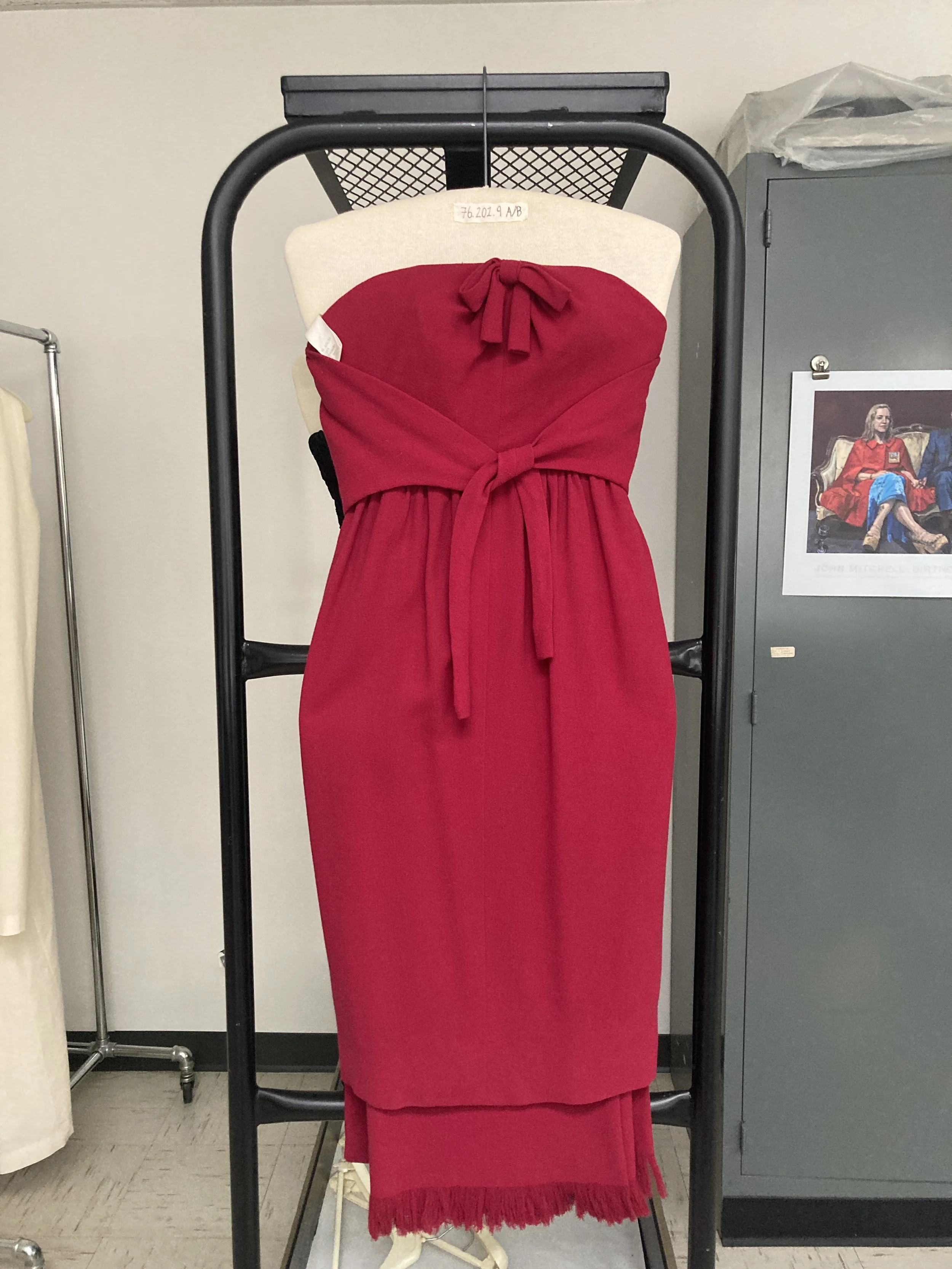
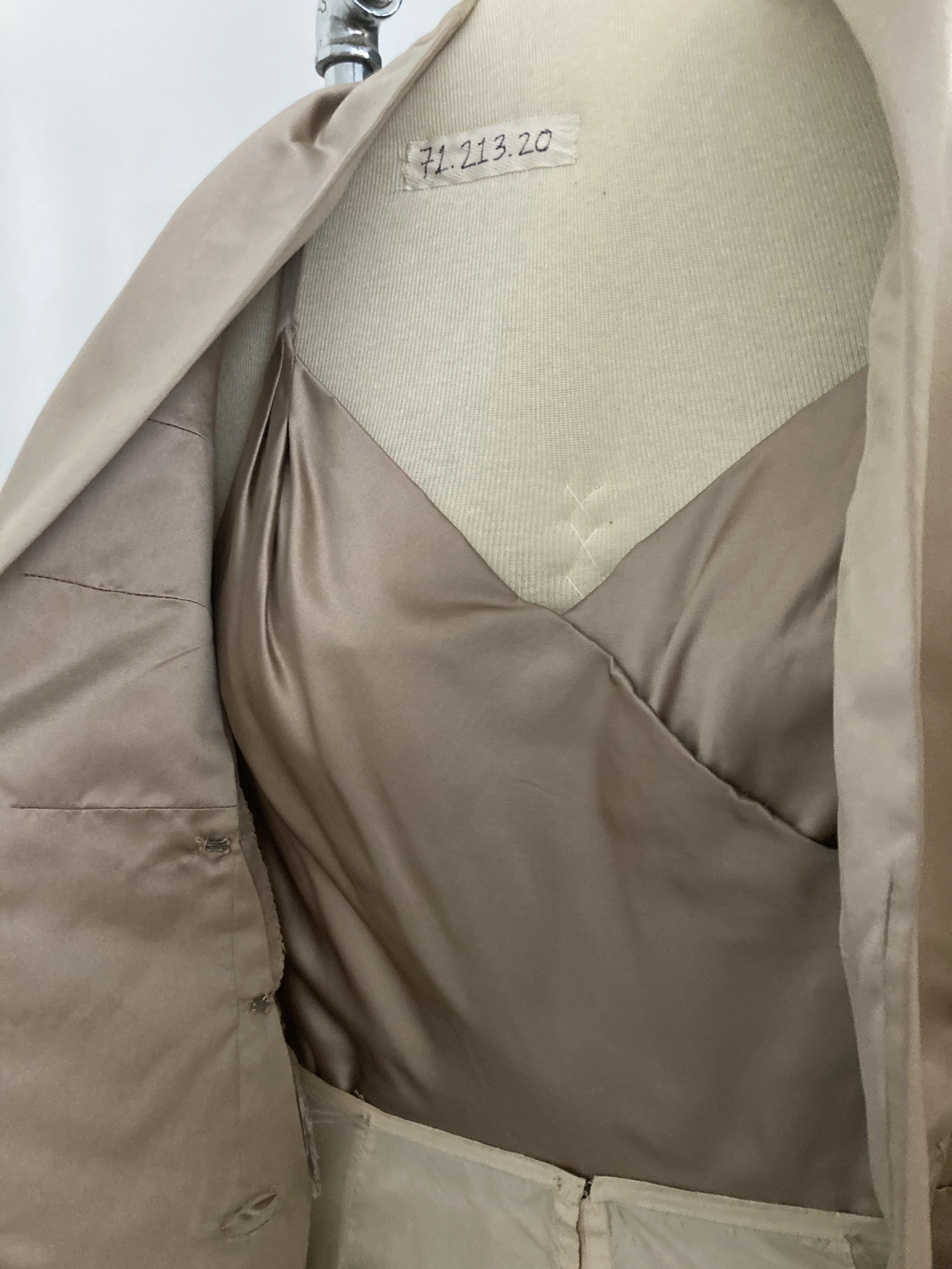
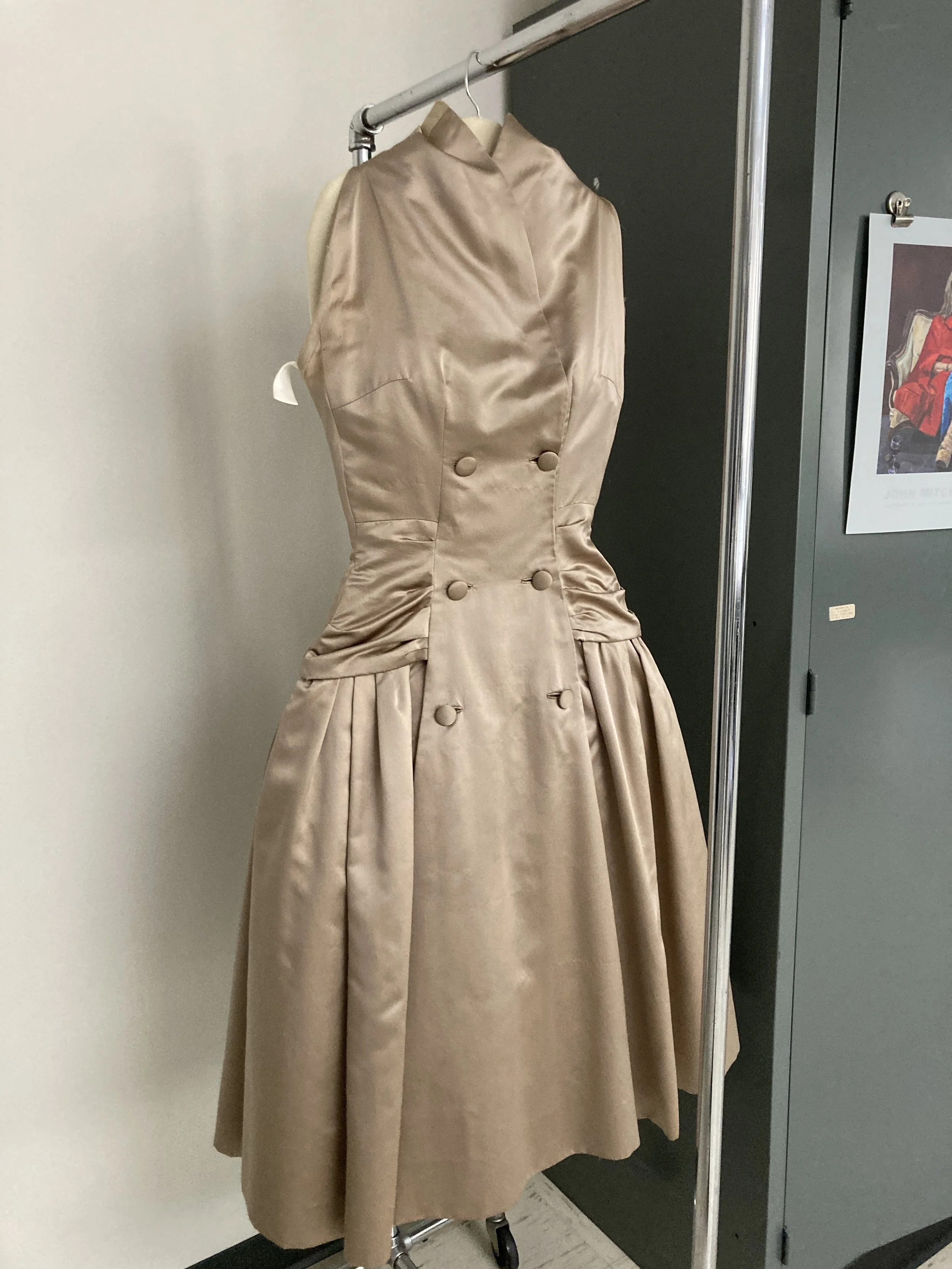
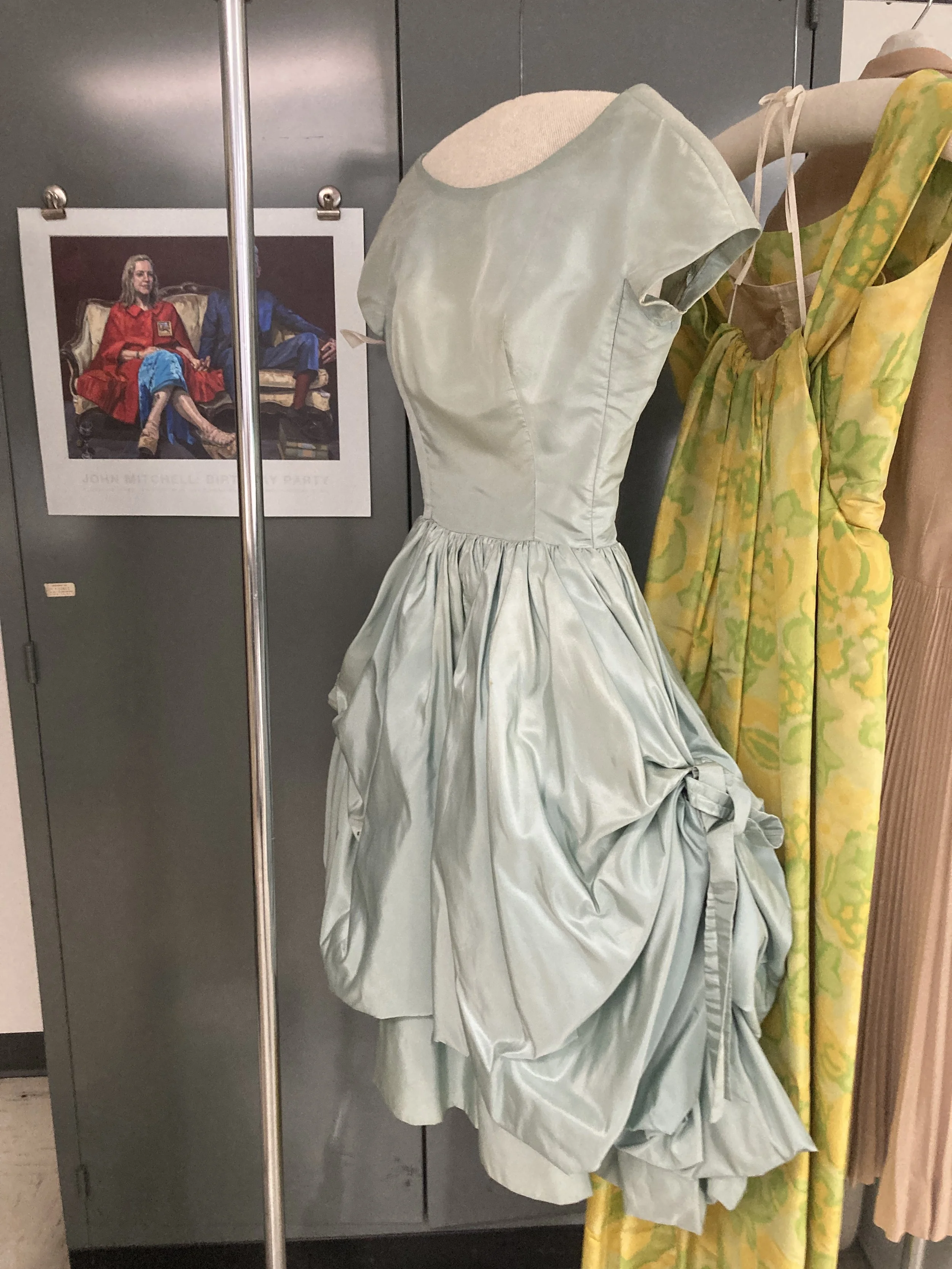
Custom padded hanger for a mid-50s Dior cocktail dress. Photo Credit: Margaret O’Neil
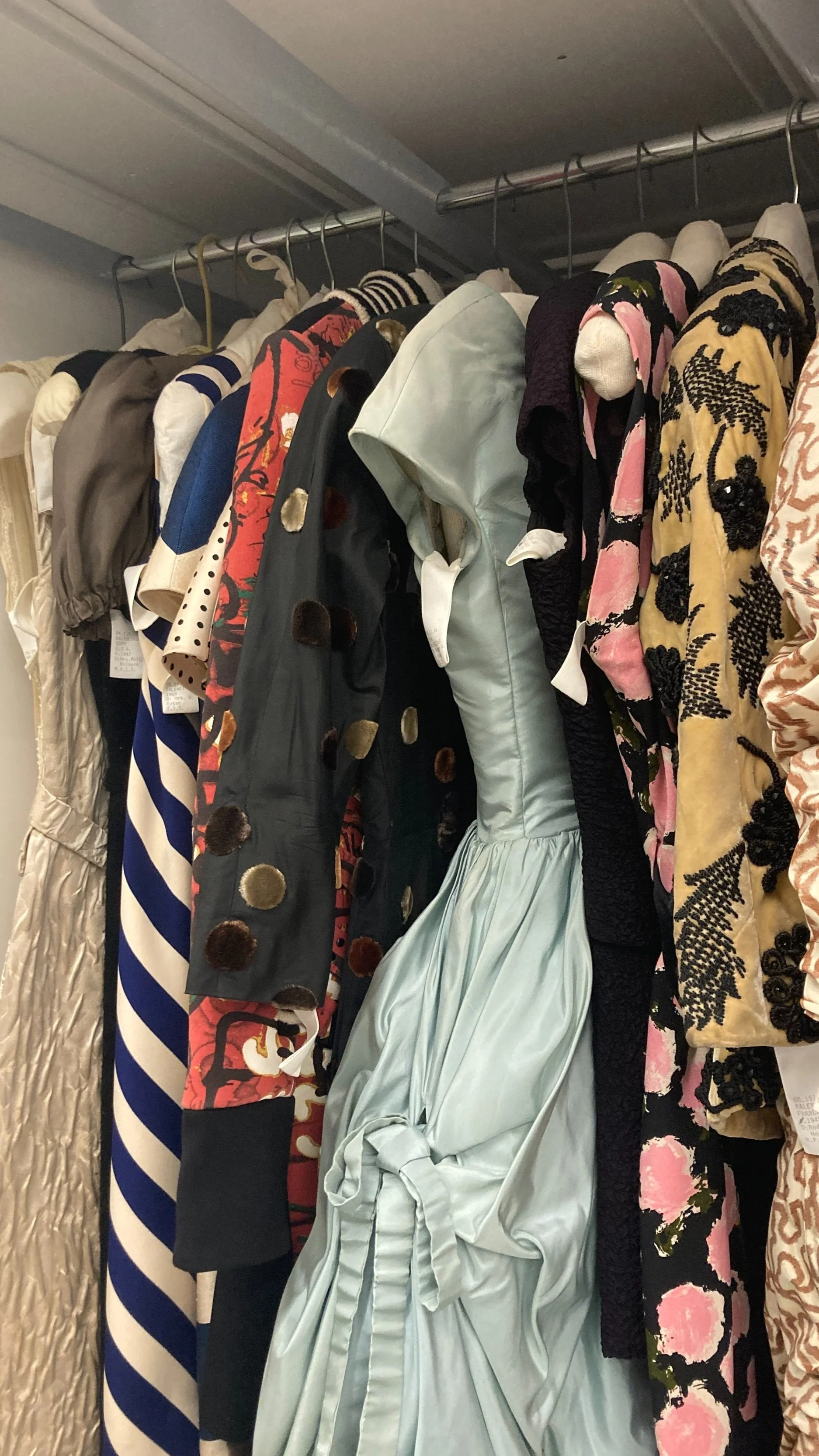
Mid-50s Dior cocktail dress with new hanger back in storage. Photo Credit: Margaret O’Neil
So Many Padded Hangers
Over the course of my semester internship, I made over one hundred padded hangers in various styles (sloped, men’s, standards, wooden, and clip). These were created by stripping the hangers of any previous material, wrapping and securing polyester felt around each side of the hanger, and covering the hanger with a stockinette or muslin cover.
The lab has a binder that details the making of each hanger with measurements for cutting the felt and stockinette. This was extremely helpful as both a teaching and standardization tool and allowed the lab to refine the process over time without losing knowledge to time.
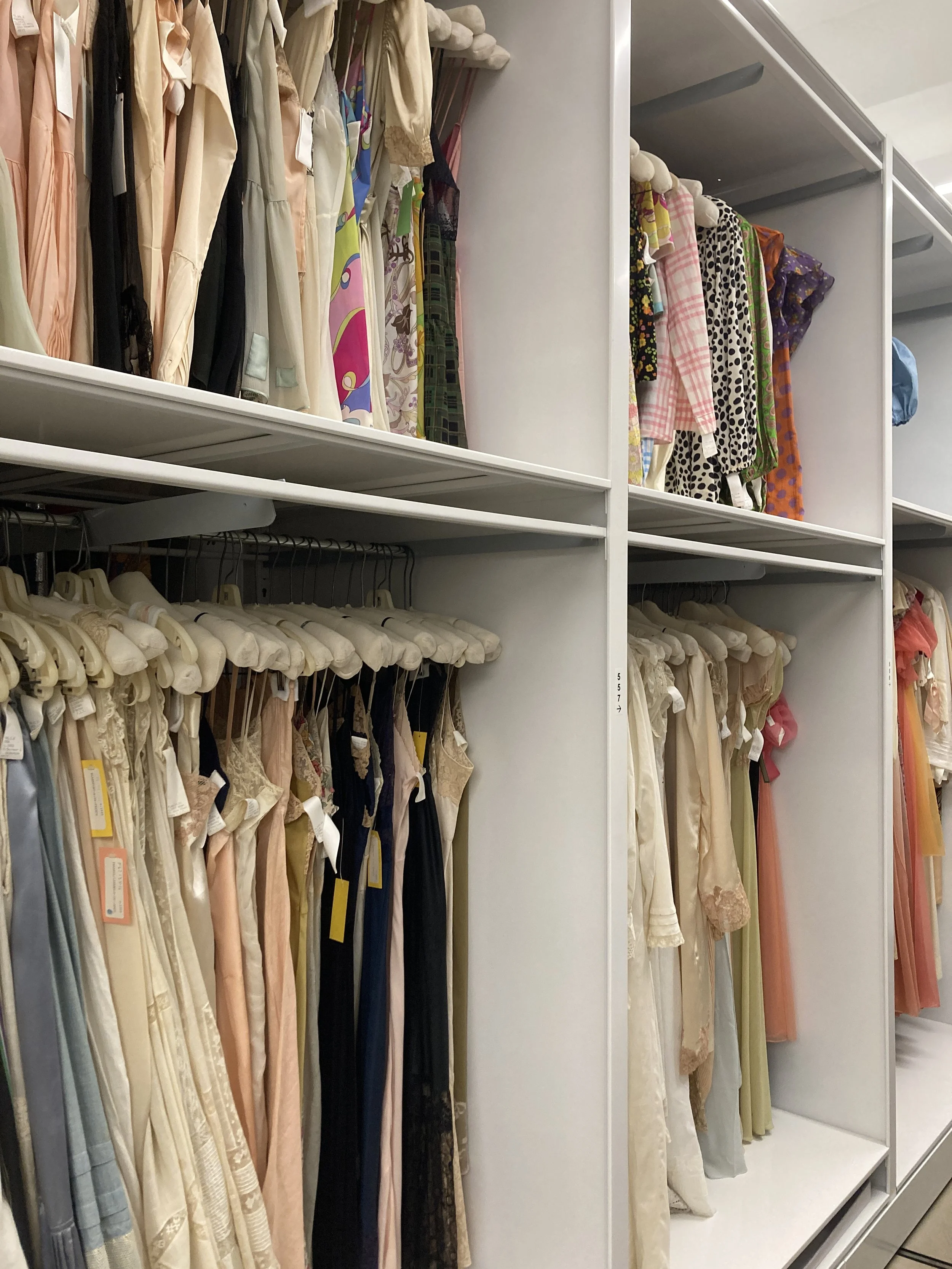
Lingerie storage area with some padded hangers. Photo Credit: Margaret O’Neil
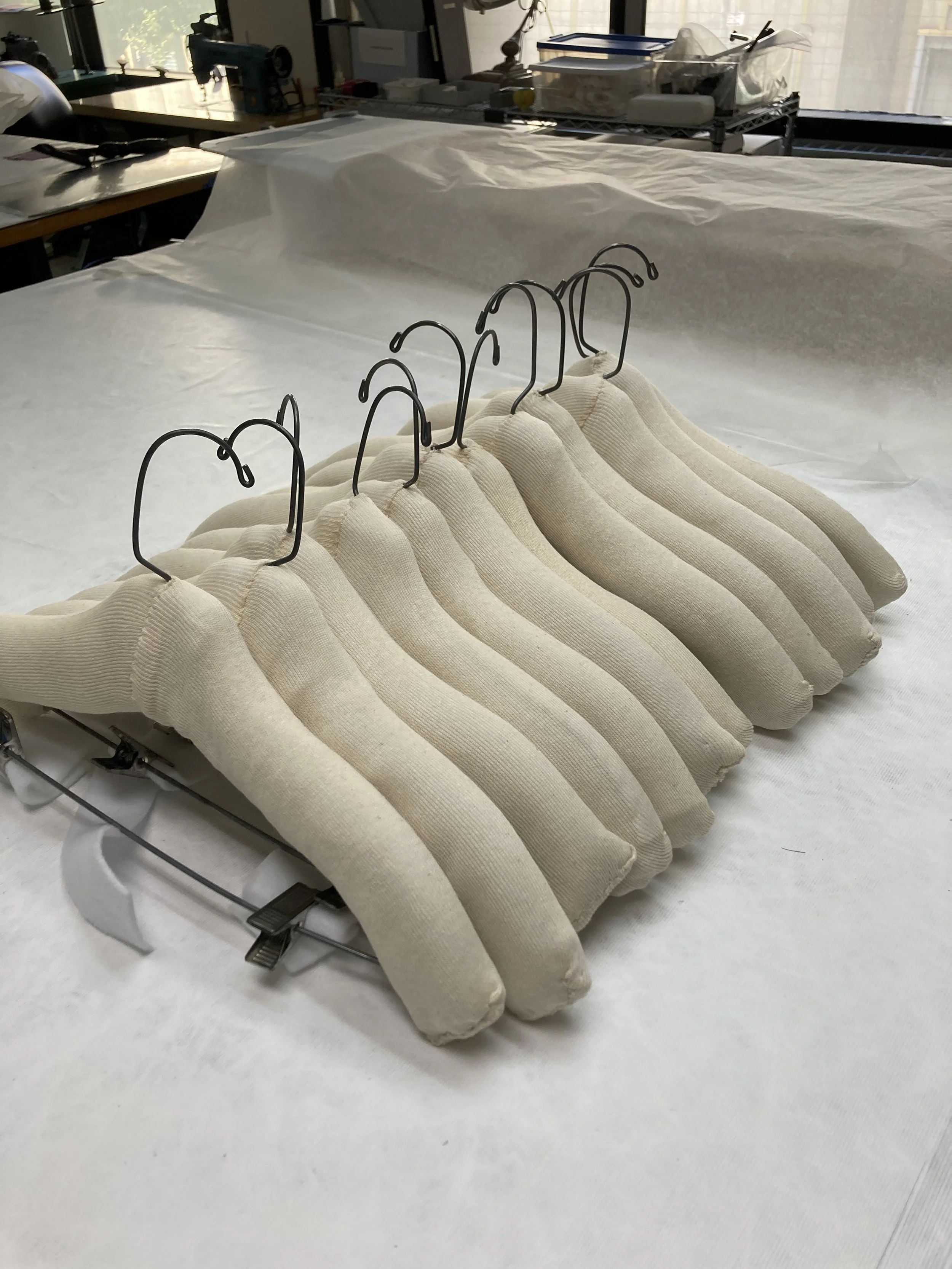
Pile of completed padded hangers. Photo Credit: Margaret O’Neil
Parchment Paper Covers
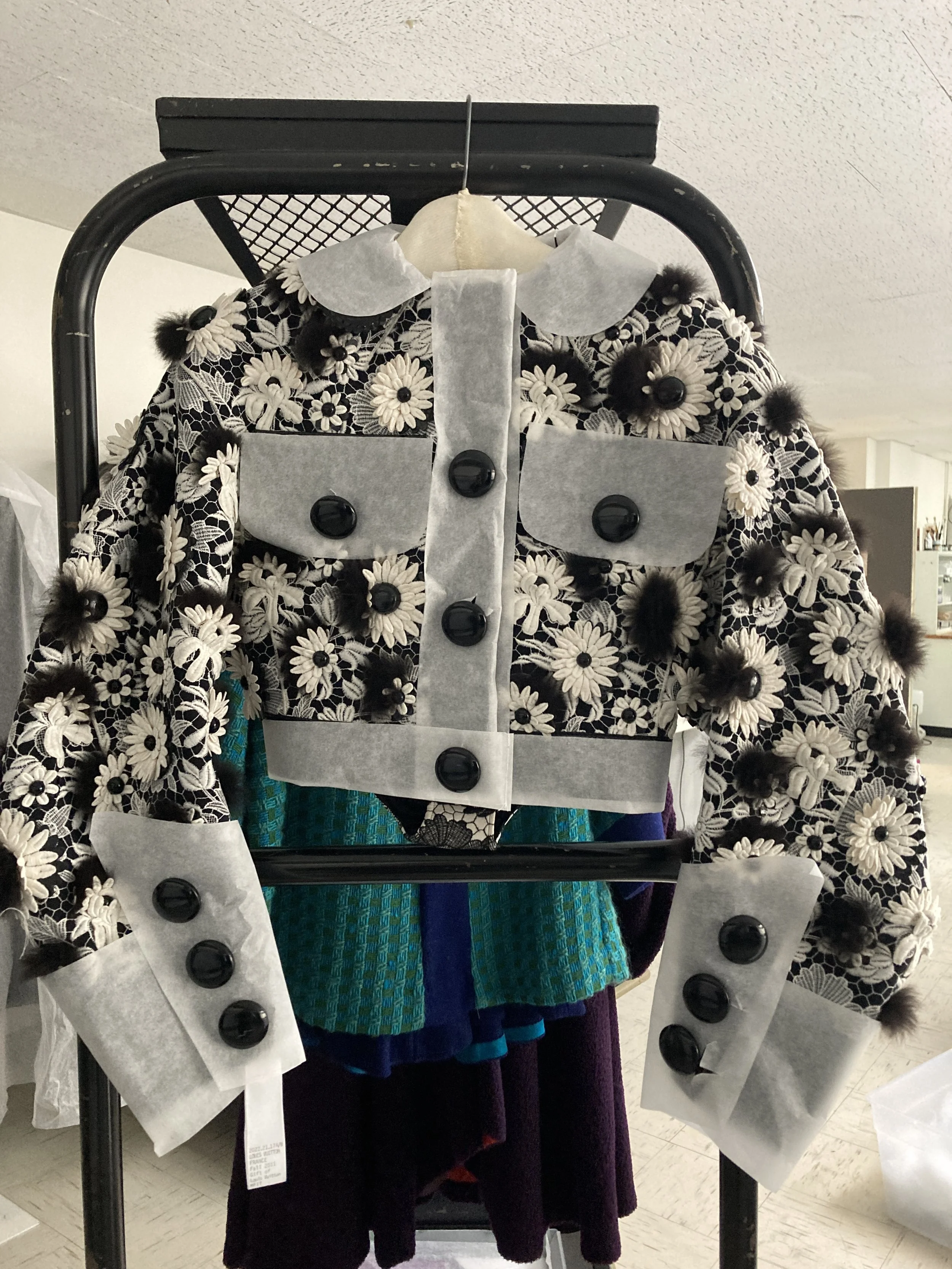
Louis Vuitton jacket with vinyl trim covered in parchment paper for storage. Photo Credit: Margaret O’Neil
MFIT collects a wide range of contemporary fashion, this means that they work with a lot of synthetic material. Synthetic materials, specifically vinyl and polyurethane, degrade relatively quickly over time. They can often become sticky with plasticizers- sticking to themselves and other items. In order to protect the collection, custom-cut parchment paper covers are created for long-term storage.
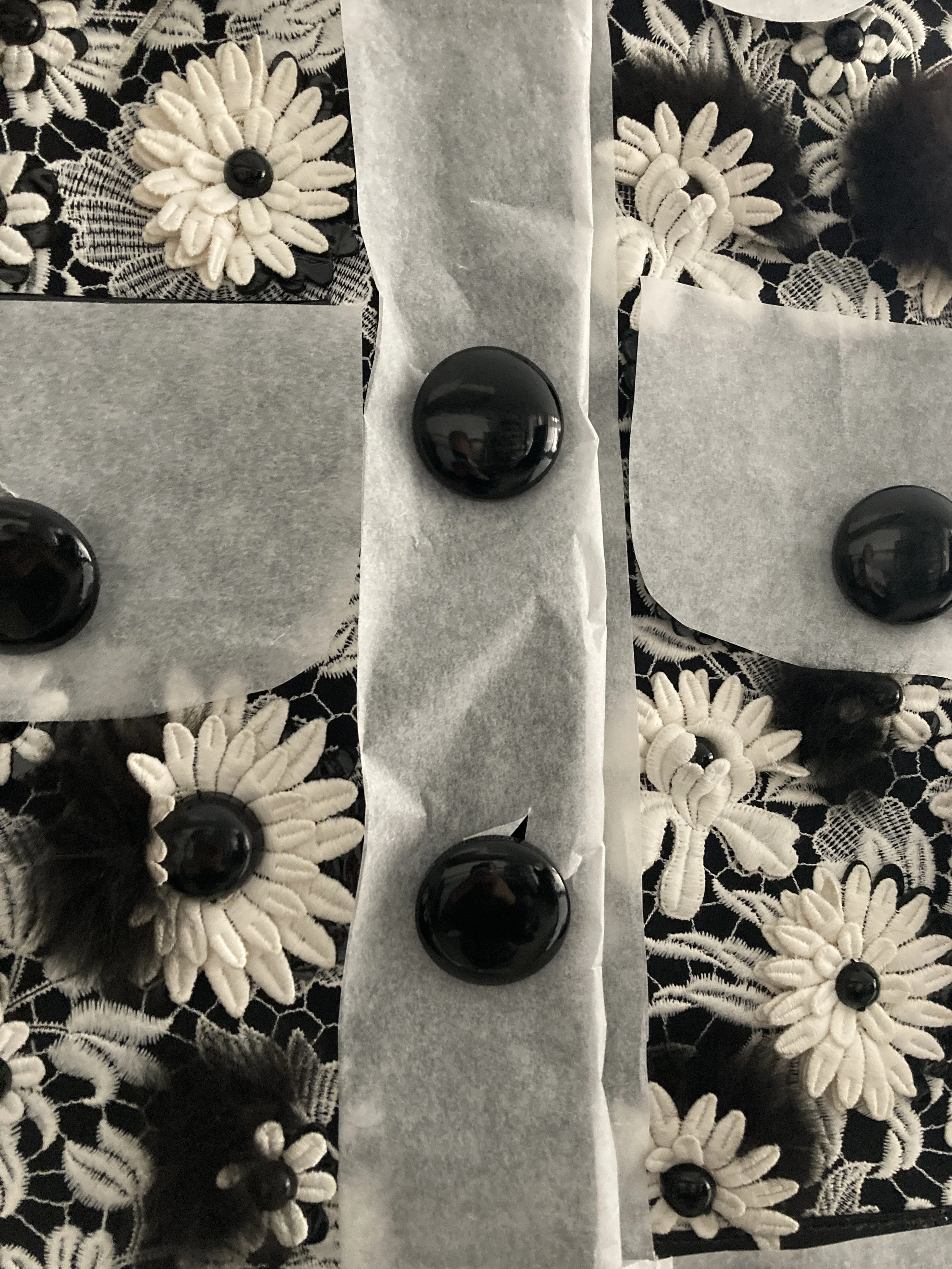
Detail of Louis Vuitton jacket. Photo Credit: Margaret O’Neil
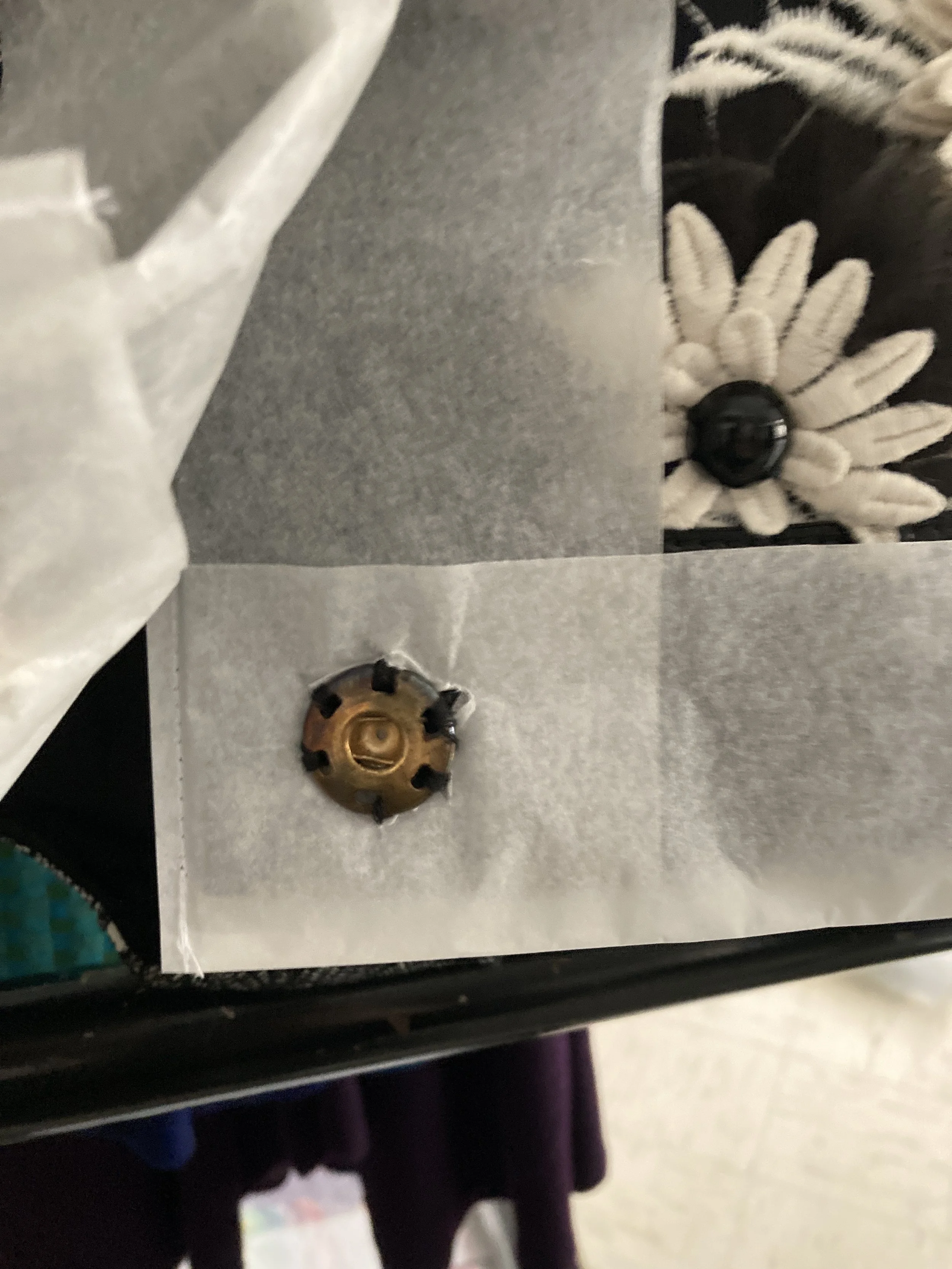
Detail of snap on Louis Vuitton Jacket. Photo Credit: Margaret O’Neil
Body Hangers and Pants Inserts
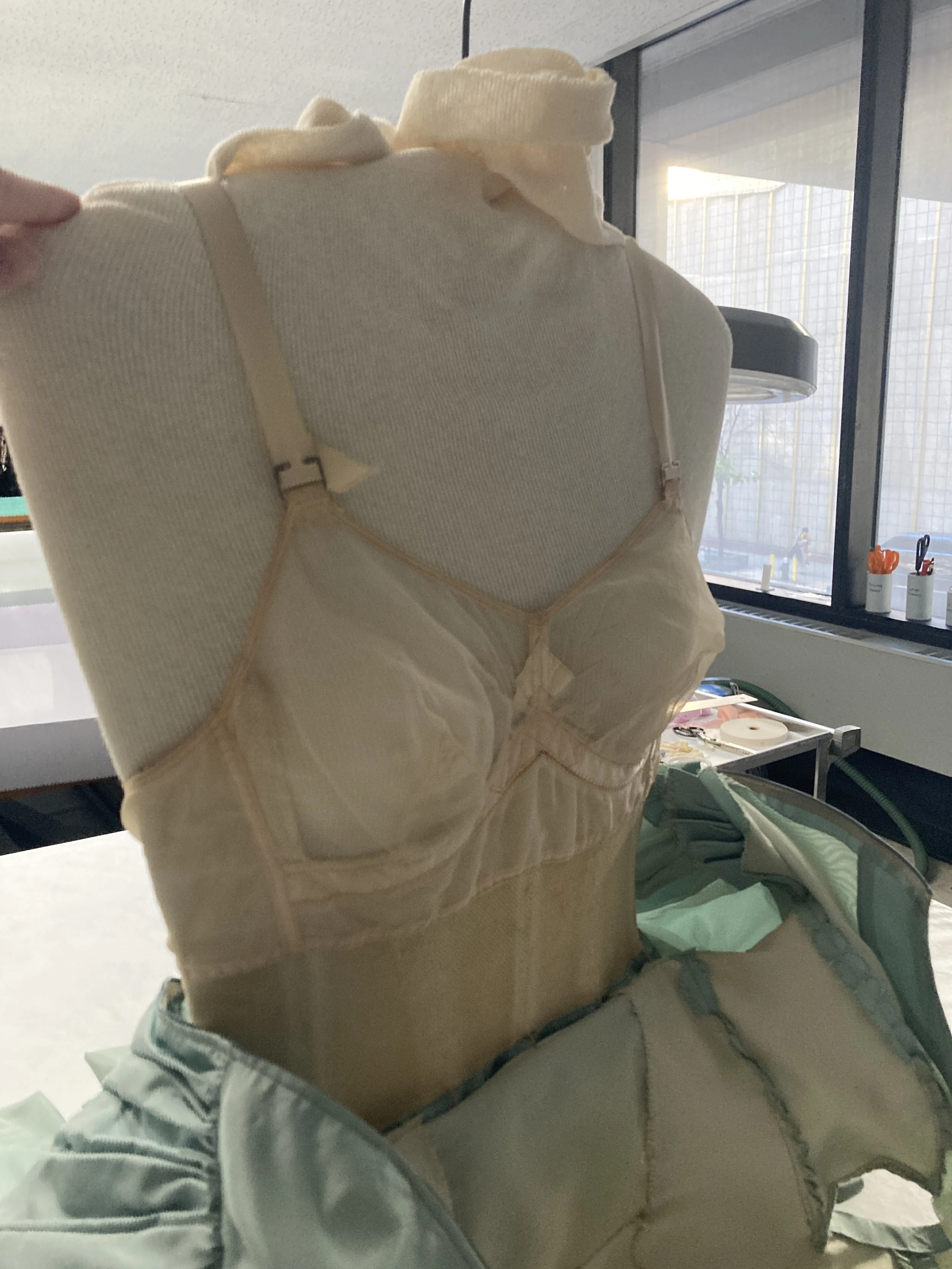
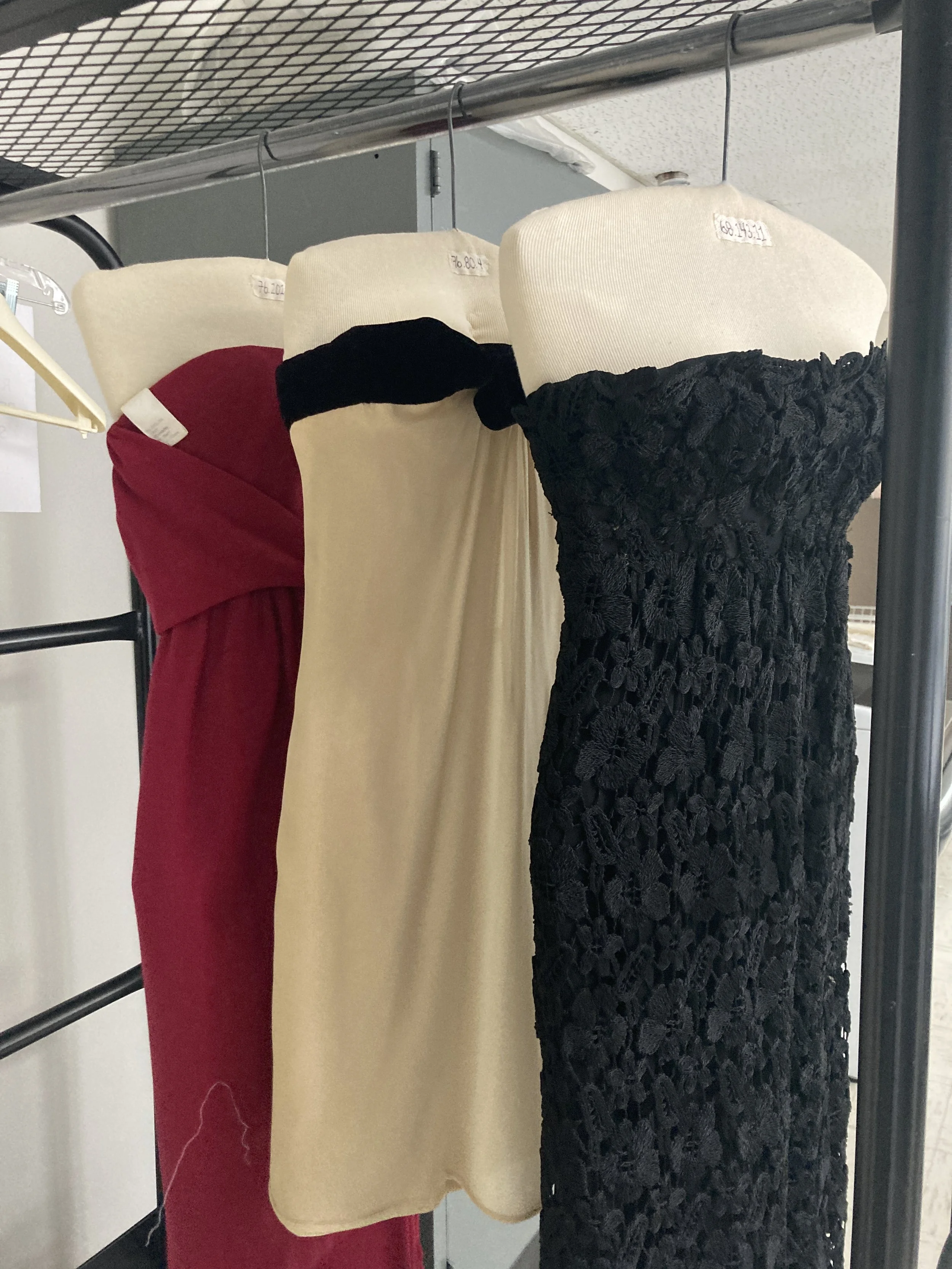
For strapless garments and pile fabric pants or skirts, three-dimensional inserts/hangers were created so that the garments are supported and not actively damaged by clips.
The following slideshow shows how a body hanger is created.
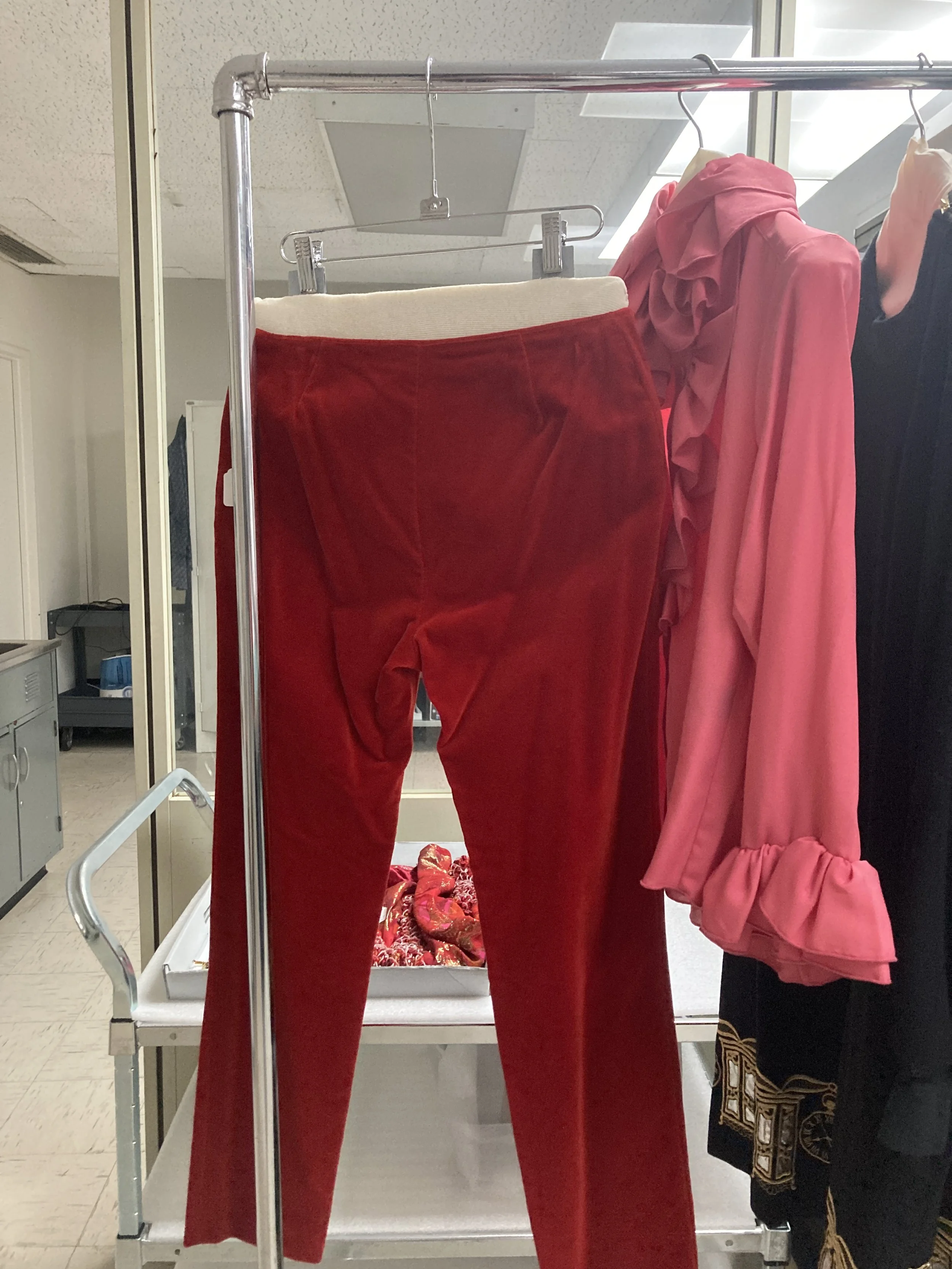
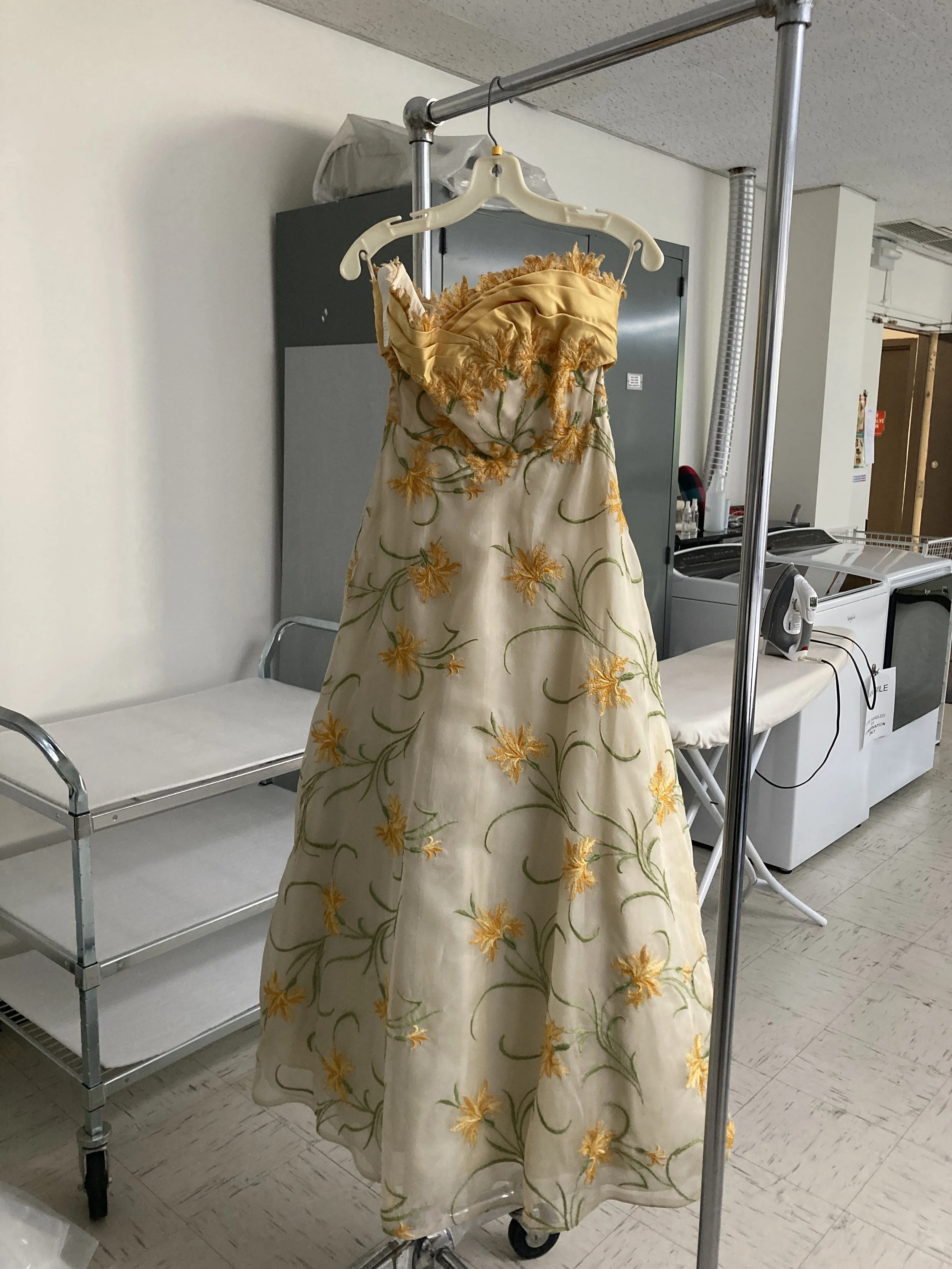
Evening Gown, Hattie Carnegie, 1955, 76.90.1 A-B, before hanger. The dress is currently unsupported in storage.
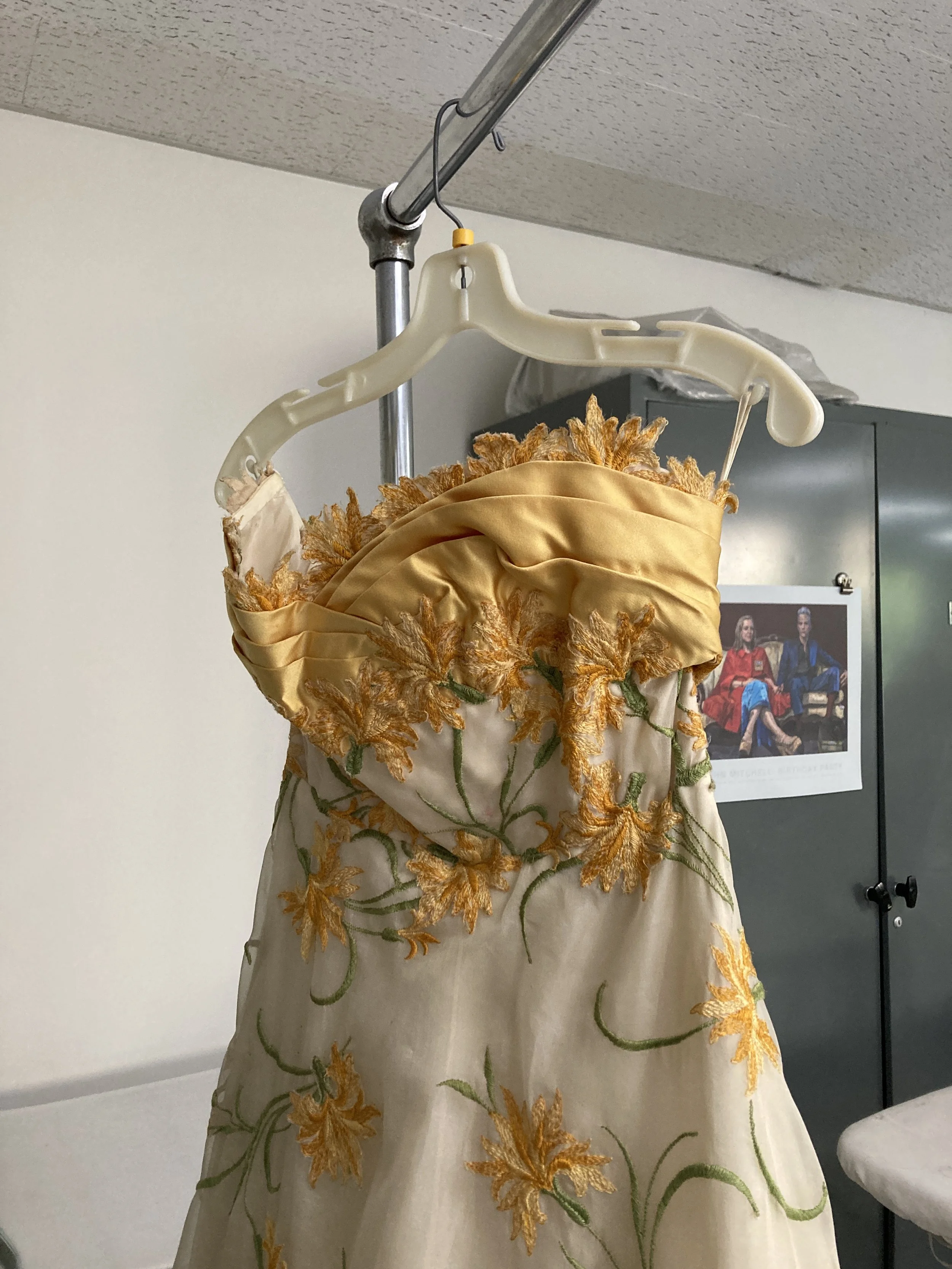
The bust is falling in on itself and the waist is buckling.
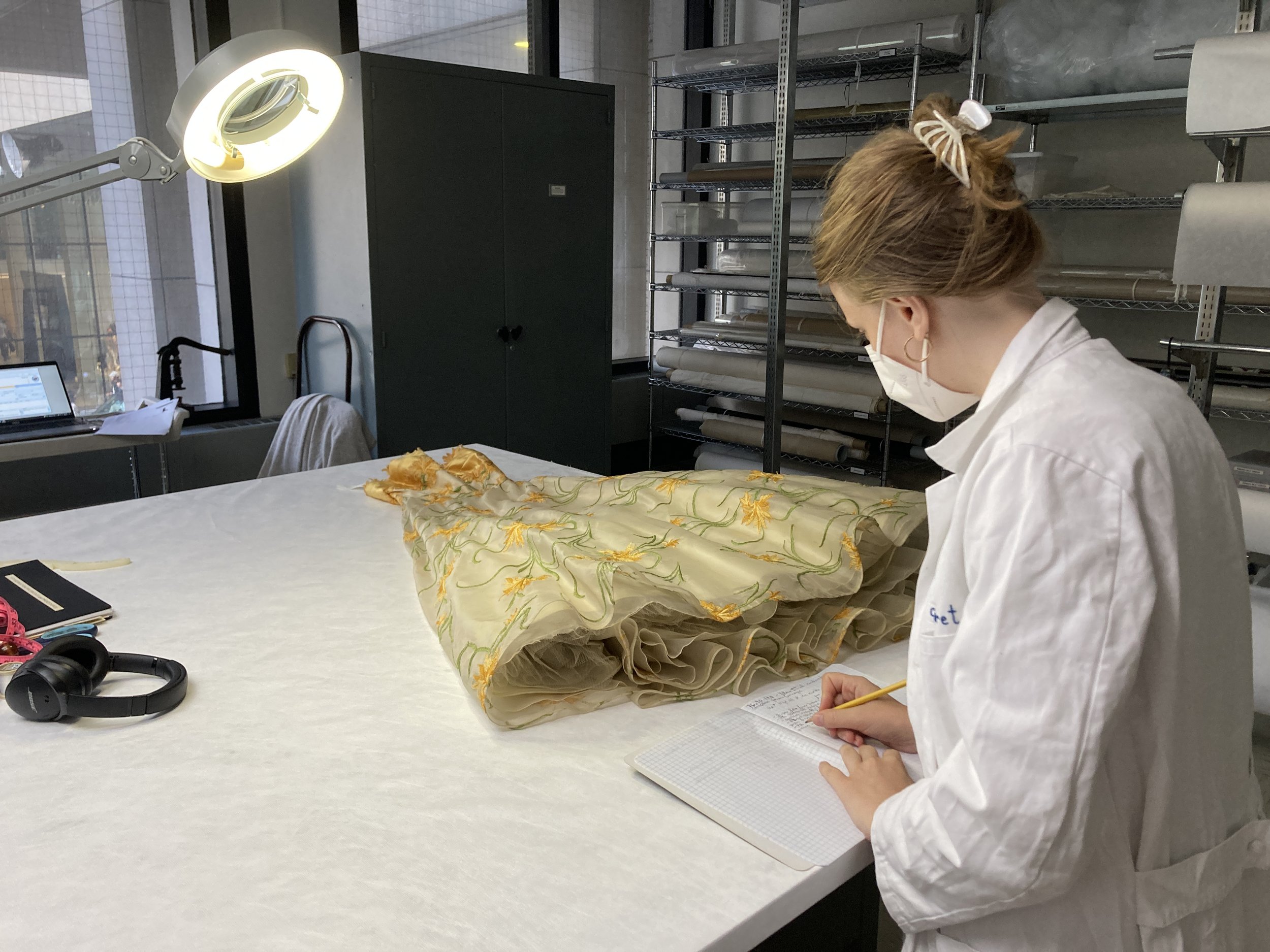
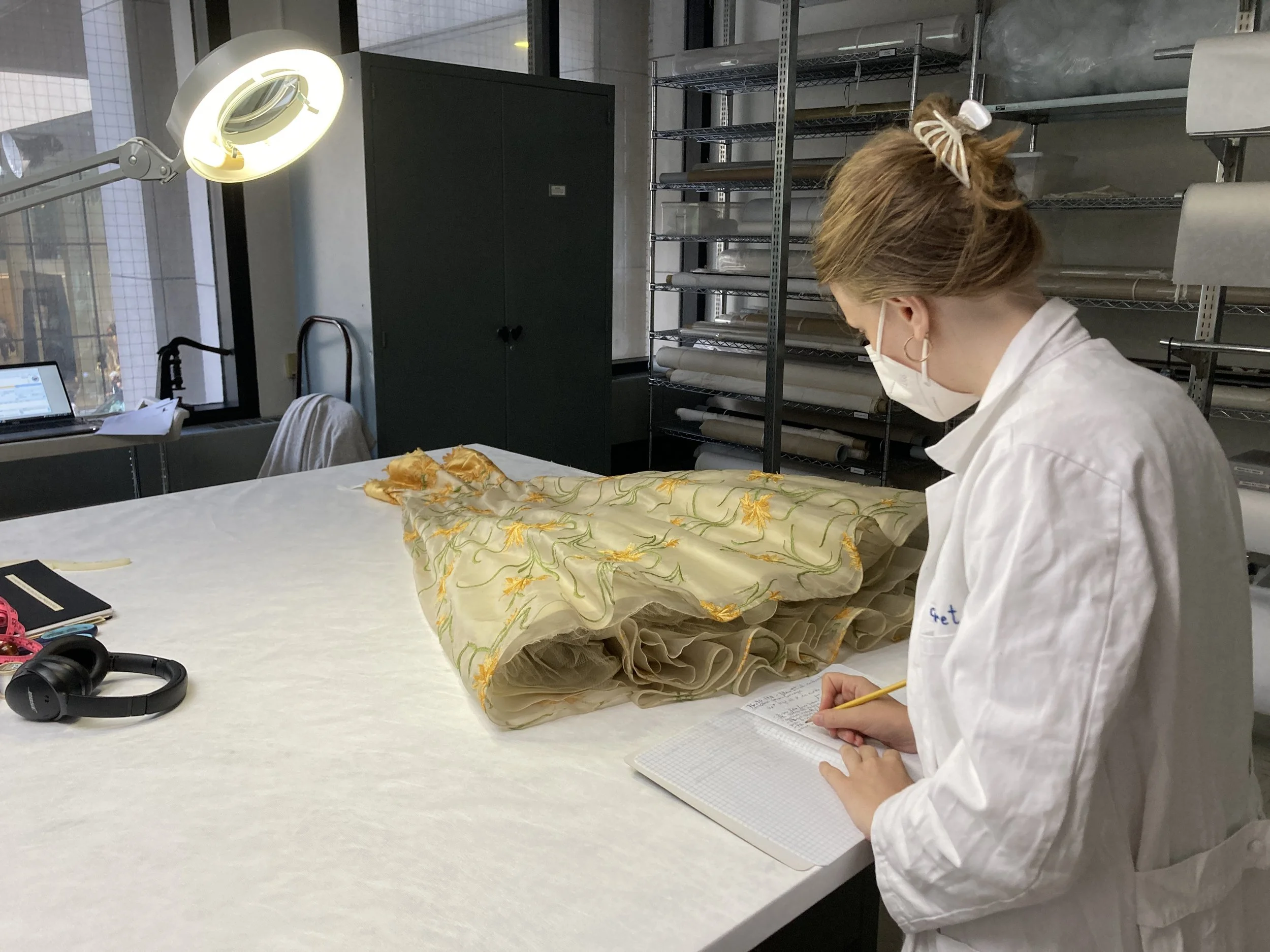
First- condition report the object. This is a great time to keep an eye on the collection.
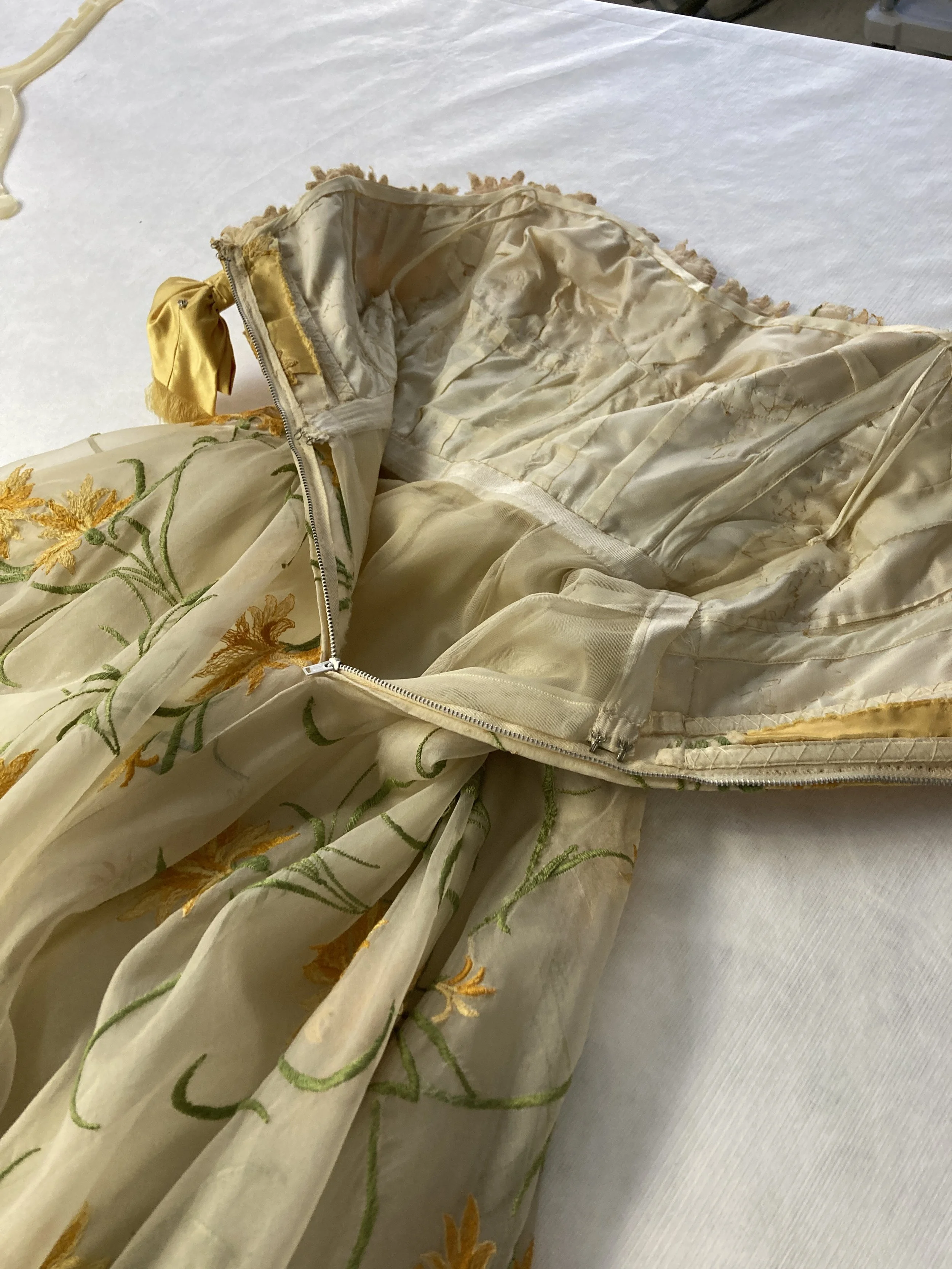
Measure the bust, waist, hip and the distance between these measurements. Make sure to note the shape of the bust.
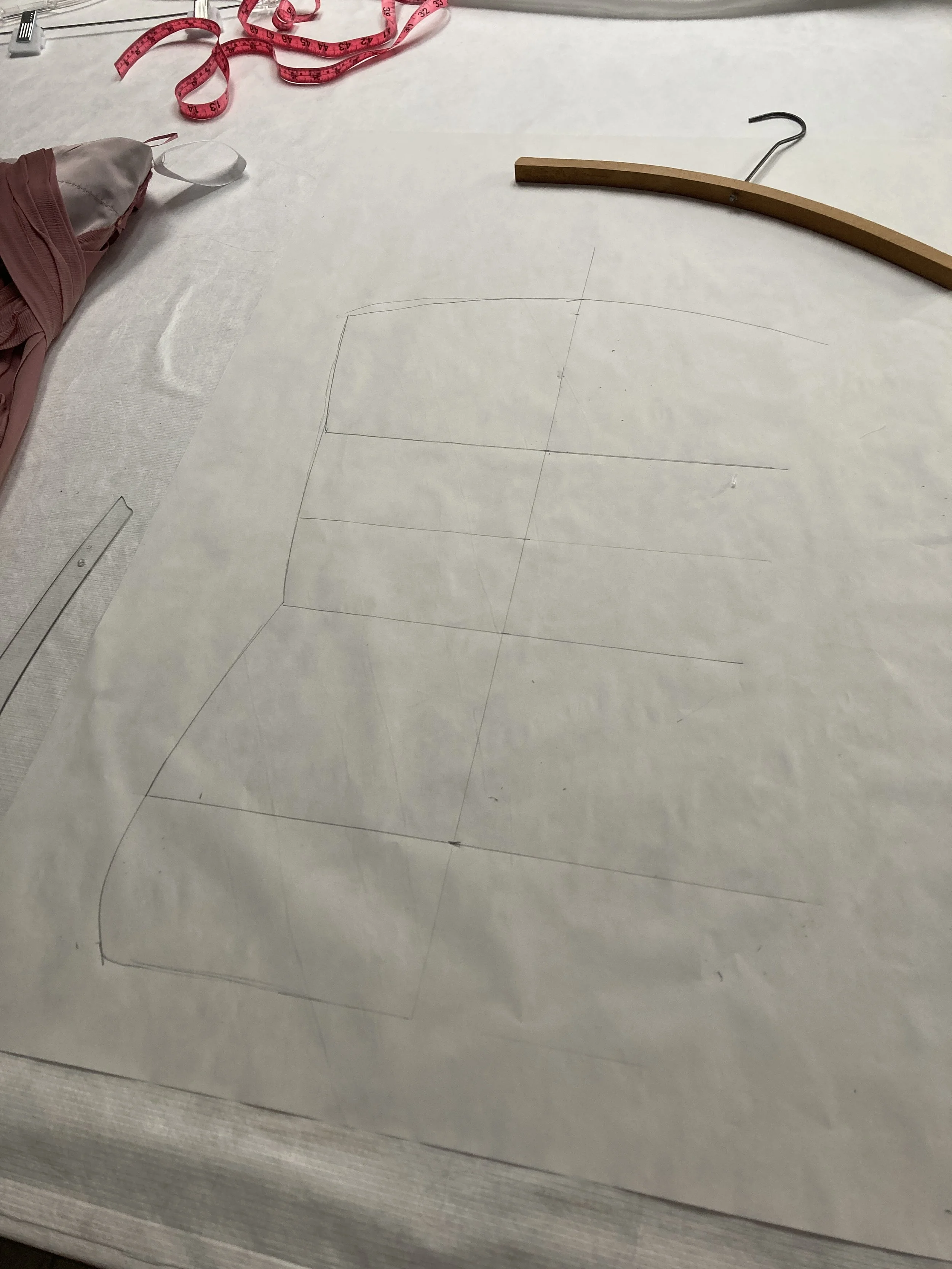
Chart your measurements on a pattern and trace the slope of the hanger. You can do this on blue-board is you are experienced.
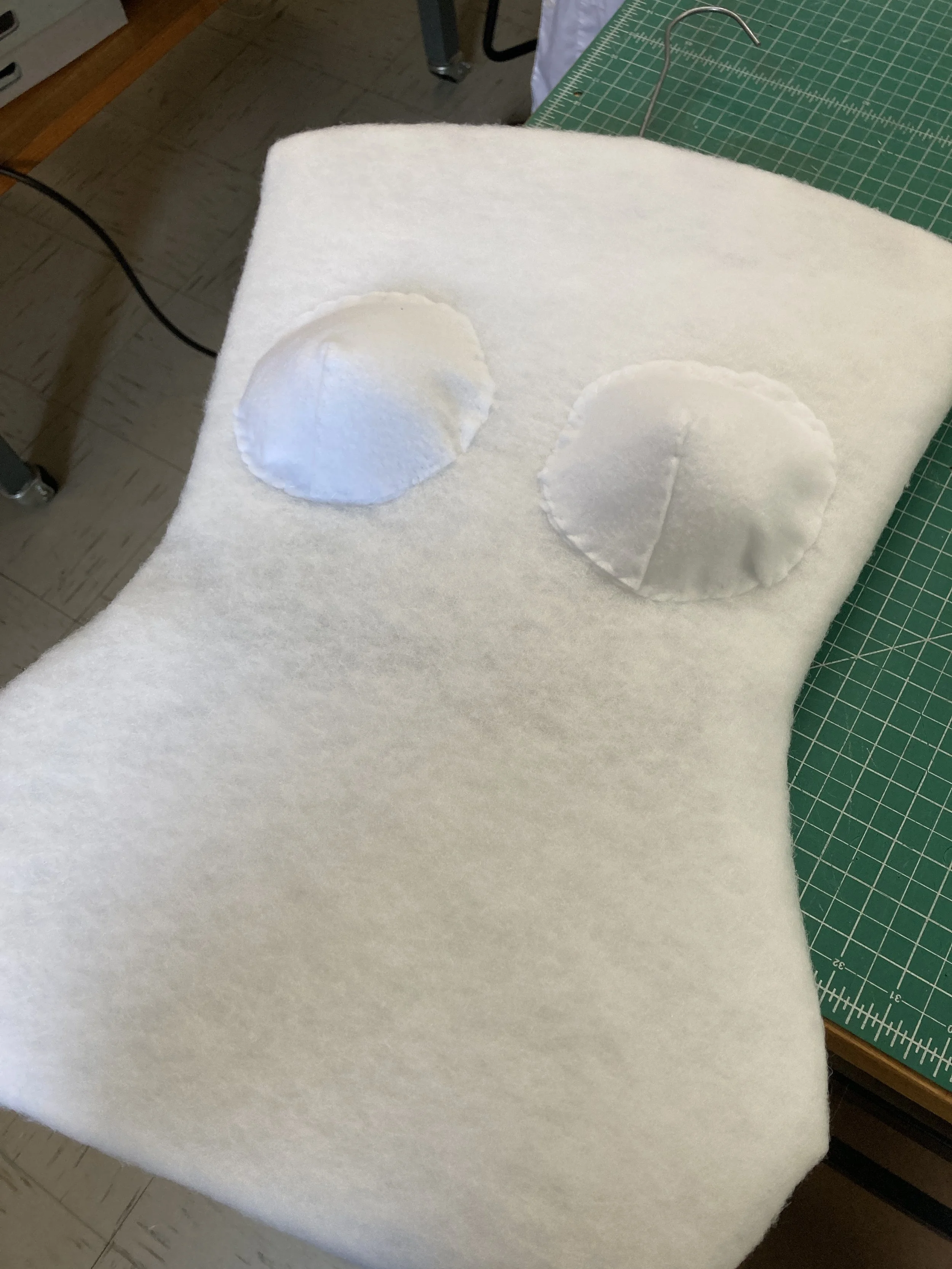
Cut out the blueboard- fit it. Add polybatting on the bust and hip on both sides with double sided tape. Lash a hanger to the blueboard. Add polybatting to the front and back and sew in place. Fit and mark bust points. Add padded felt bust pads.
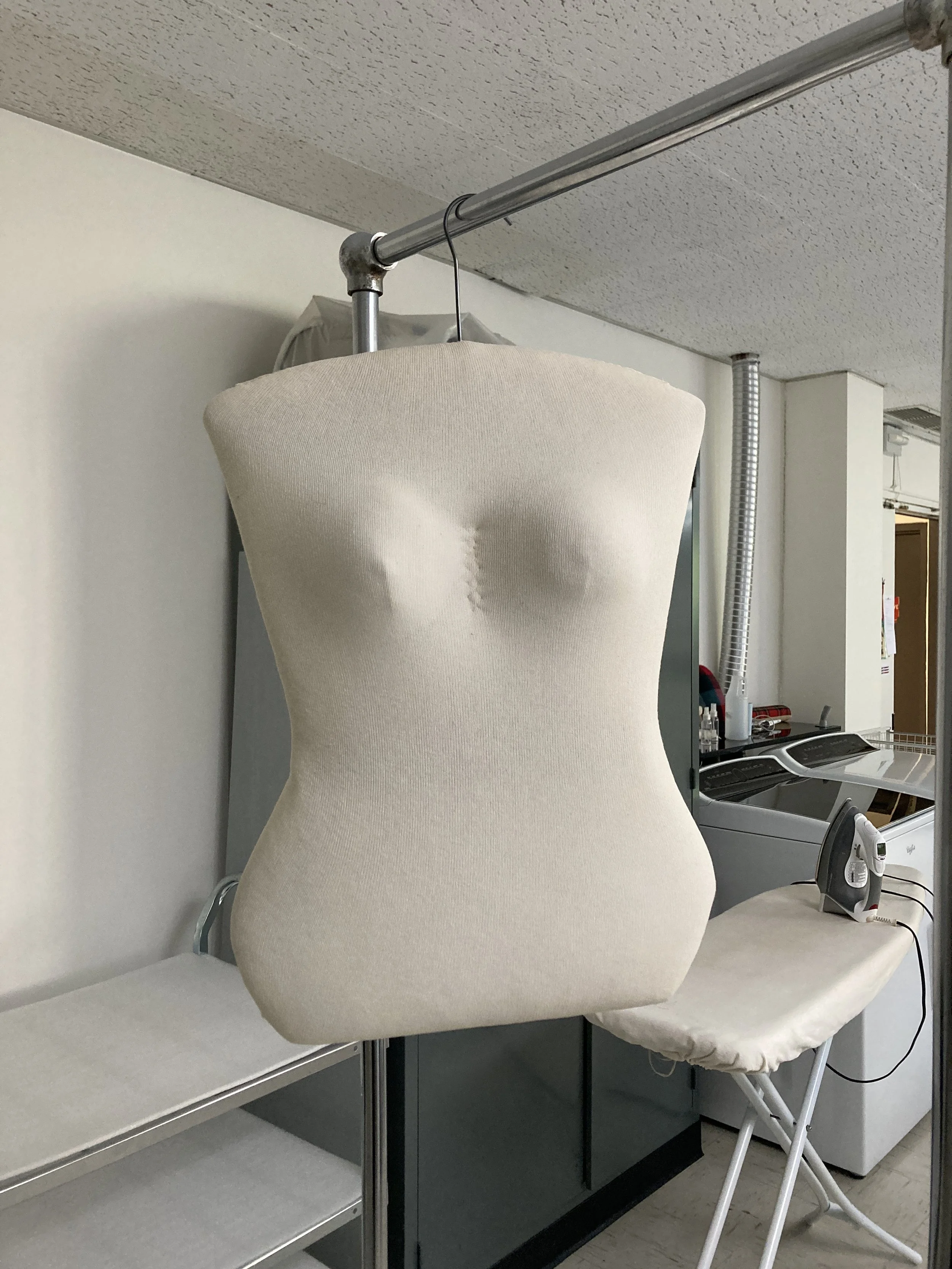
Stretch 6" stockinette over the form and sew in place.
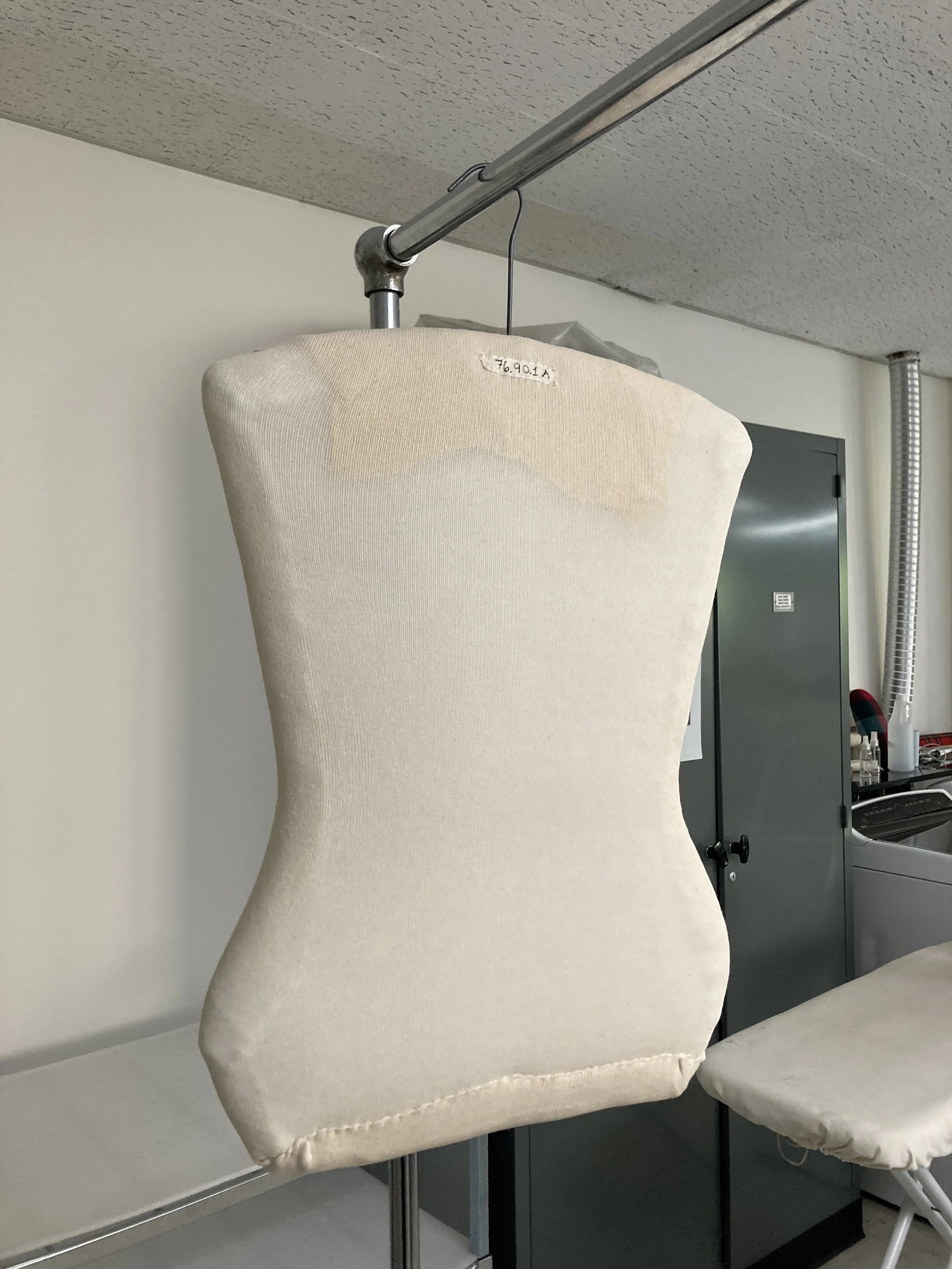
Don't forget to add the accession number!
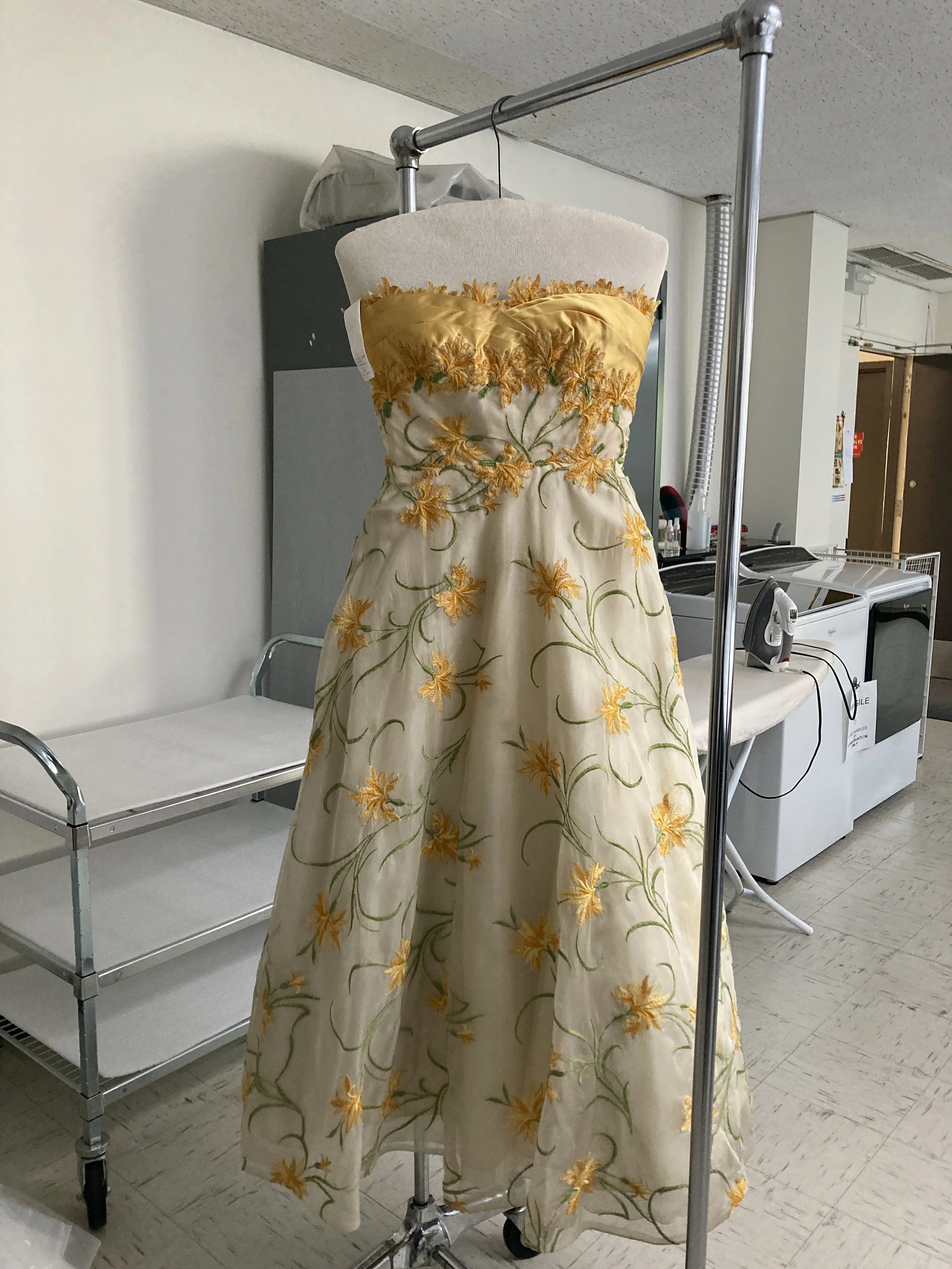
Now the strapless dress is nice and supported.
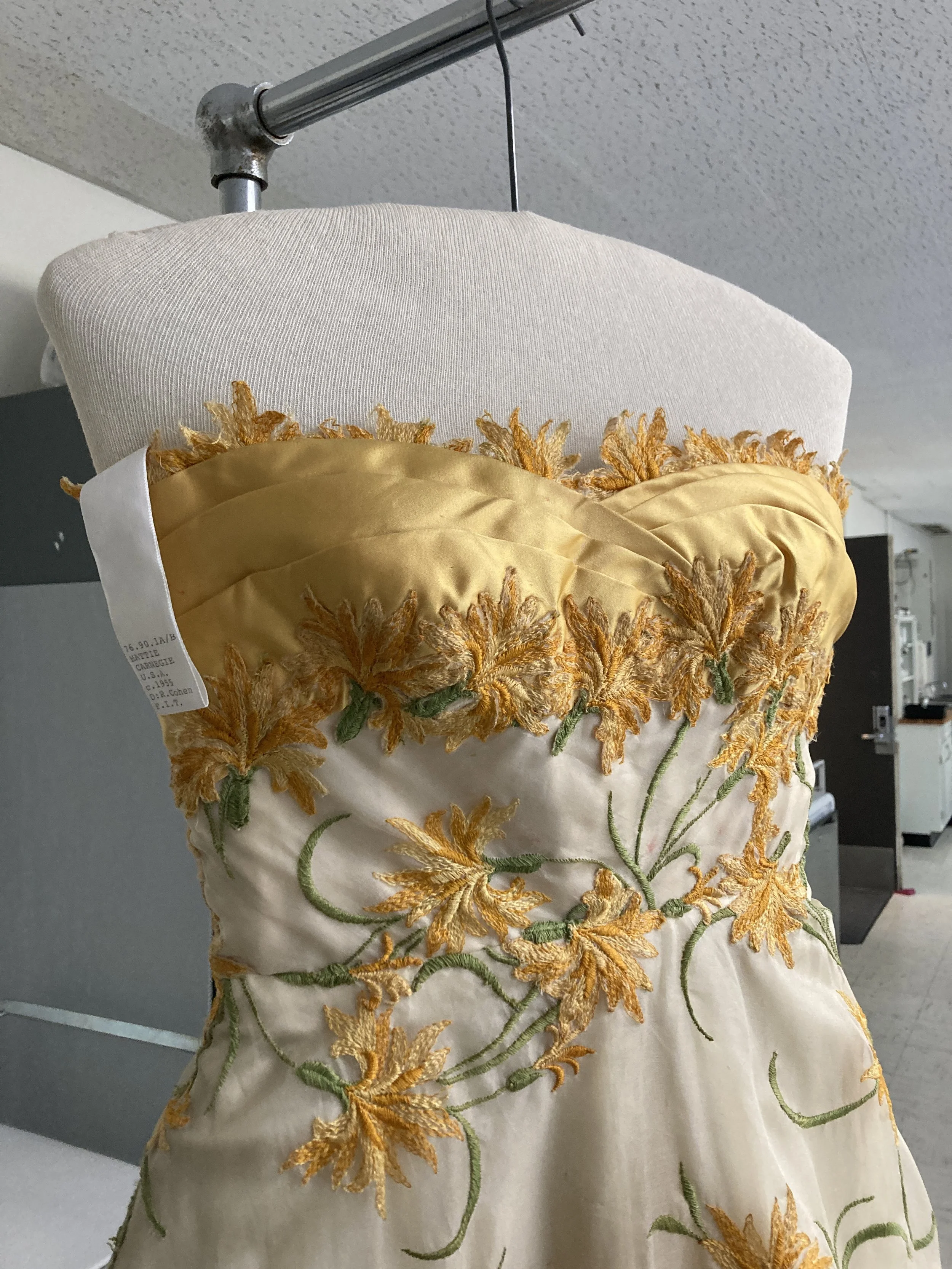
All Done!