Ann Flower Sampler
Needlework Picture, Ann Flower, 1755, Silk, Linen Philadelphia, WMGL 2017.0022 A
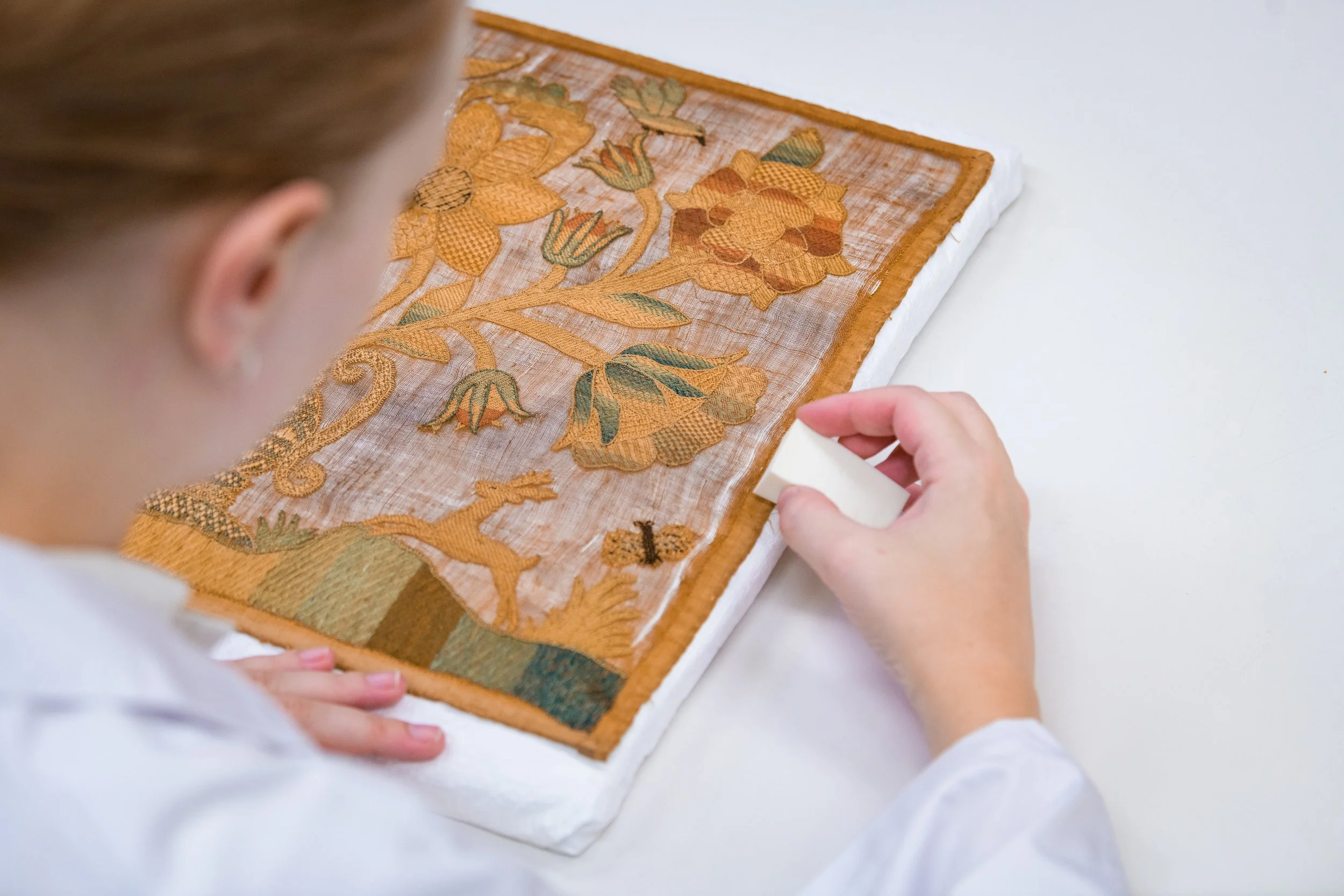
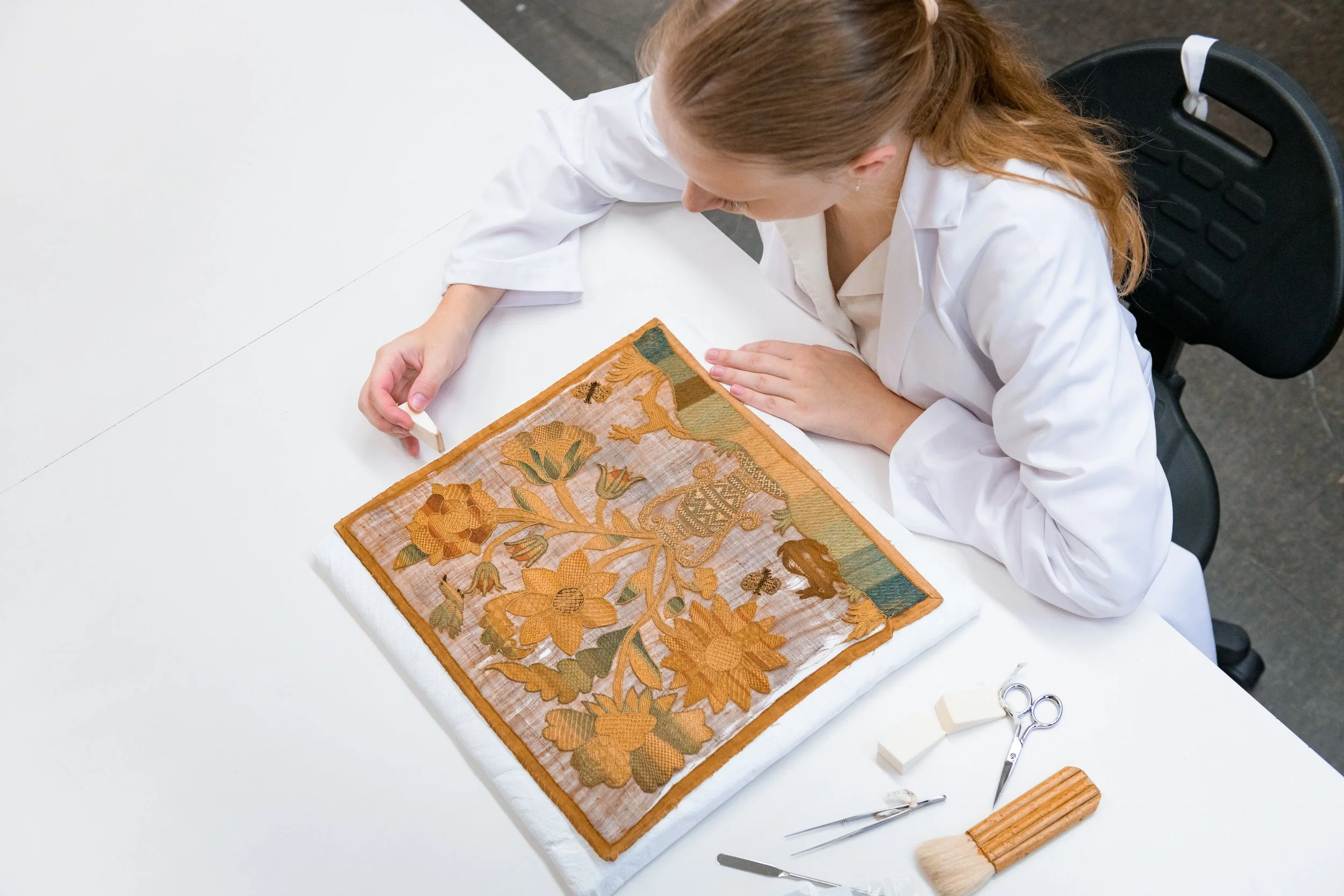
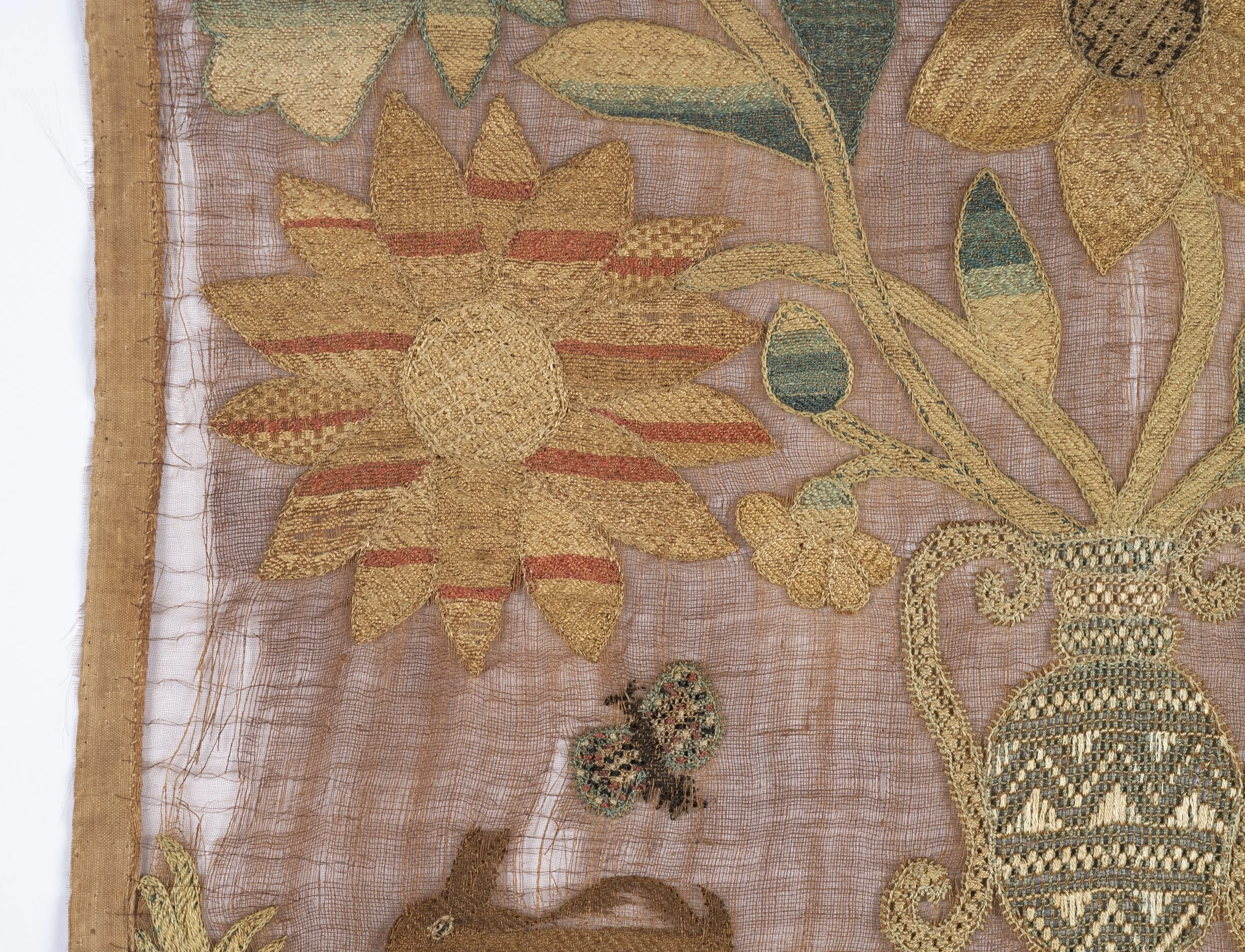
This silk on linen darning sampler by Philadelphia school girl Ann Flower is an important new acquisition into the Winterthur collection. The fragile sampler was treated with a blotter wash, silk crepeline stitch consolidation, and visual compensation for exhibition. This treatment is still in process.
Who were the Flowers?
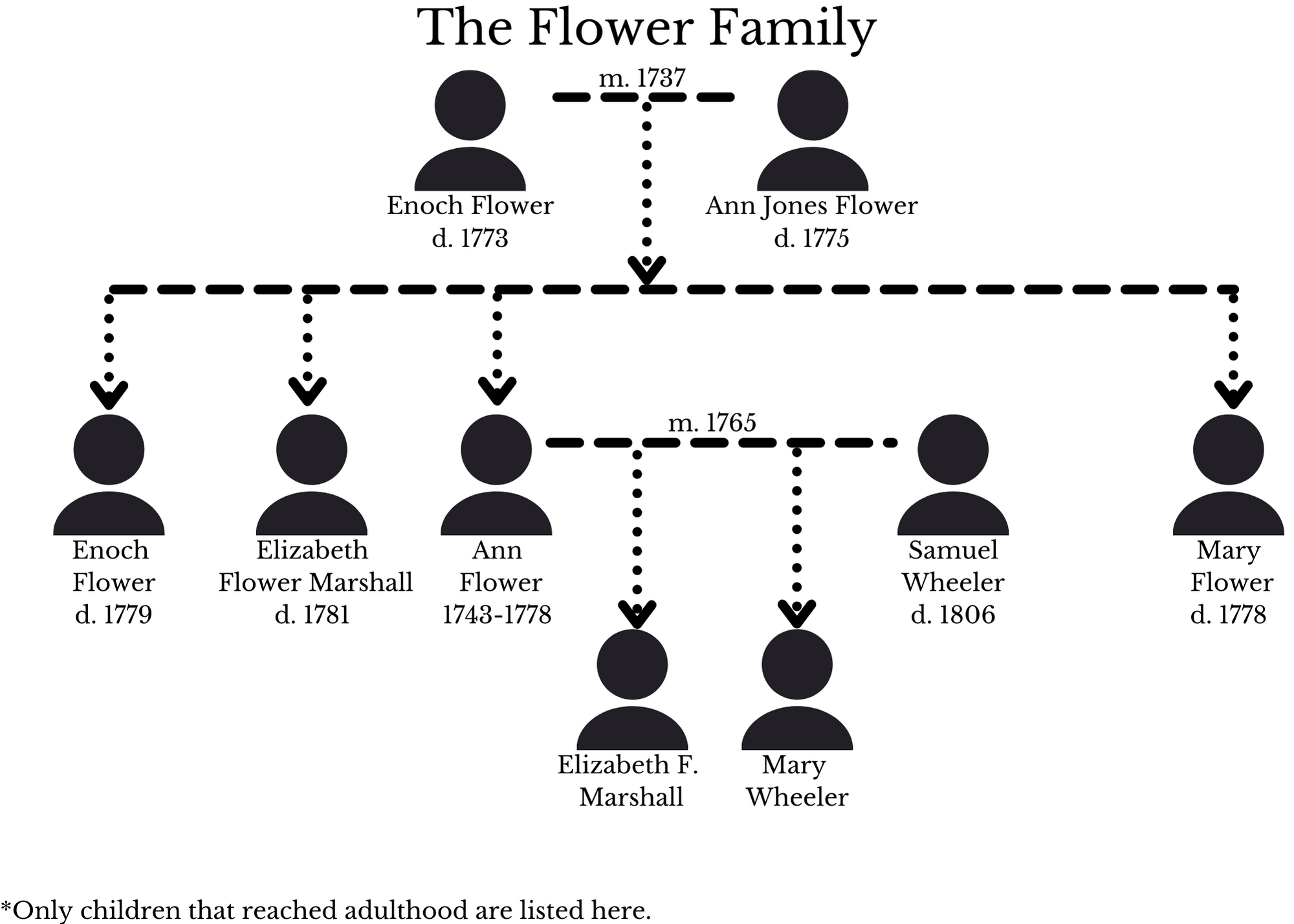
The Flowers were a Quaker family living in Philadelphia in the middle of the 18th Century. They had deep roots in Pennsylvania with Ann’s great-grandfather, Enoch Flower, becoming one of the first school teachers in the state.
The Flower family were prolific needleworkers. A quilt from Ann J. Flower is in the collection of the Colonial Williamsburg Foundation. The Flower girls Ann and Mary have work in the collection at Winterthur and in many private collecitons.
In Fragile Condition
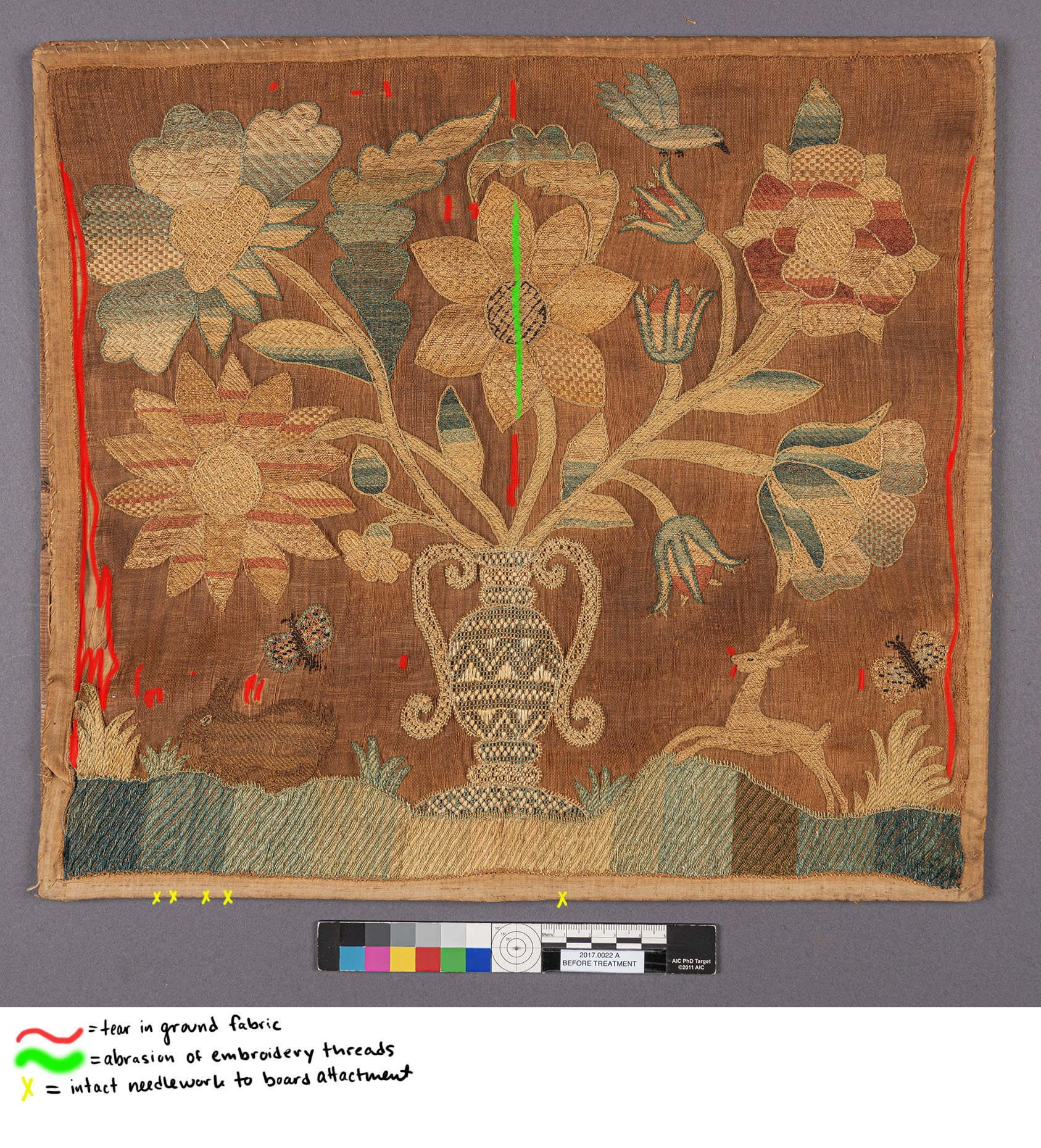
This needlework piece was in fragile, unstable condition. The linen ground was extremely friable with multiple losses throughout. The piece was soiled all over with a layer of ground in particulate, many fly specks, and a build-up of acidic degradation byproducts.
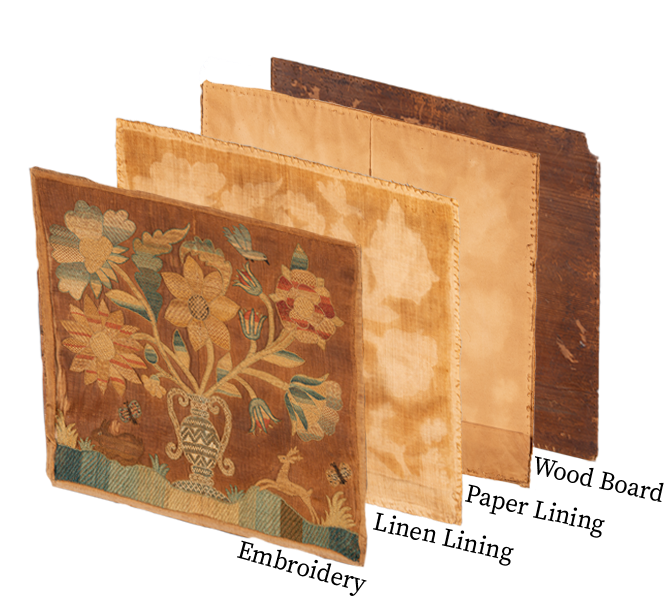
The Big Decision
The needlework came into the museum on its original board. Although this is an important feature, it was ultimately decided to disassemble the package in order to have full access to the needlework.
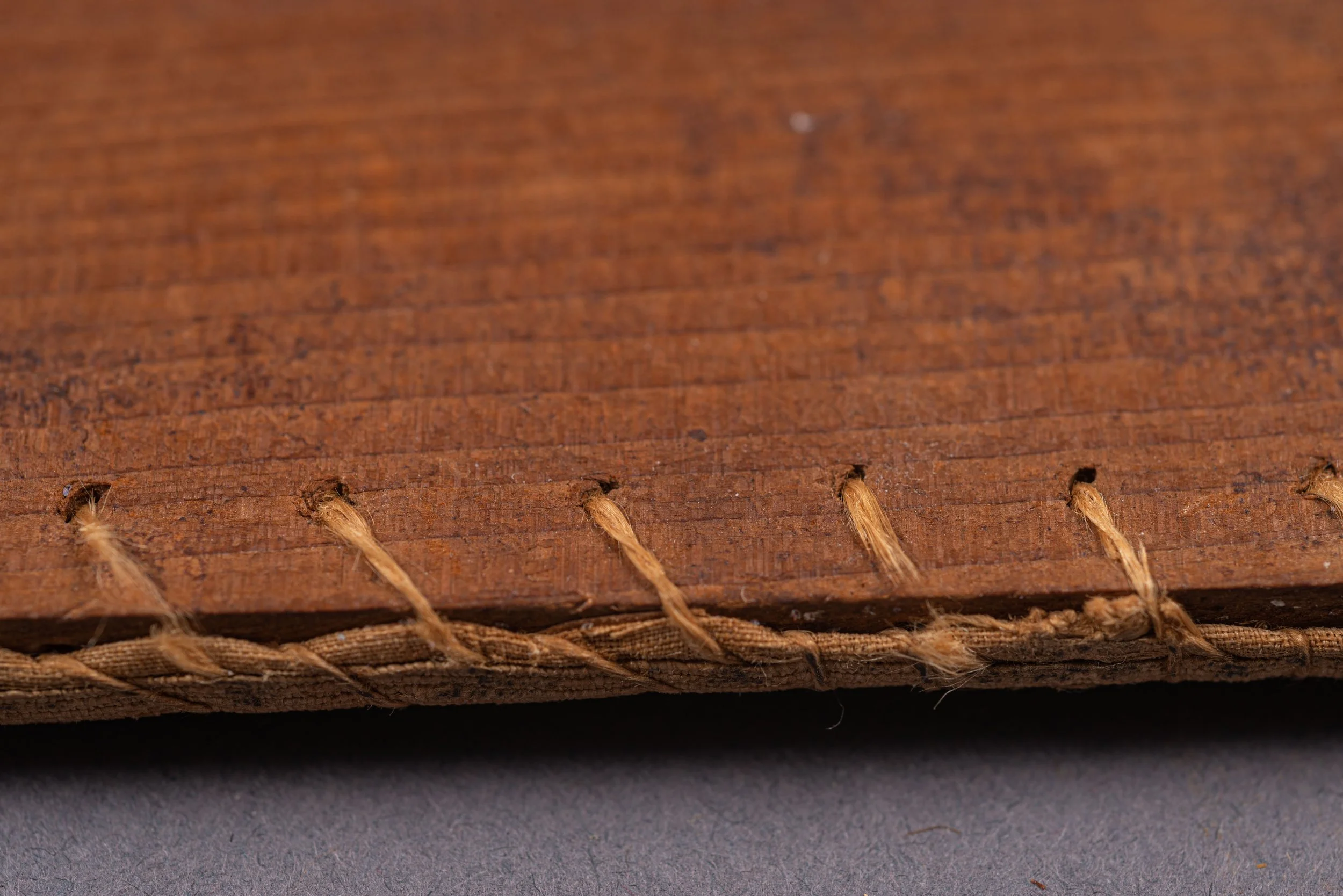
Original Stitches holding the needlework to the board
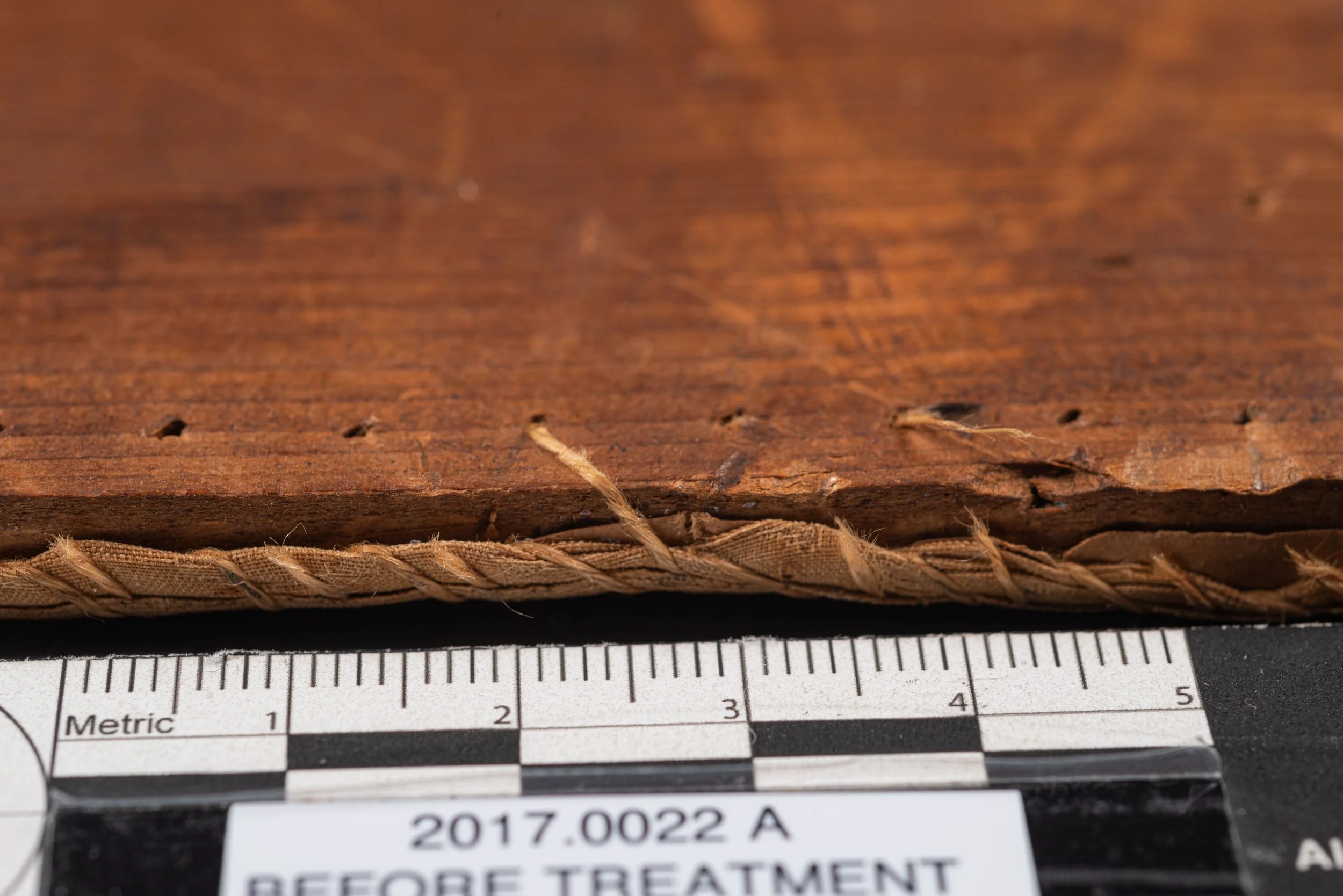
Original Stitches holding the needlework to the board
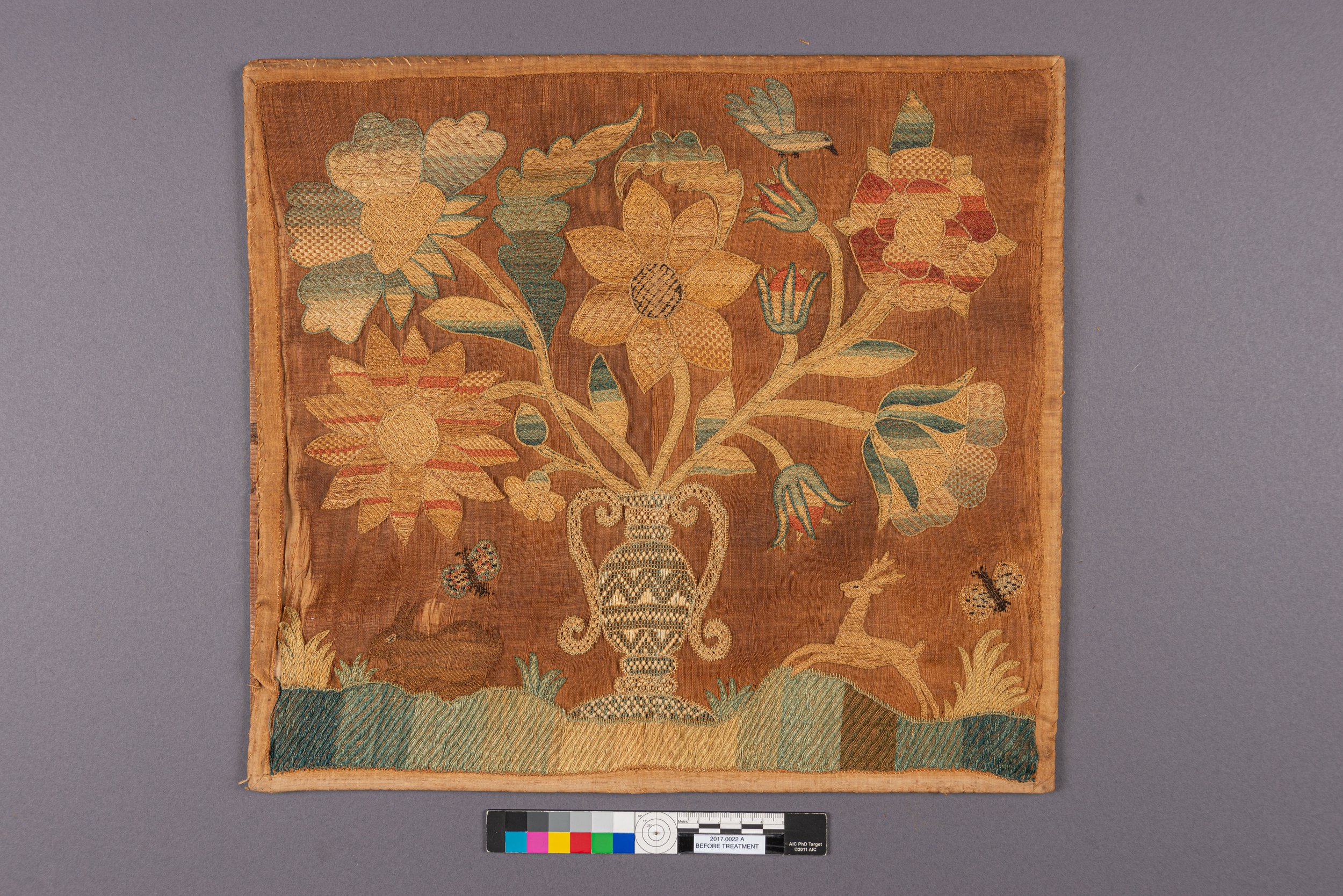
2017.0022, Before Treatment, Overall Front
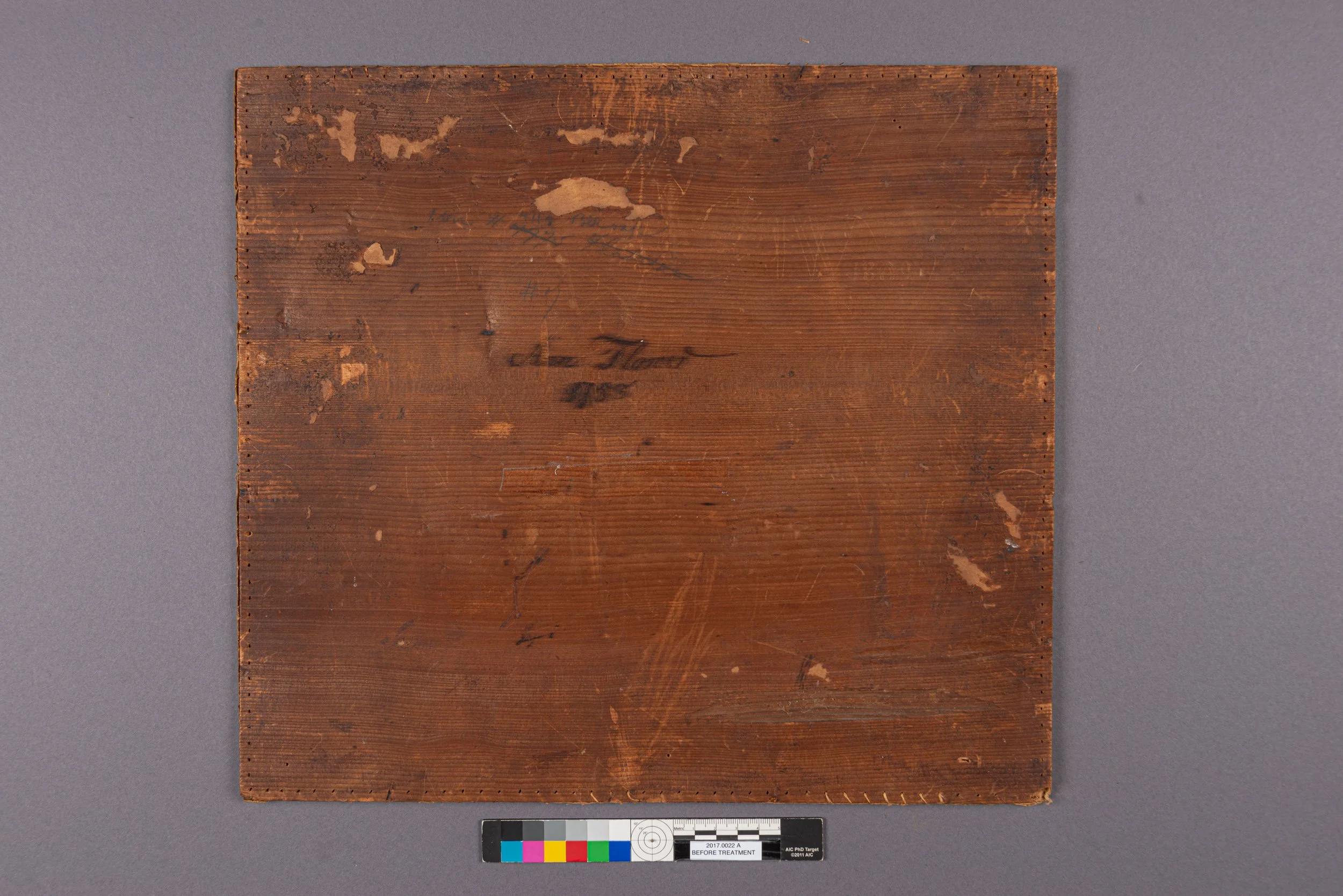
2017.0022, Before Treatment, Overall Back
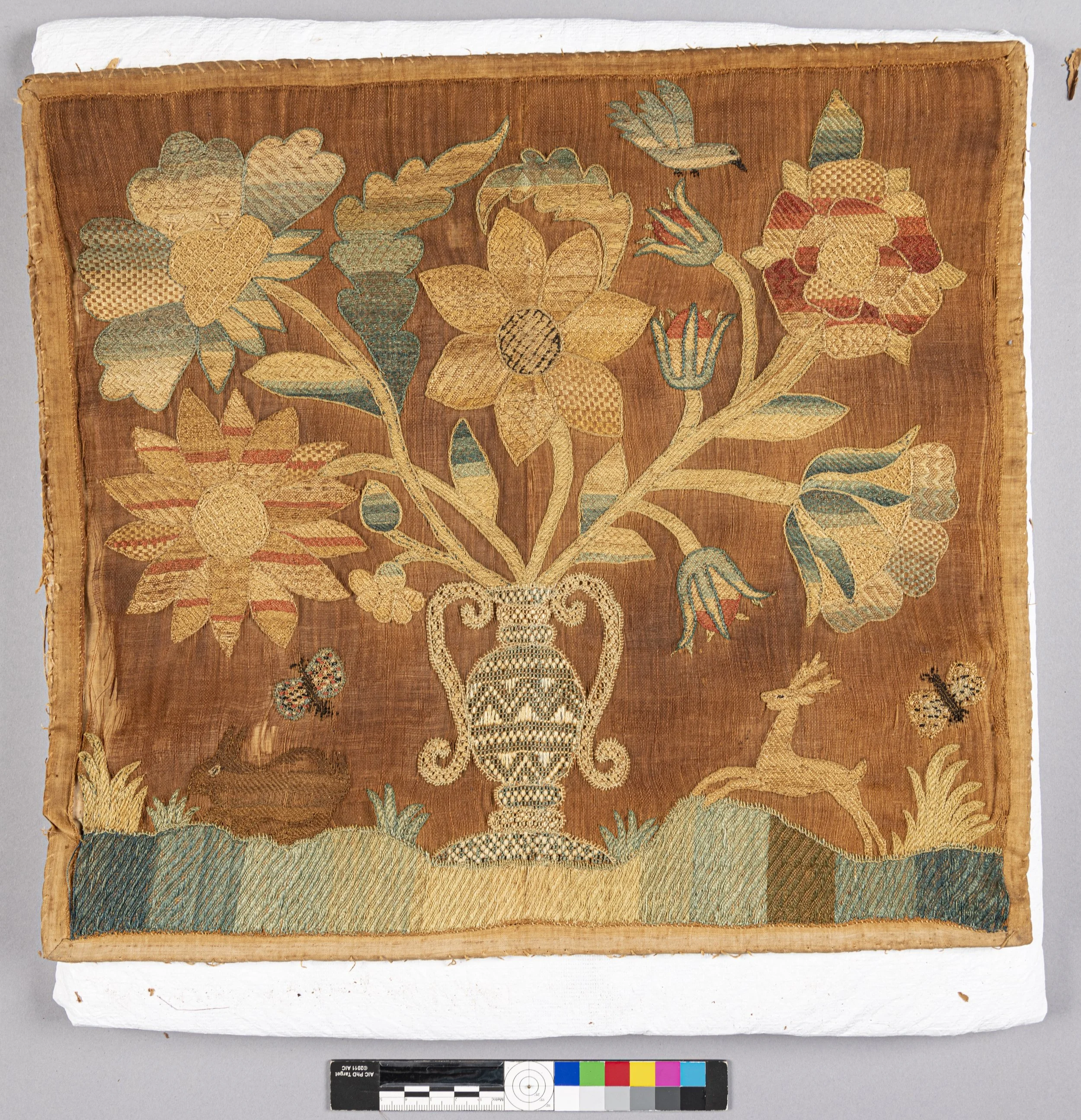
2017.0022, During Treatment, Overall Front
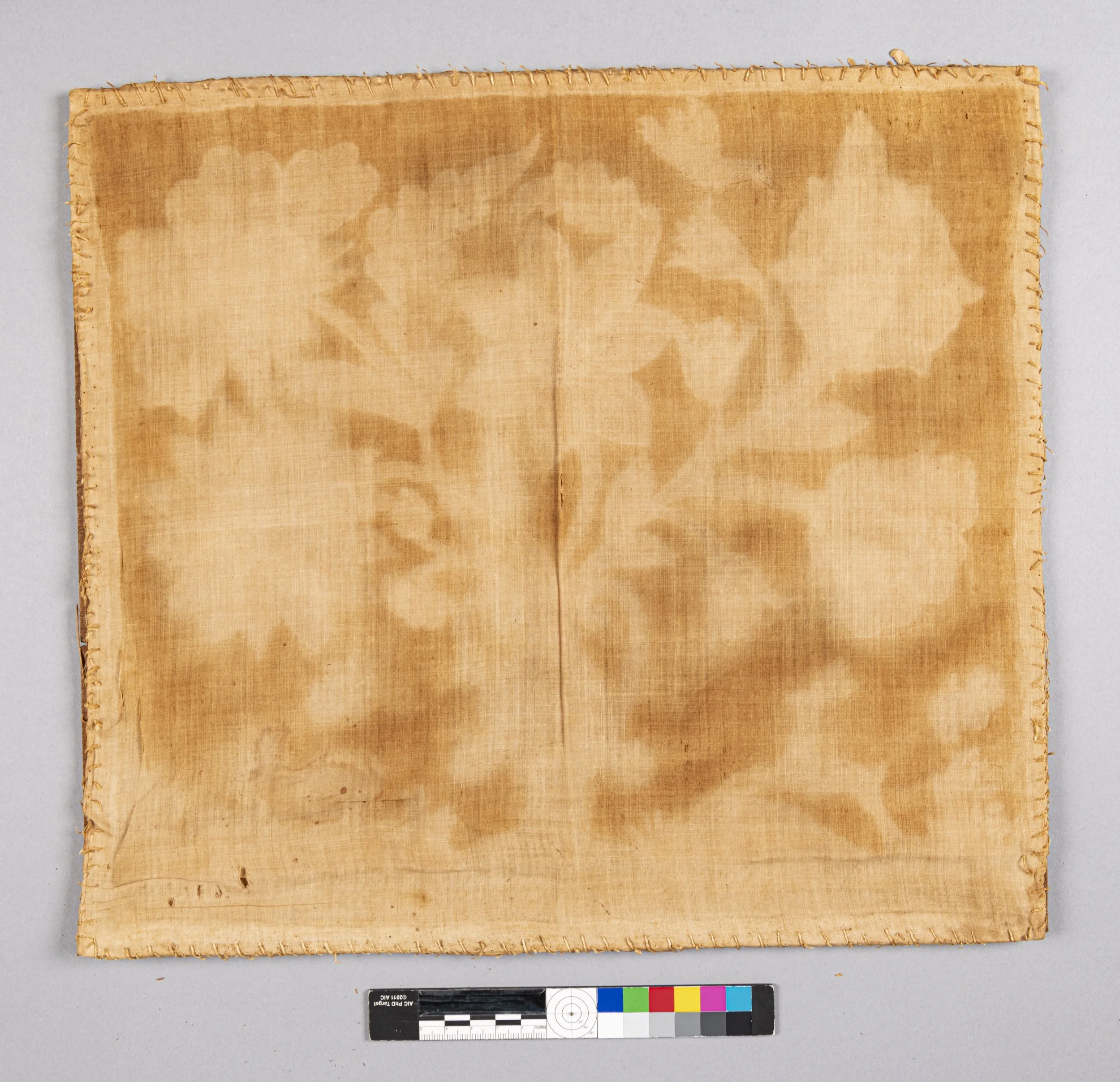
2017.0022, During Treatment, Linen Lining Front
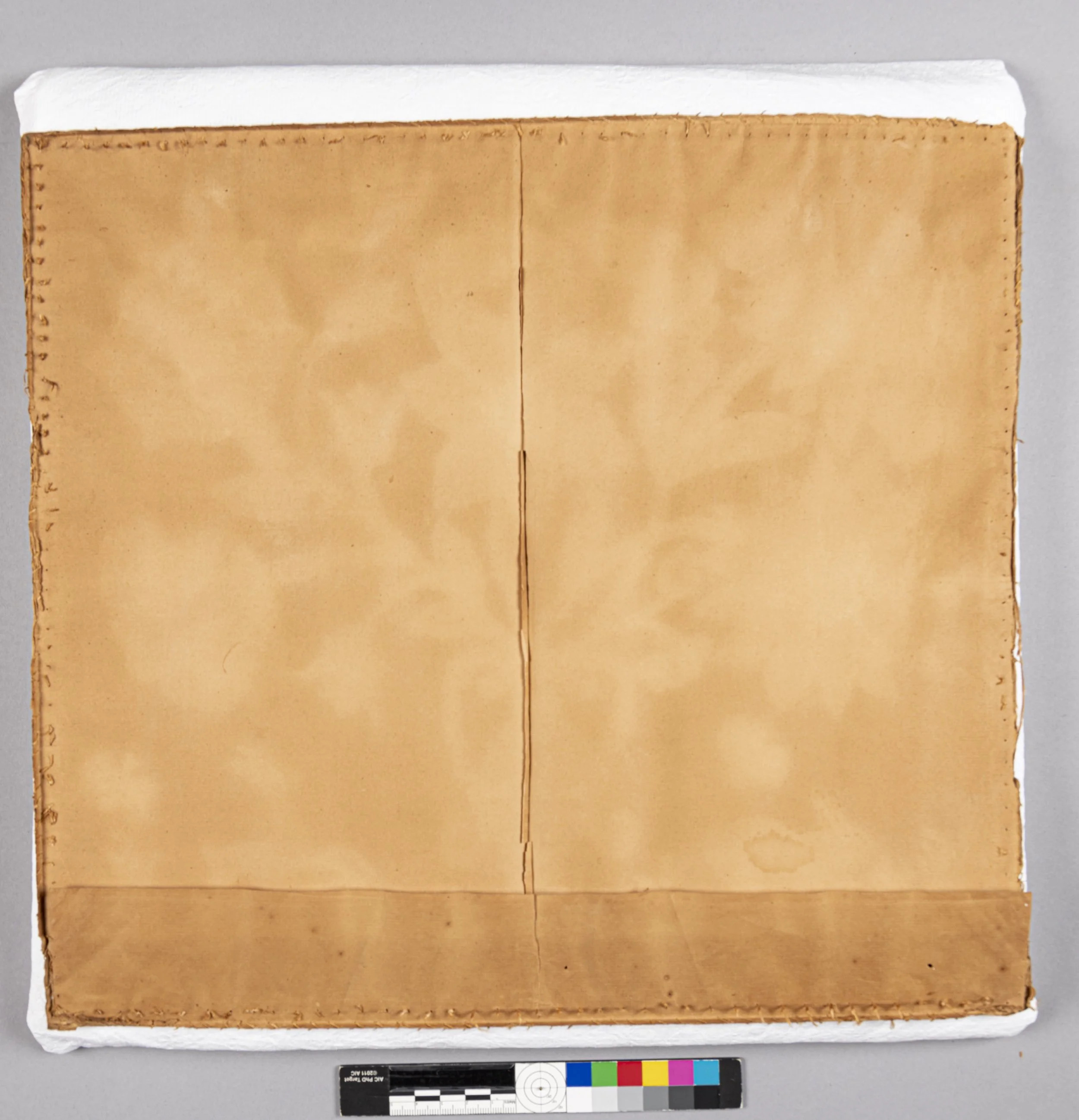
2017.0022, During Treatment, Paper Lining Back
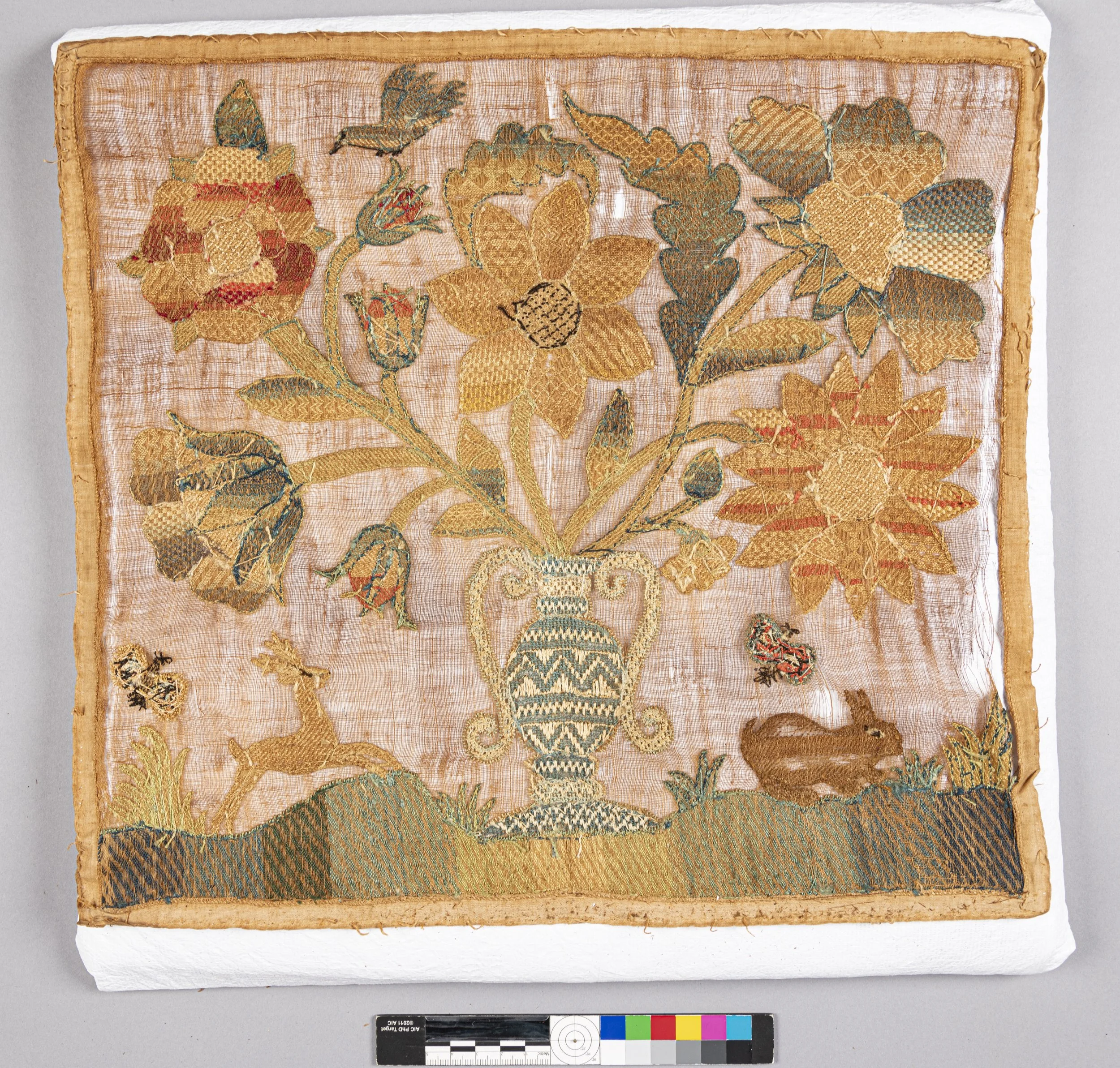
2017.0022, During Treatment, Needlework Back
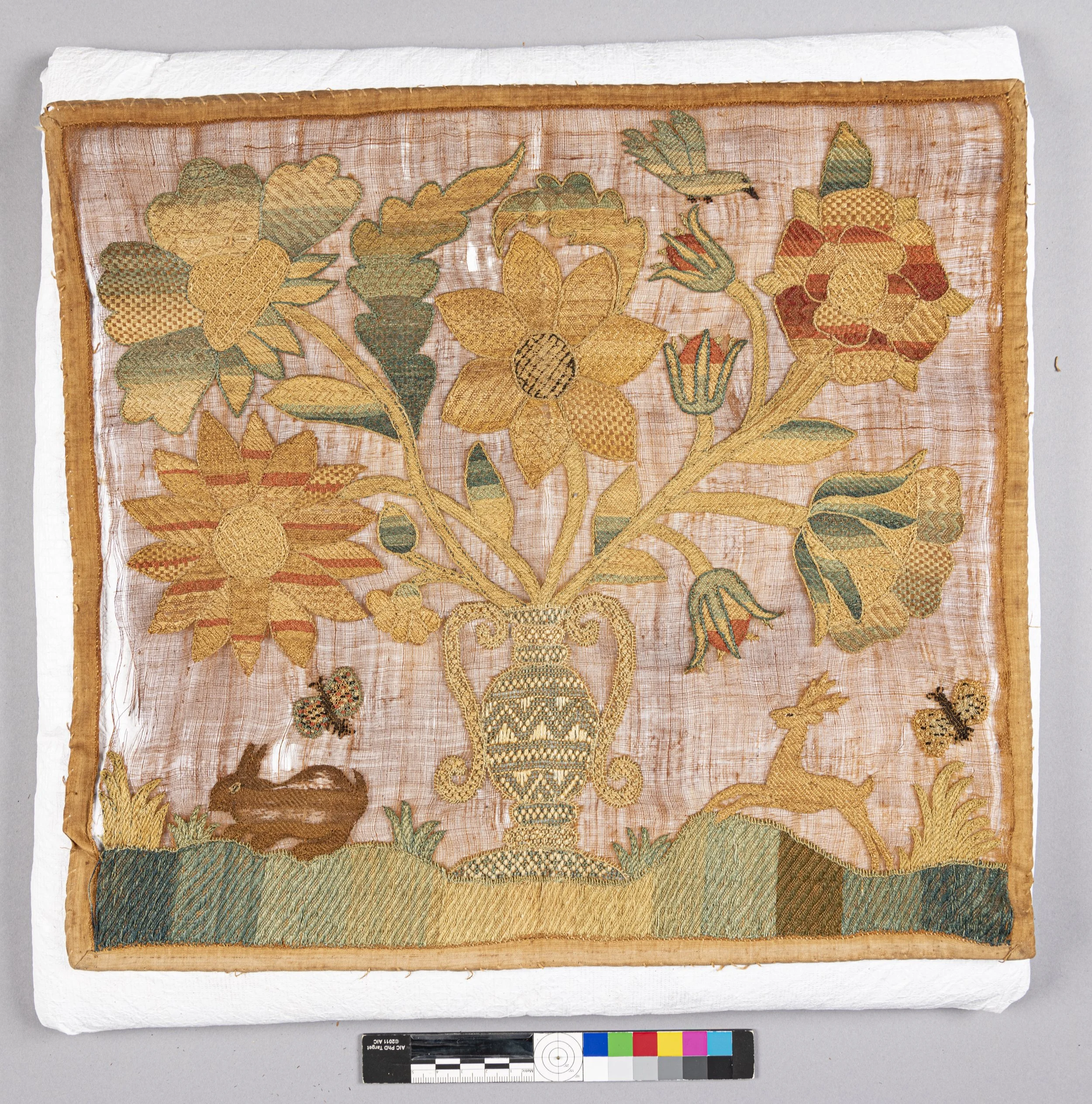
2017.0022, During Treatment, Needlework Front
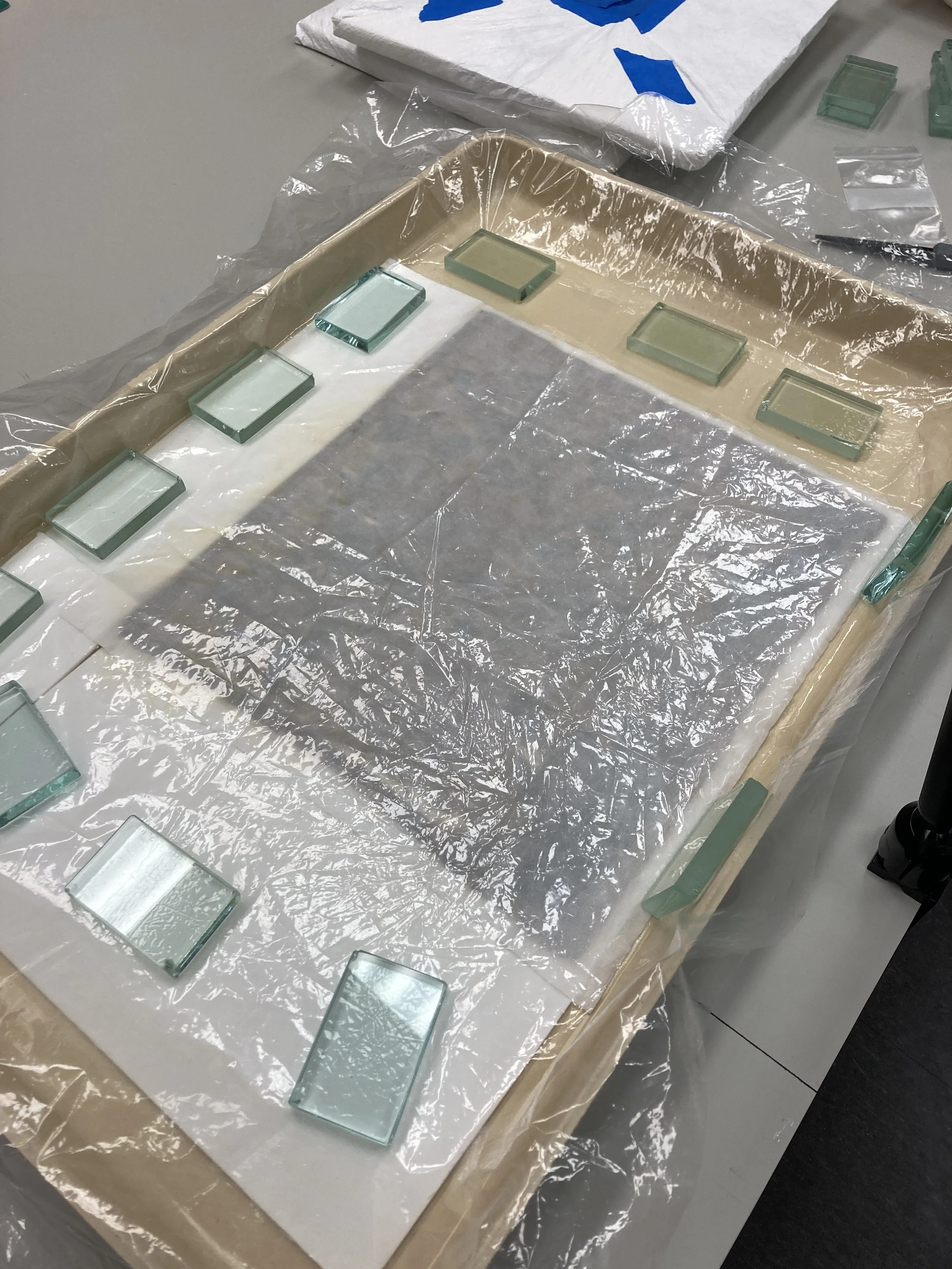
A Gentle Cleaning
The decision was made to humidify and wash the piece to reduce the acidic degradation byproducts and brighten the silk thread. From solubility tests, it was found that surfactants and chelators solubilized some dyes, thus only DI water was used.
Blotter washing was chosen because it allowed the fragile piece to remain stationary while also providing a gentle all-over wetting.
The piece was humidified for 36 hours in a humification chamber and then two blotter washes were completed. During the second blotter wash, it was found that the dye was beginning to solubilize and the treatment was immediately stopped.
Overall this was a very successful wet cleaning. It was gentle enough as not to disturb the losses and dyes but still brighten up the silk and hydrated the linen.
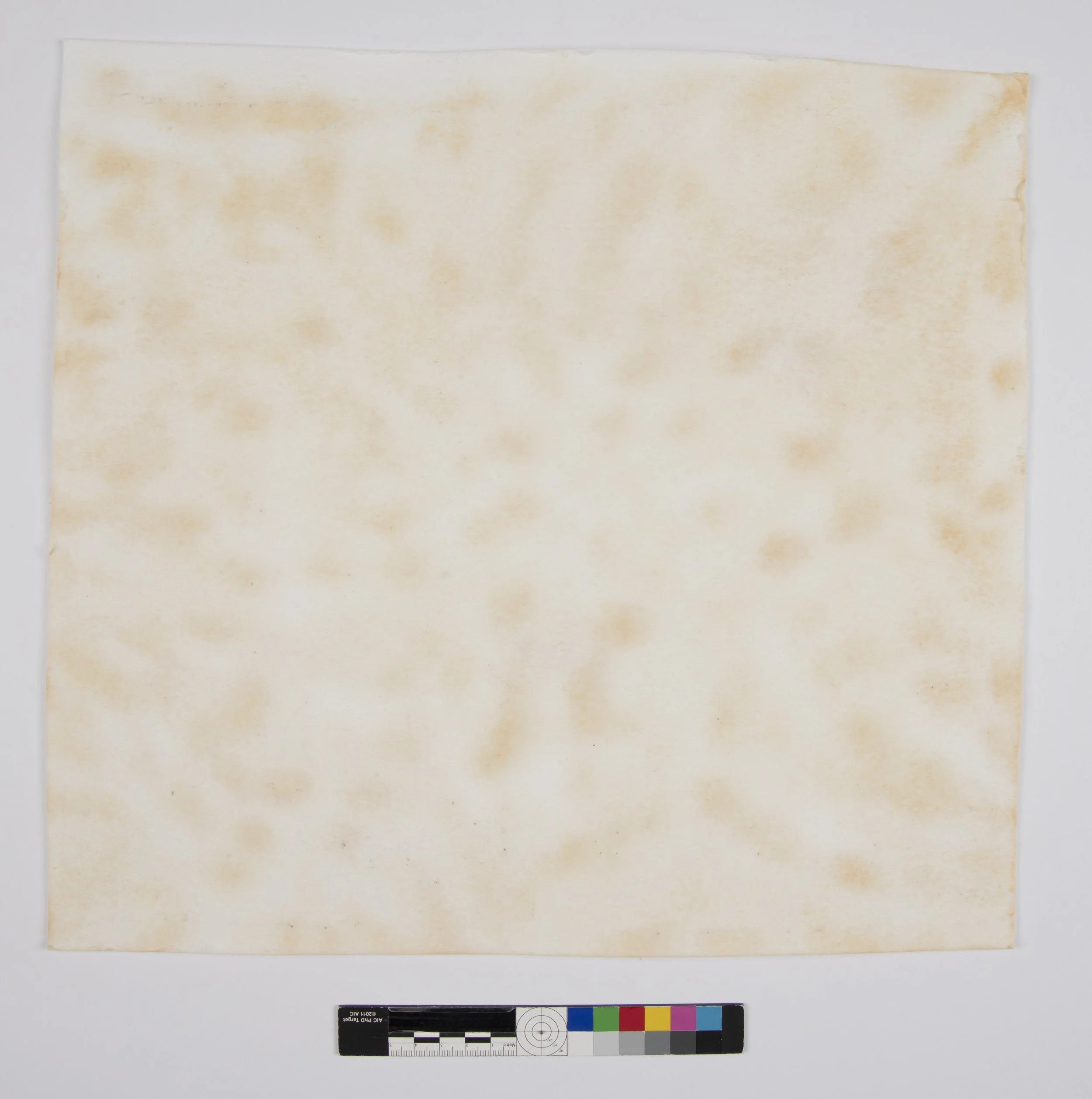
As you can see, a lot of acidic degradation came out of the object into the blotter!
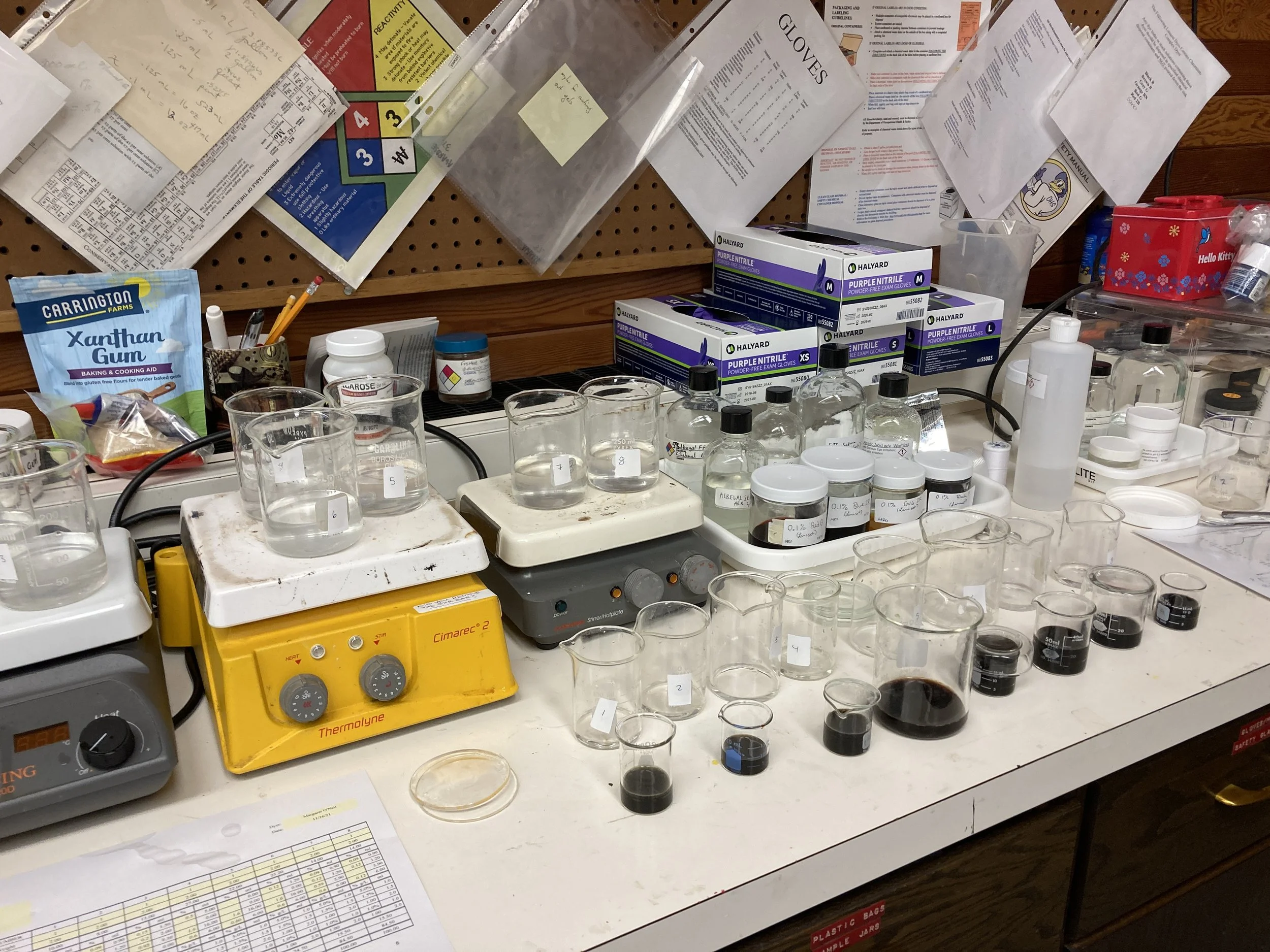
Dyeing to Match
To create the underlay support for the piece, silk crepeline was custom dyed to compliment (but not distract) from the linen ground.
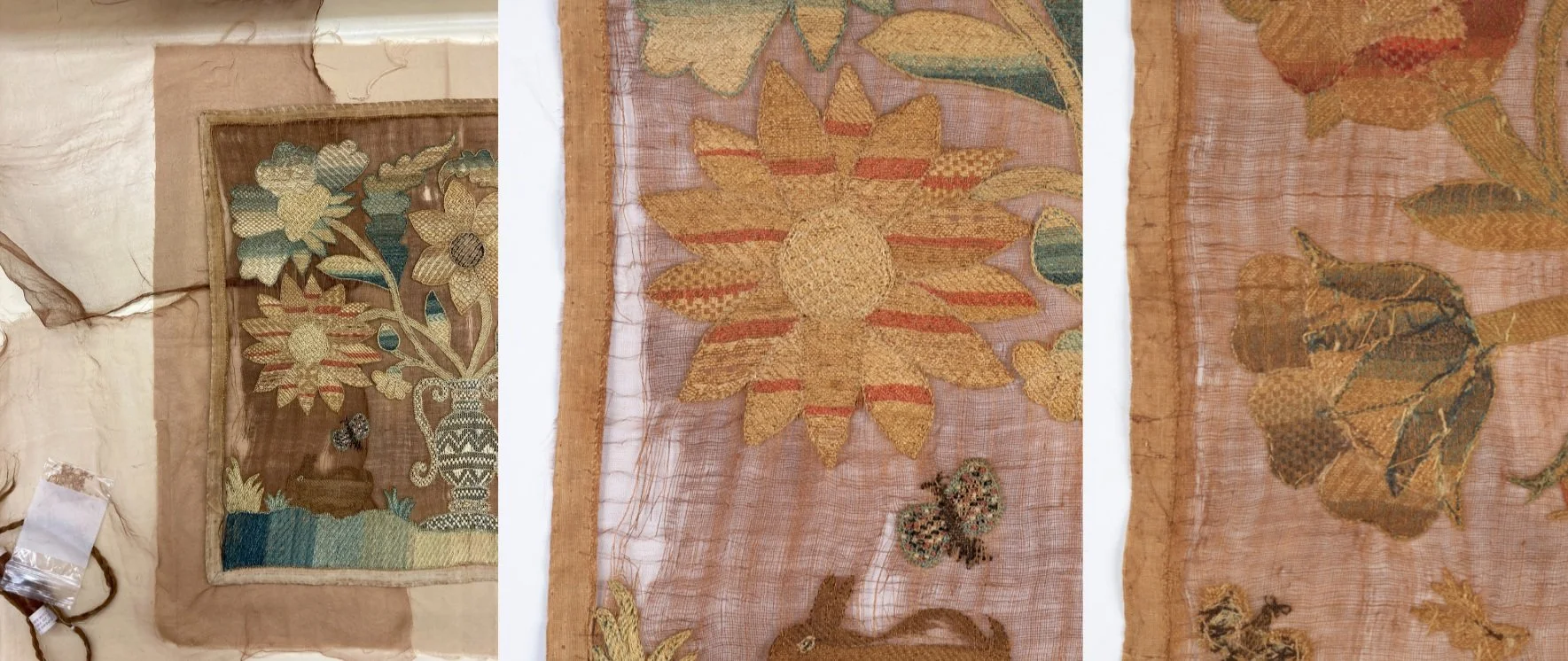
A brown shade of silk crepeline was chosen as the backing fabric and hair silk was dyed to match. The silk crepeline was attached with herringbone stitches on the outer linen tape and laid and couch stitches over the breaks.
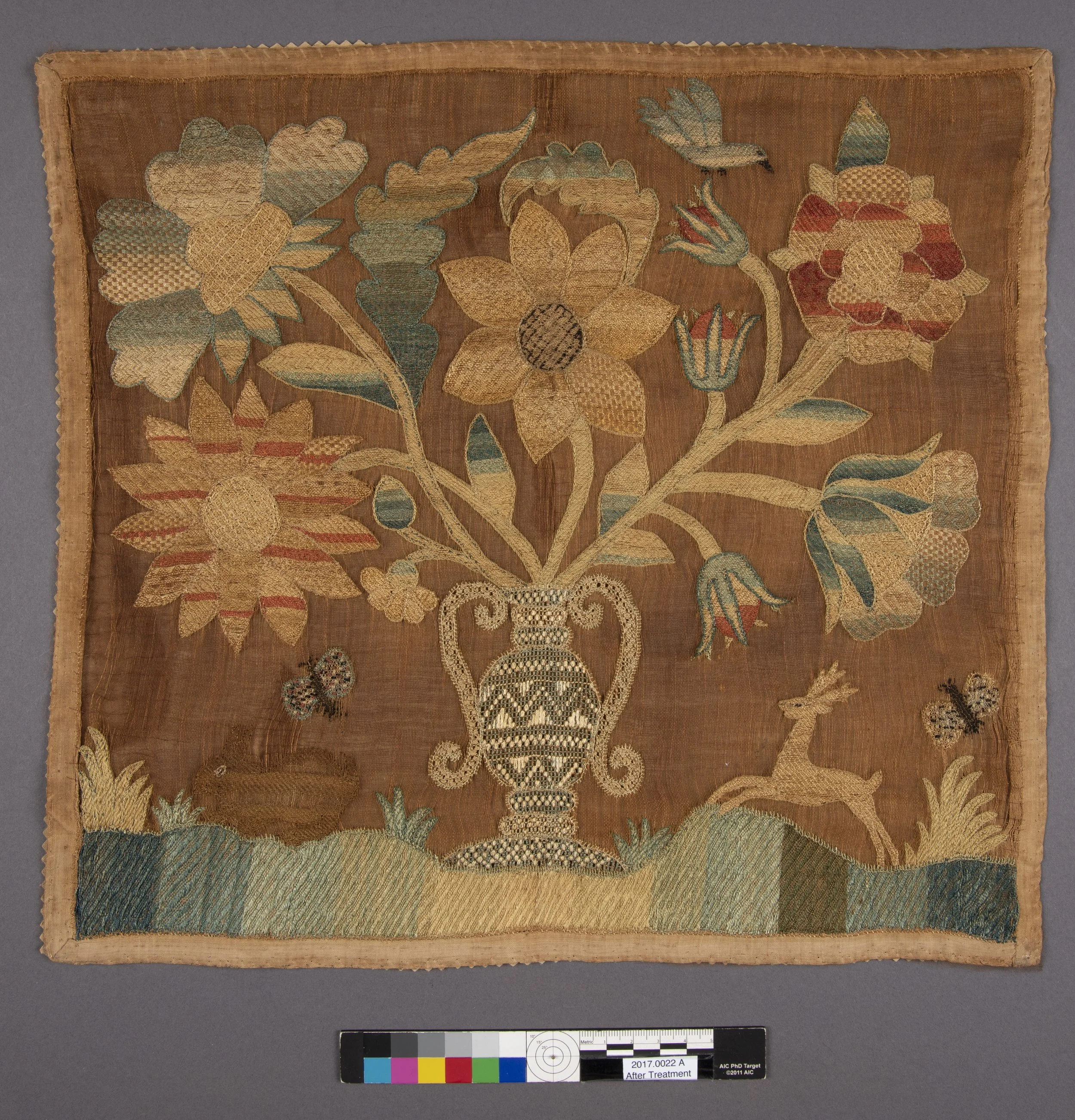
A slip of Kona Cotton was created with silk crepeline patches to fill in the loss areas. This slip is not attached to the piece and can be easily removed and replaced when needed.
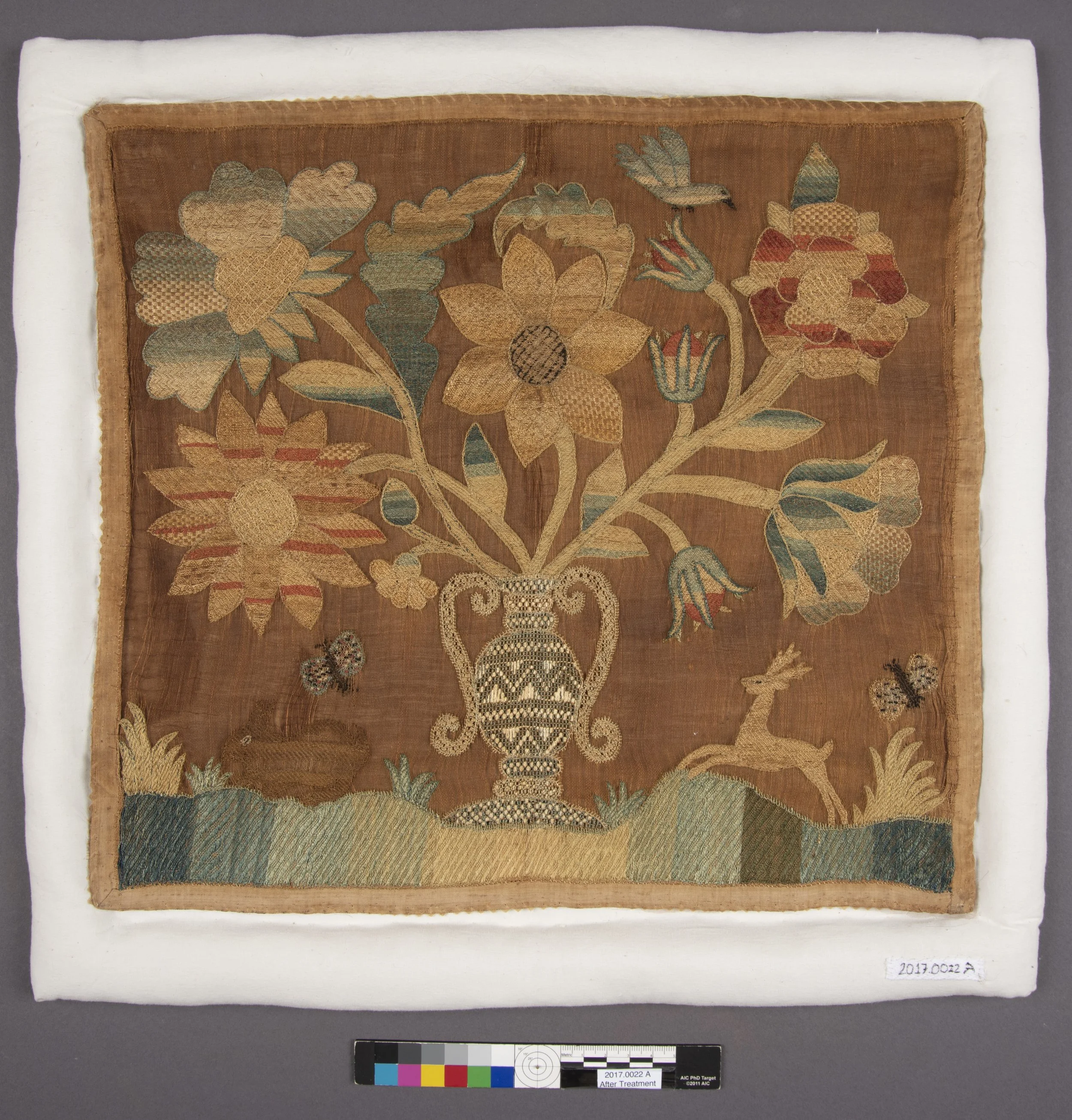
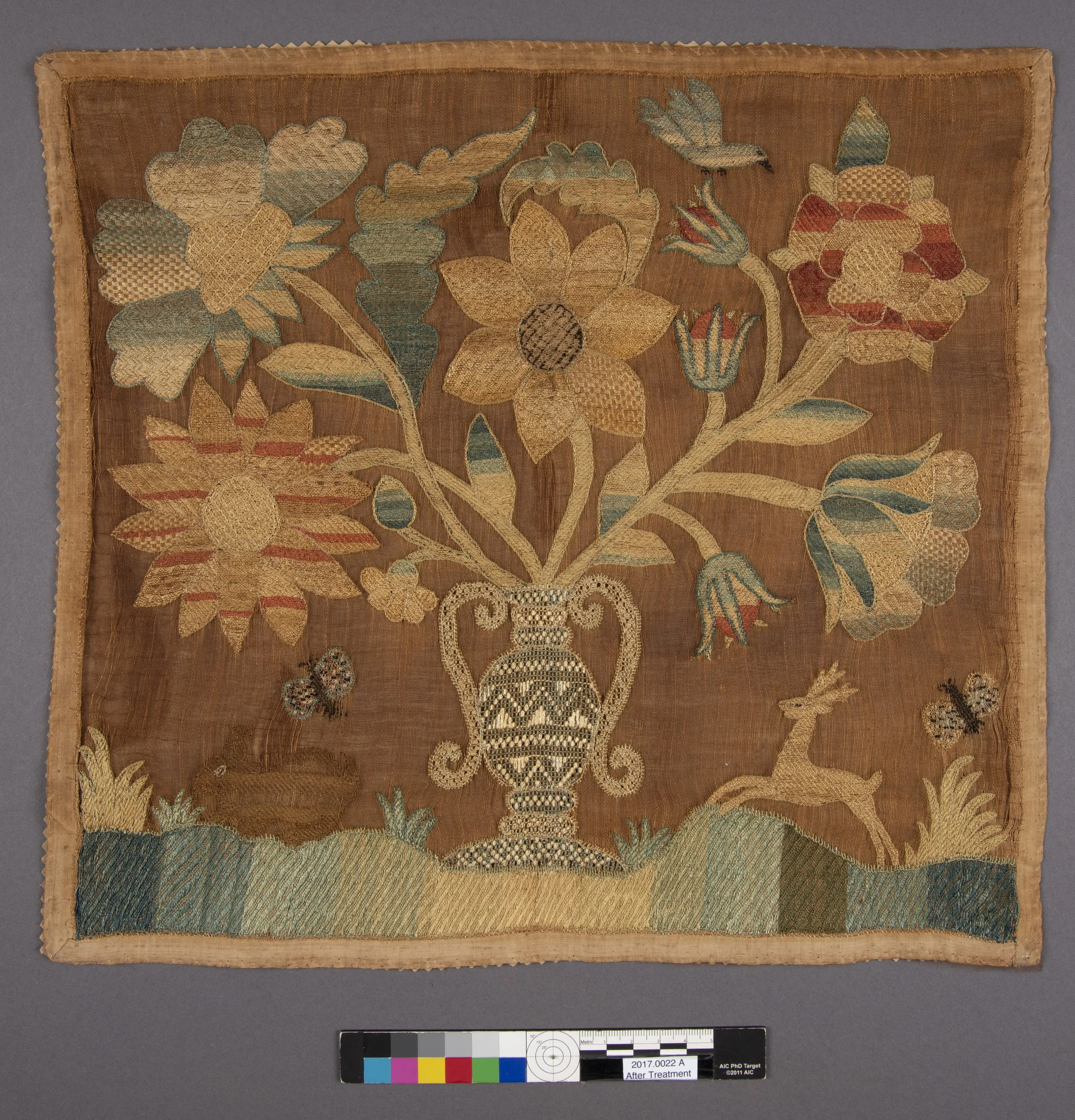
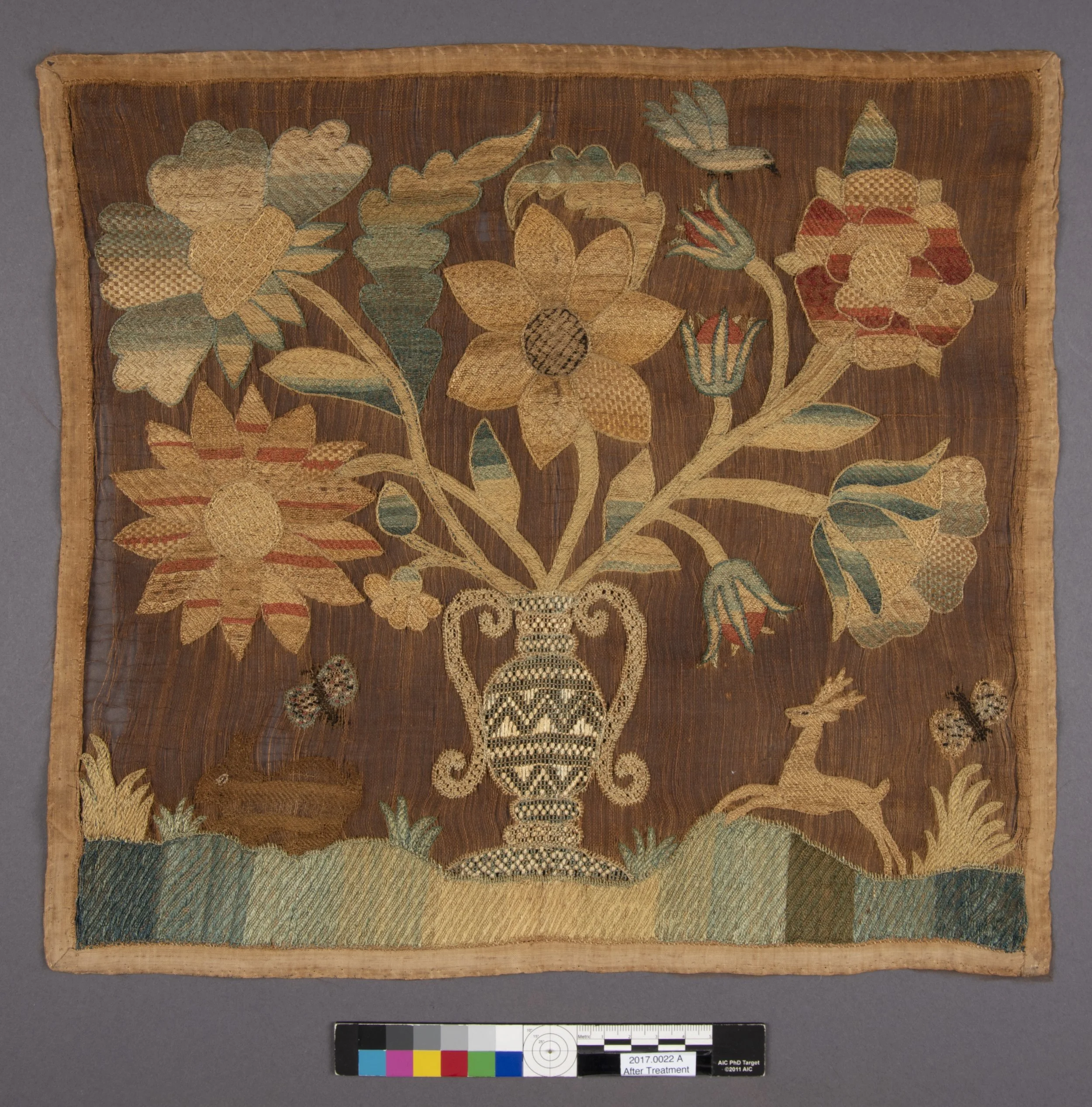
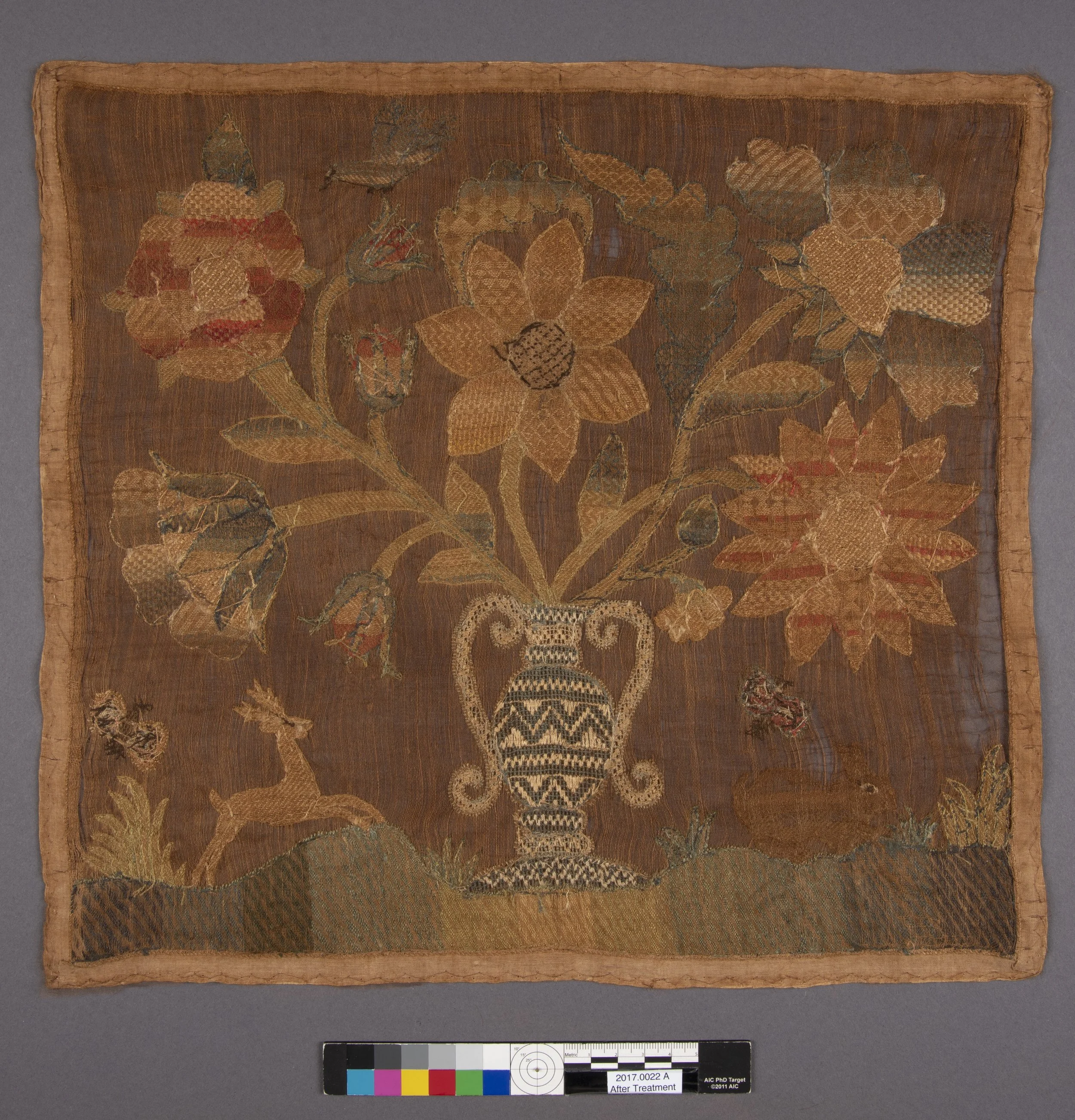
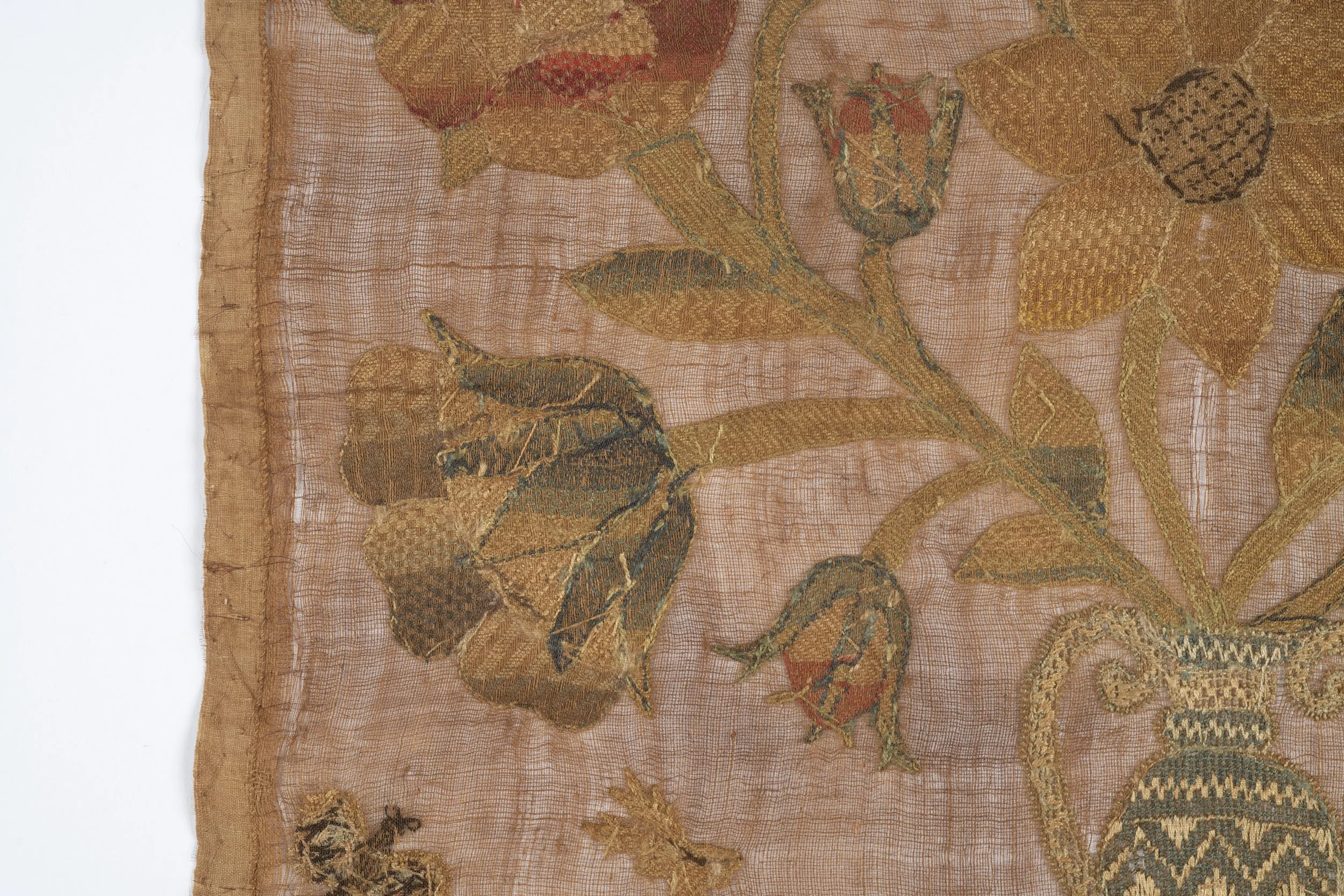
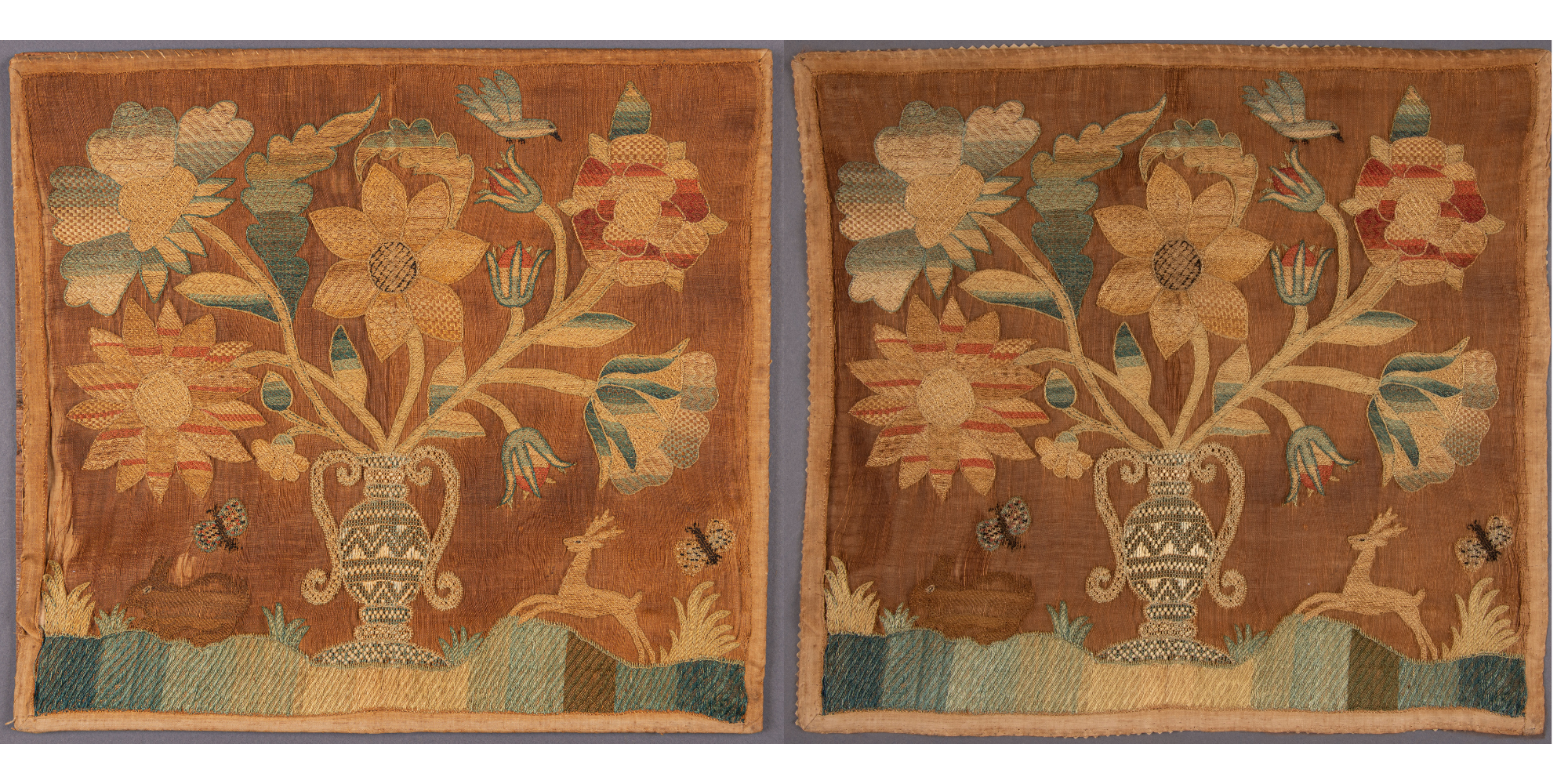
Before Treatment (Left); After Treatment (Right)
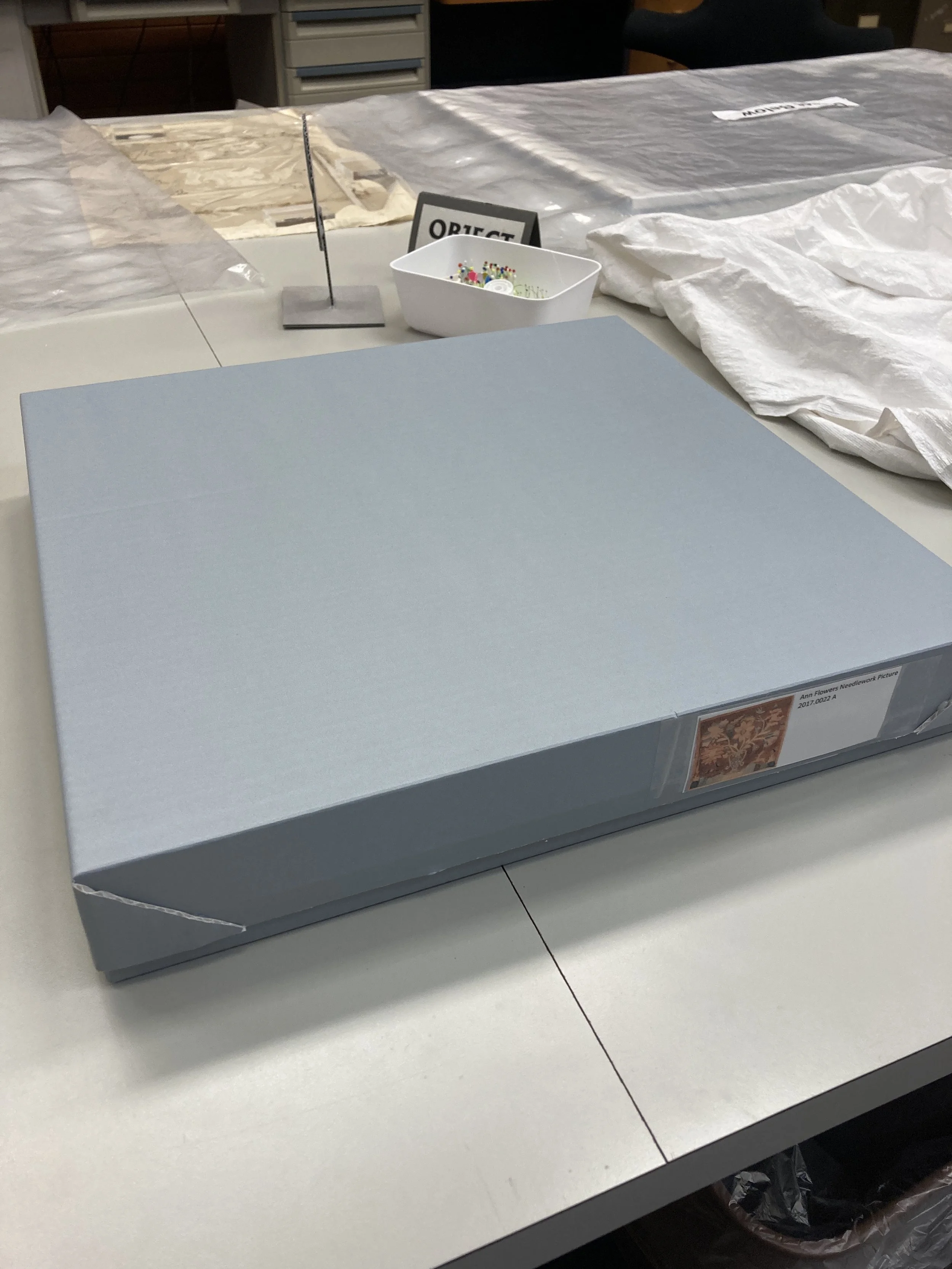
Ann's New Box
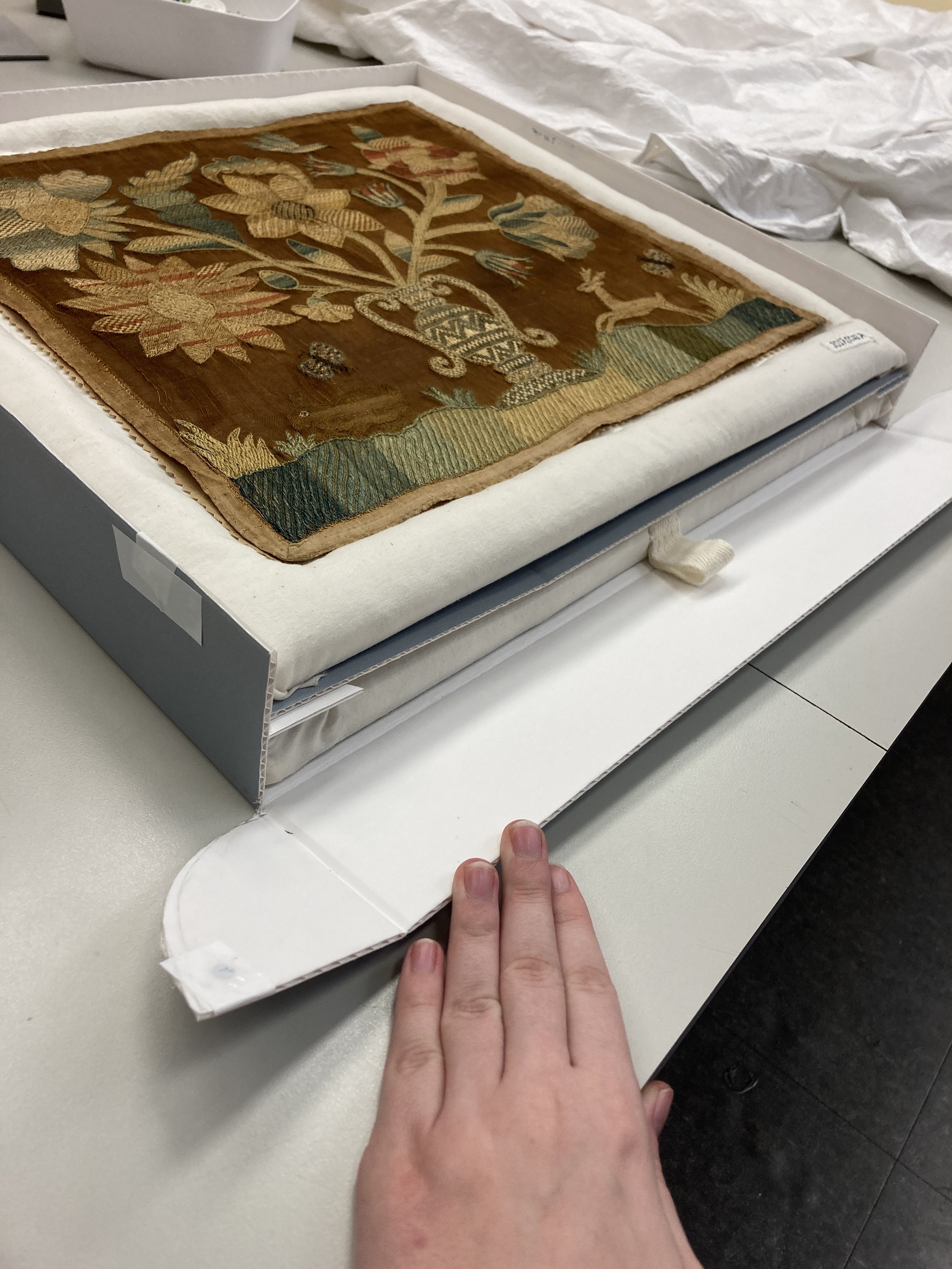
It has two levels. One for the needlework and the other for board.
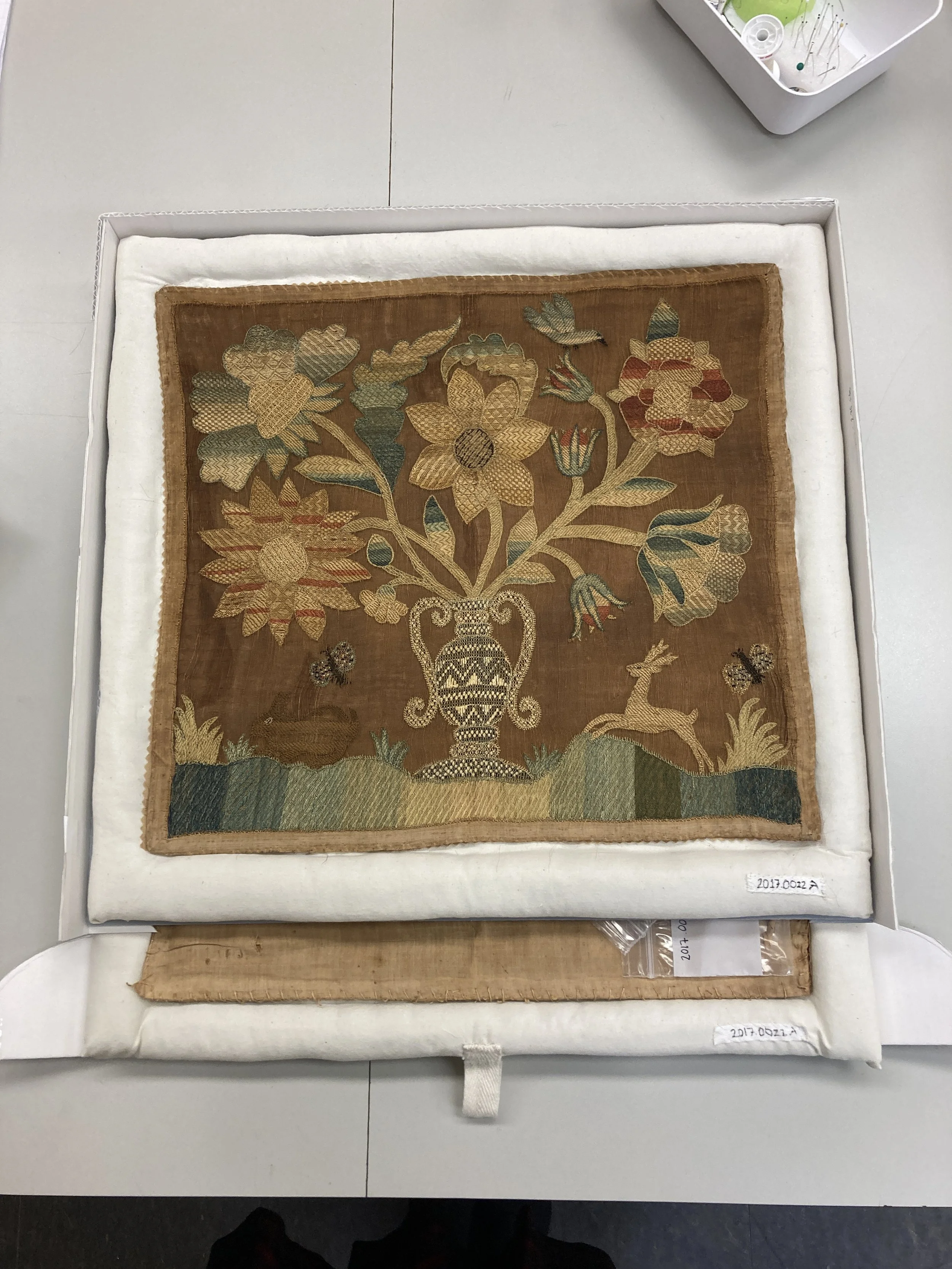
The front opens with magnets for easy handling.
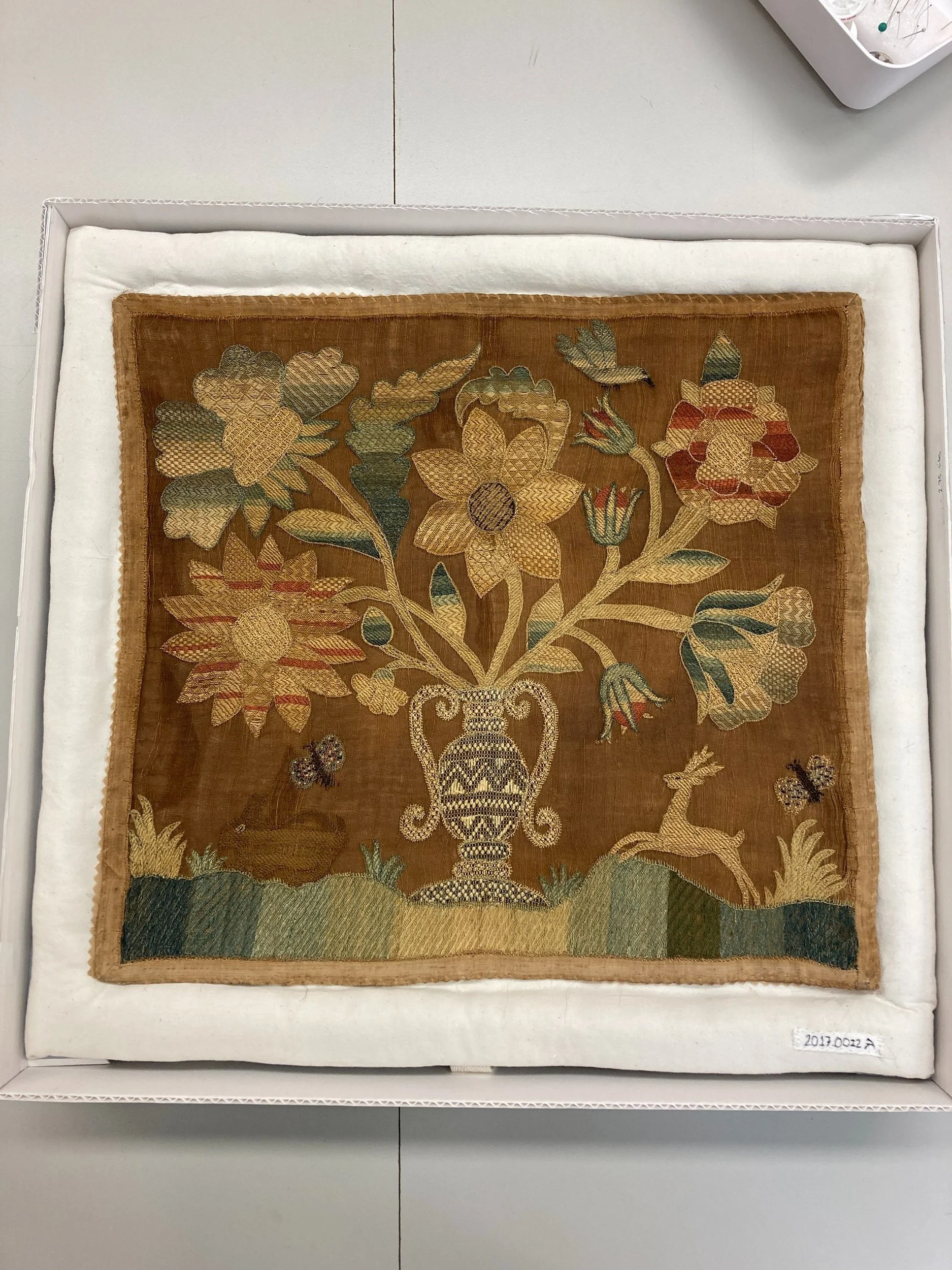
Ann all snuggly