1880s Velvet Evening Gown and Button Reconstruction
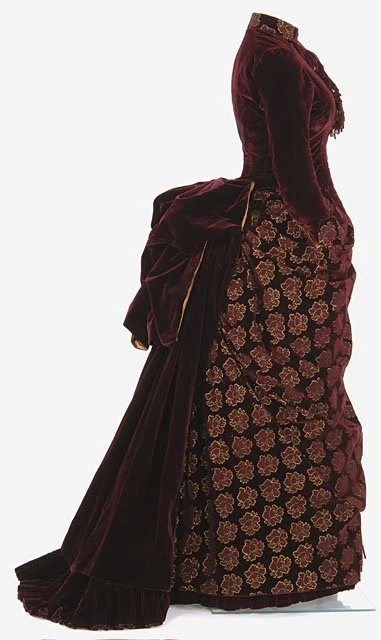
Two-Piece Velvet Evening Gown, c. 1887, attributed to Mary G. Worley, St. Paul, Minnesota, MNHS 9975.1.A,B
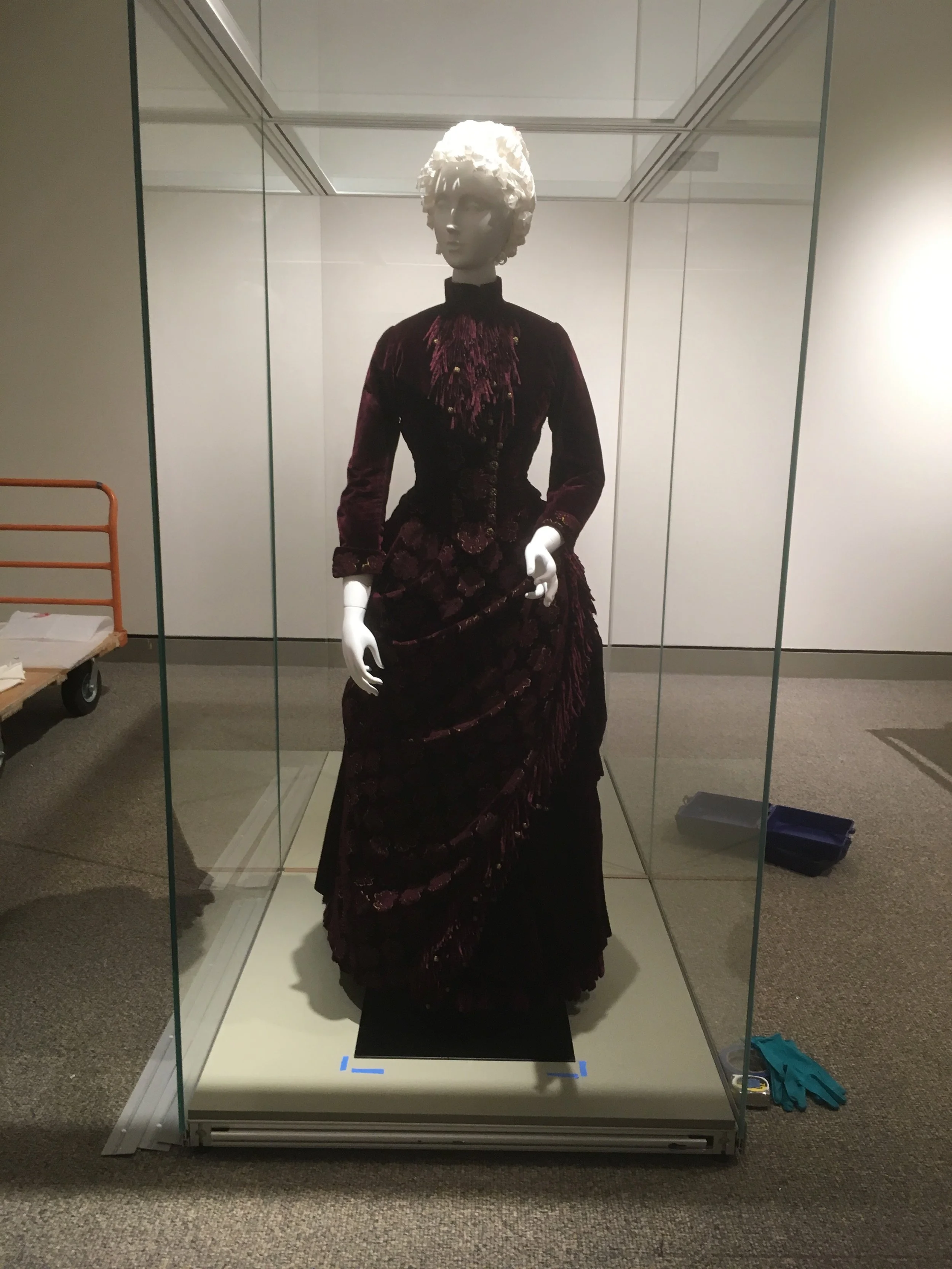
This 3rd Bustle Era velvet evening gown was also conserved and mounted for the 2019 exhibition The Art of High Style: Minnesota Couture 1880–1914. The treatment included a reversal of a non-contemporaneous alteration, consolidation of the hem tape, and the recreation of two late Victorian buttons.

The dress came to the lab with an auxiliary silk panel stitched into the center front closure. It was determined that this panel was not original to the dress as it had the hallmark picot edges and snaps of the early 20th century. It is theorized that the panel was added for fancy dress in the 1910s or 1920s.
The panel was documented with both photography and a drawing within the report. The panel was then removed.

The waistband of the dress had been altered- presumably for fancy dress in the early 20th century
The altered waistband was fragile and could not be mounted for exhibition.
To stabilize it, a cotton patch was attached over it.
The hem tape was also shattering leaving the wefts exposed. Herringbone stitches
were used to secure it in situ
Button Reconstruction
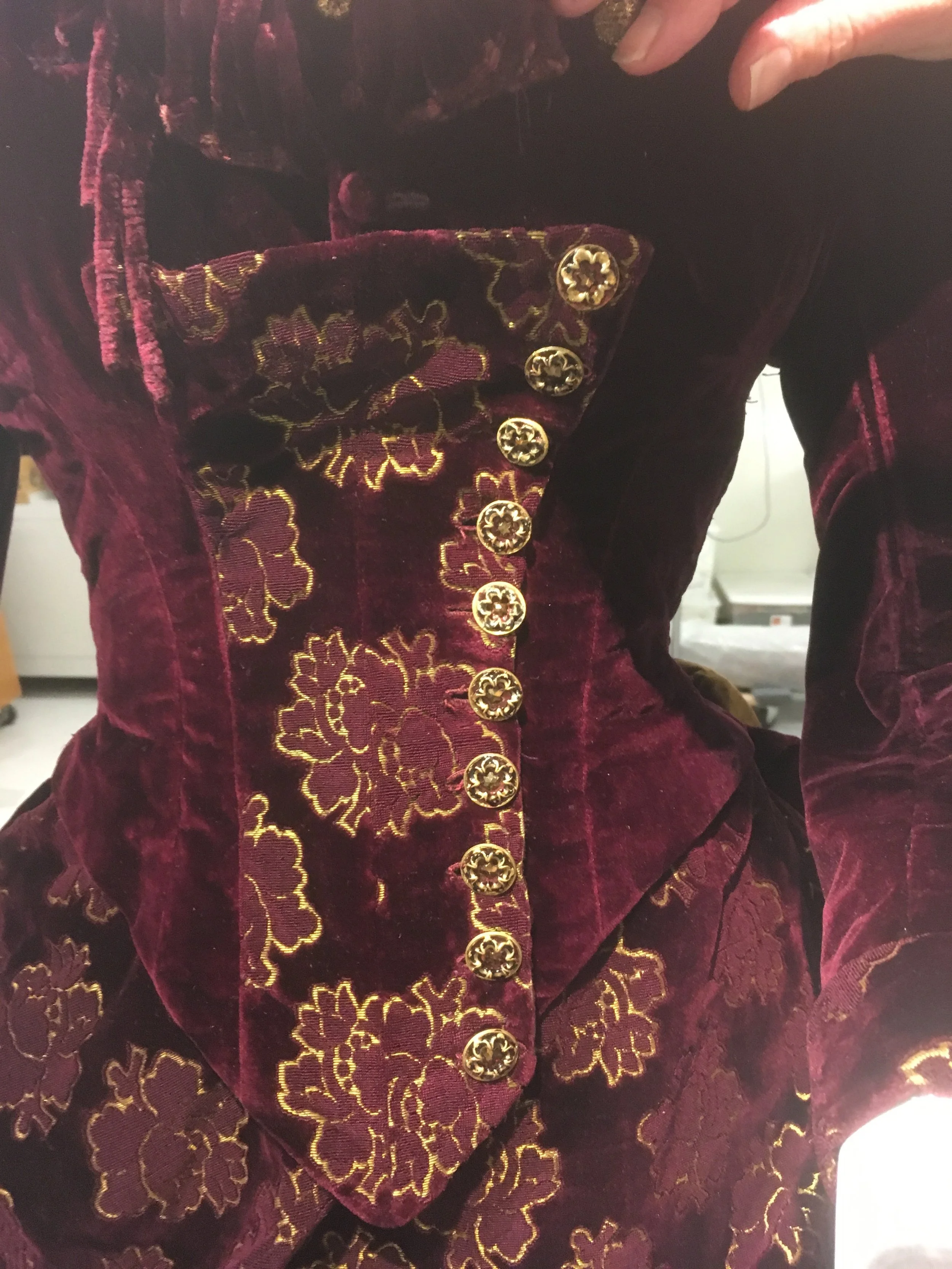
The bodice of the dress was missing two of its distinctive buttons, which was determined to be distracting. With the help of KCI Inc. (a private objects conservation studio in Minneapolis, MN) two new show buttons were constructed from wood epoxy and paint. See the gallery below or read the article written for the Minnesota State Button Society Newsletter.
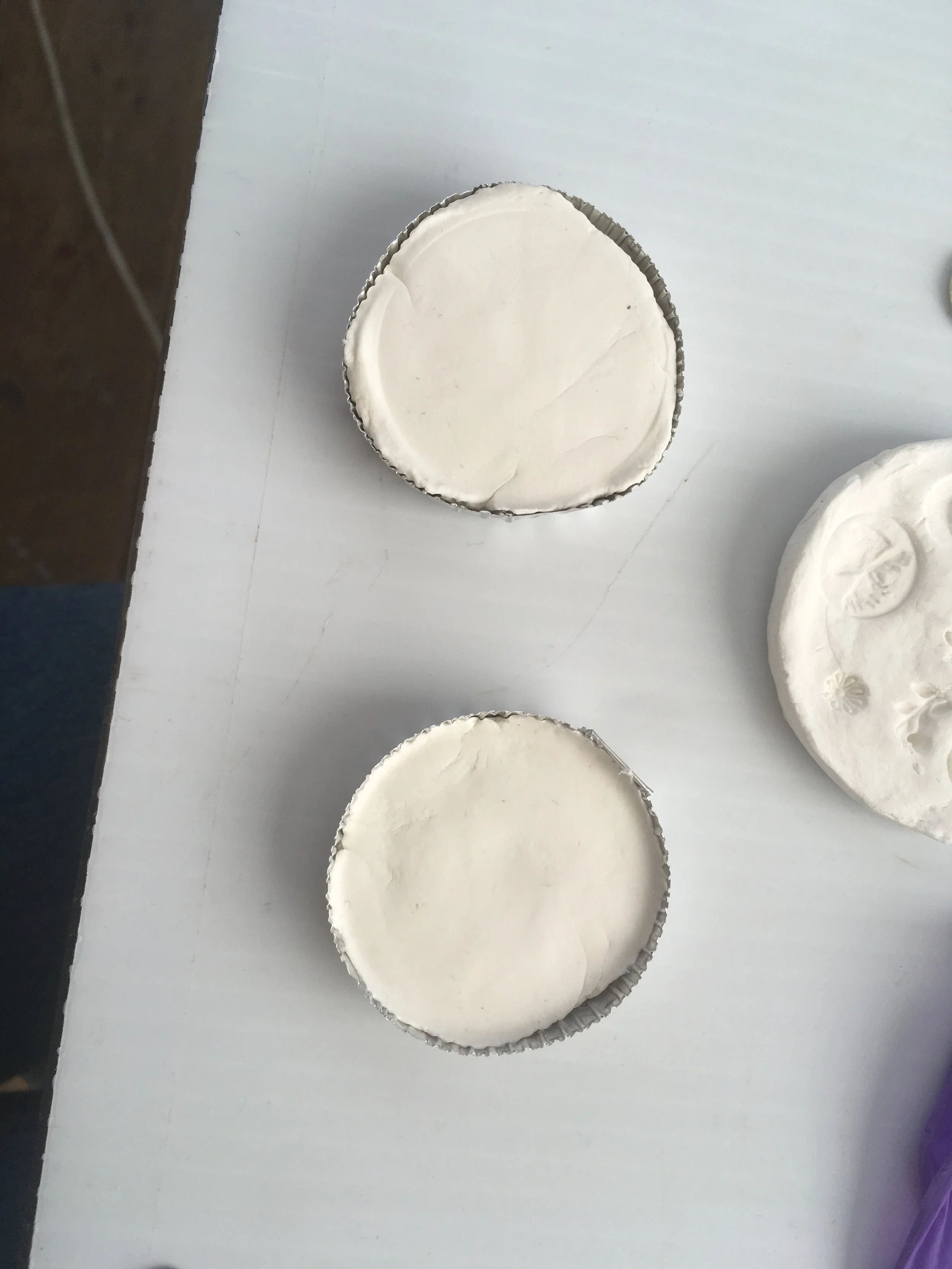
Flat disks of air dry clay were made in round tin containers.
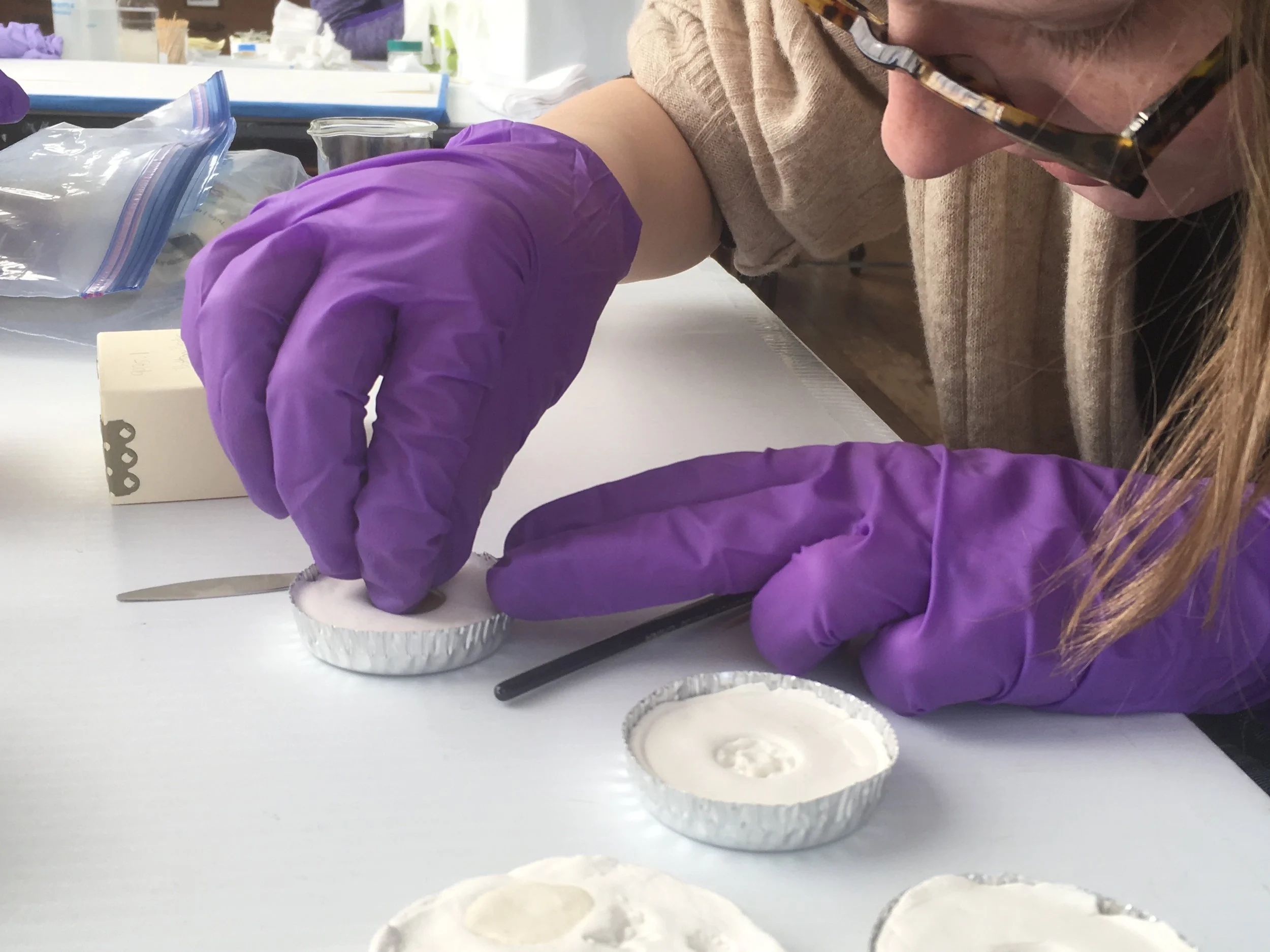
The original button (covered in aluminum release powder) was pressed into the air dry clay. The original was then cleaned with mineral spirits.
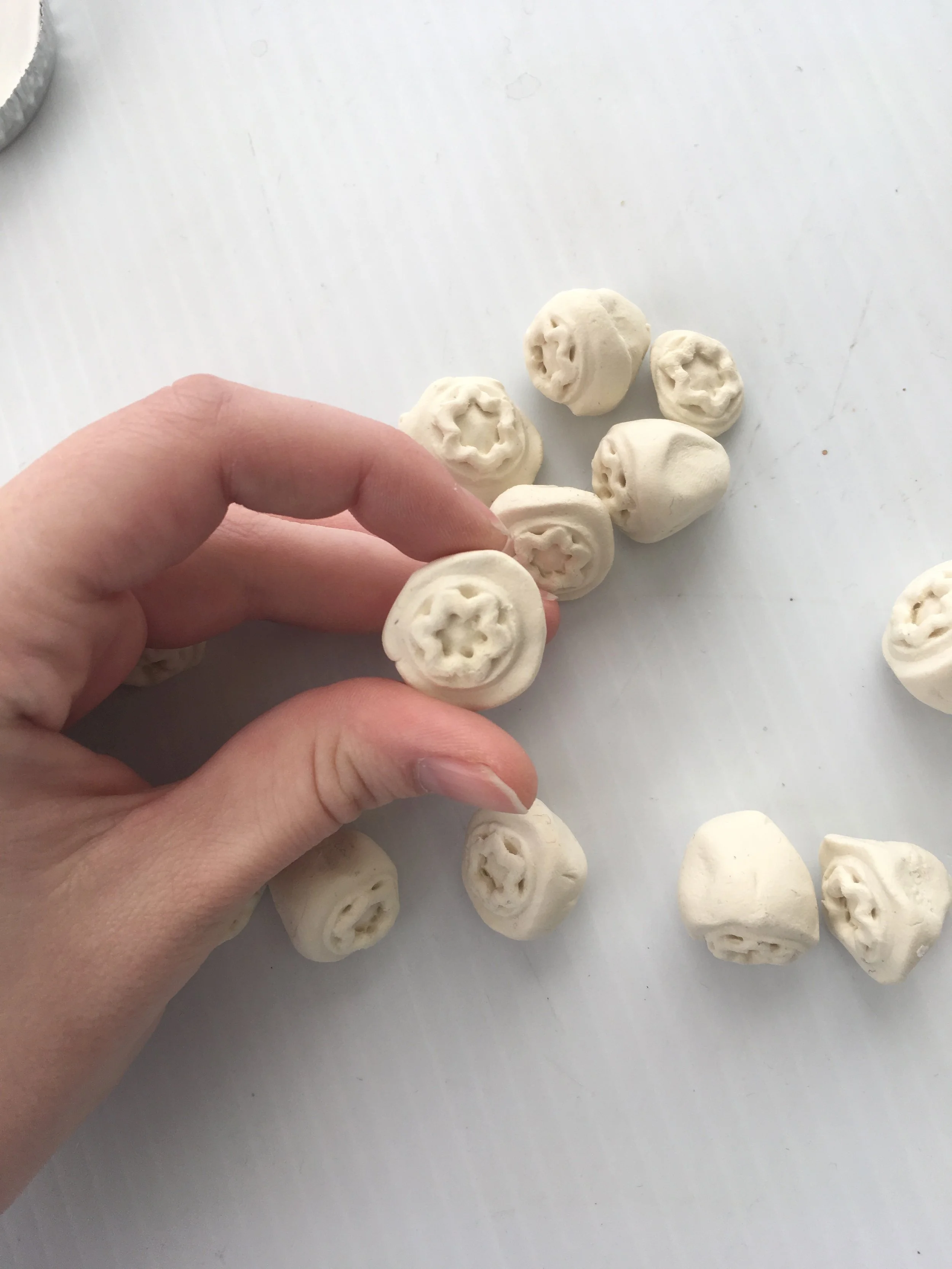
Large clumps of wood epoxy were squished into the mold and left to dry. The large mass allowed ease of release from the mold.
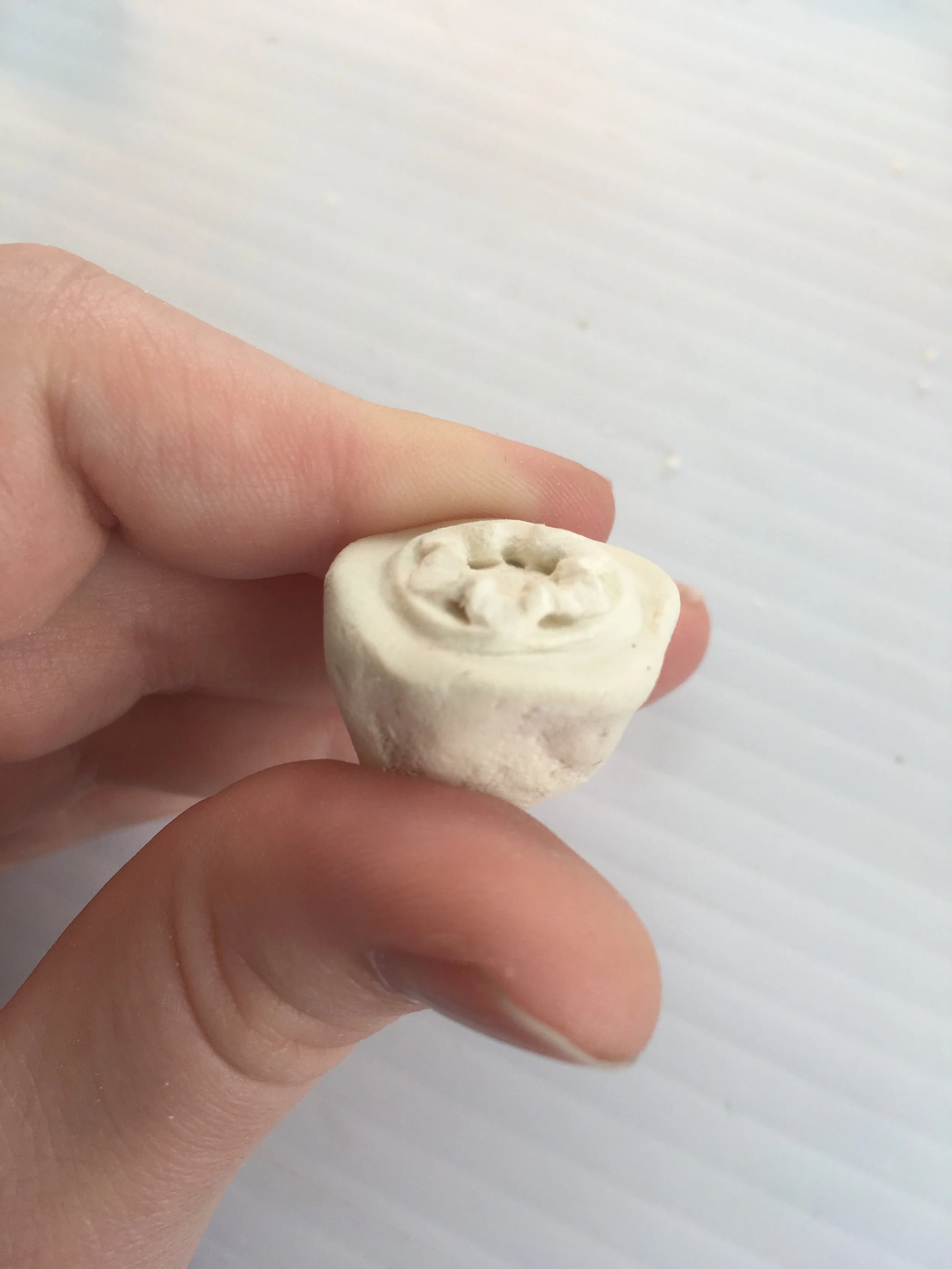
However, these casts were super thick.
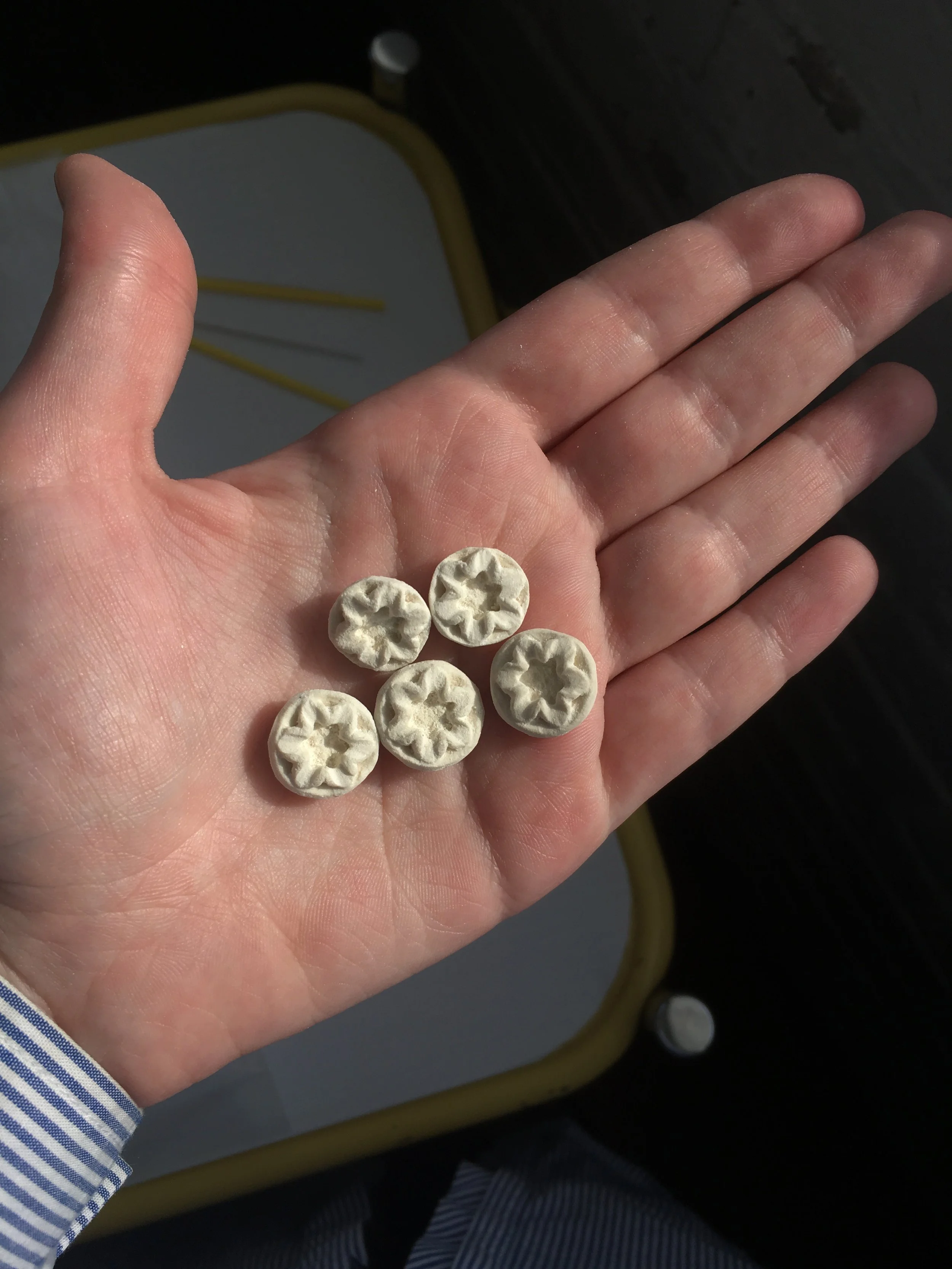
We used a jewelers saw and various files to shave down the mass.
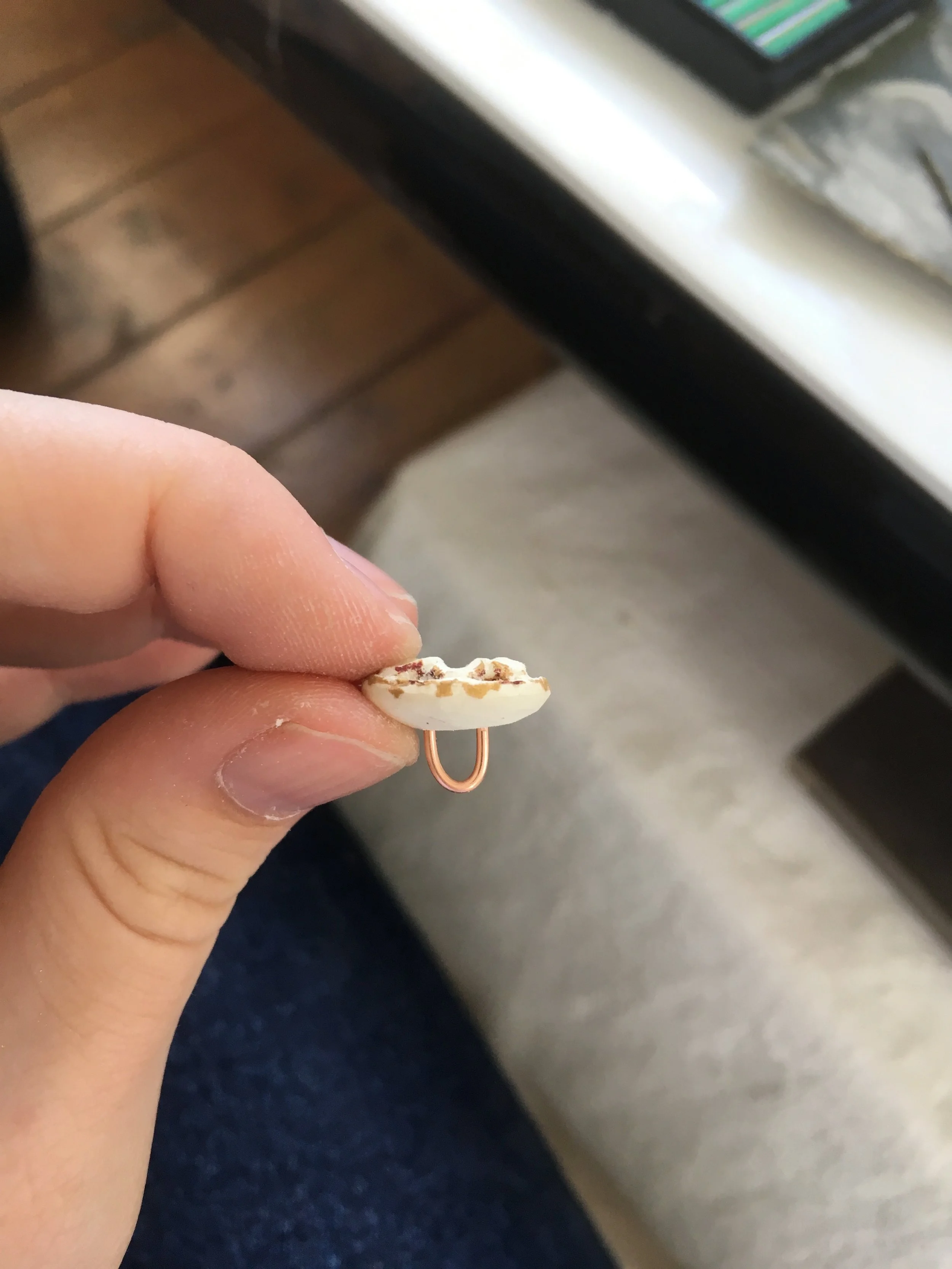
Then a shank of copper wire (held in place with PVA) was added.
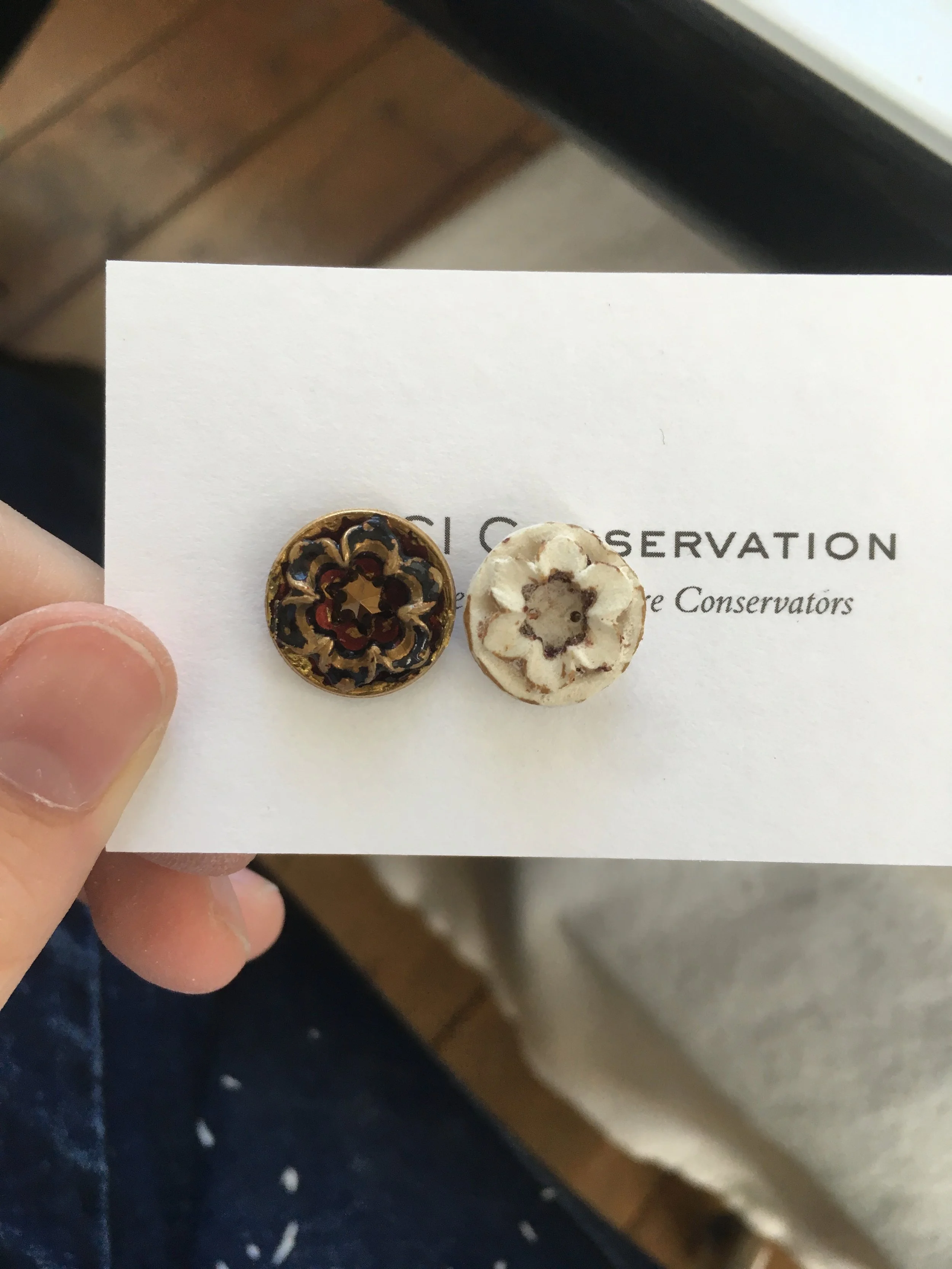
The final carving was achieved with various tools. The wood epoxy was soft and very easy to carve.
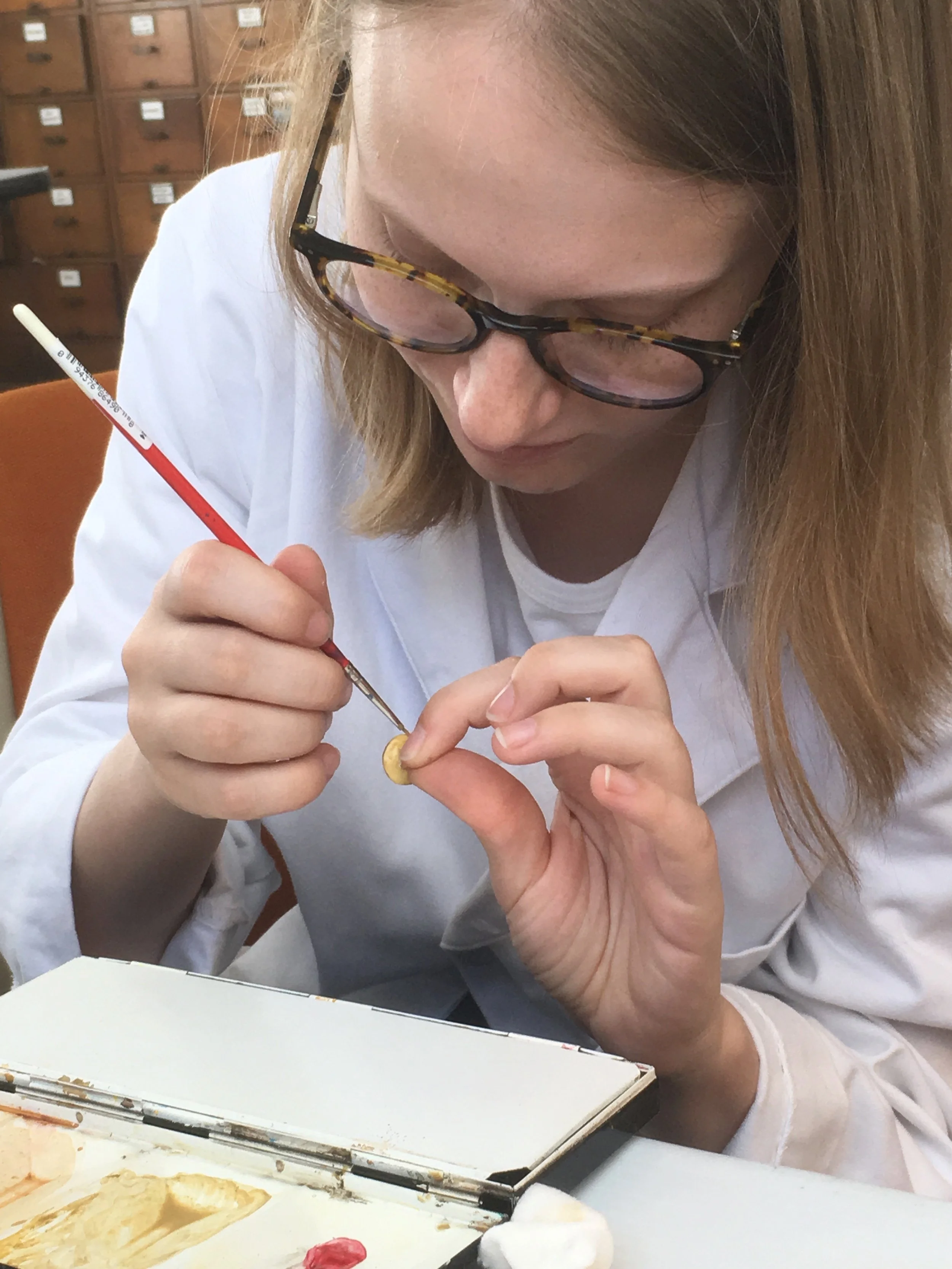
The buttons were painted with acrylic washes.
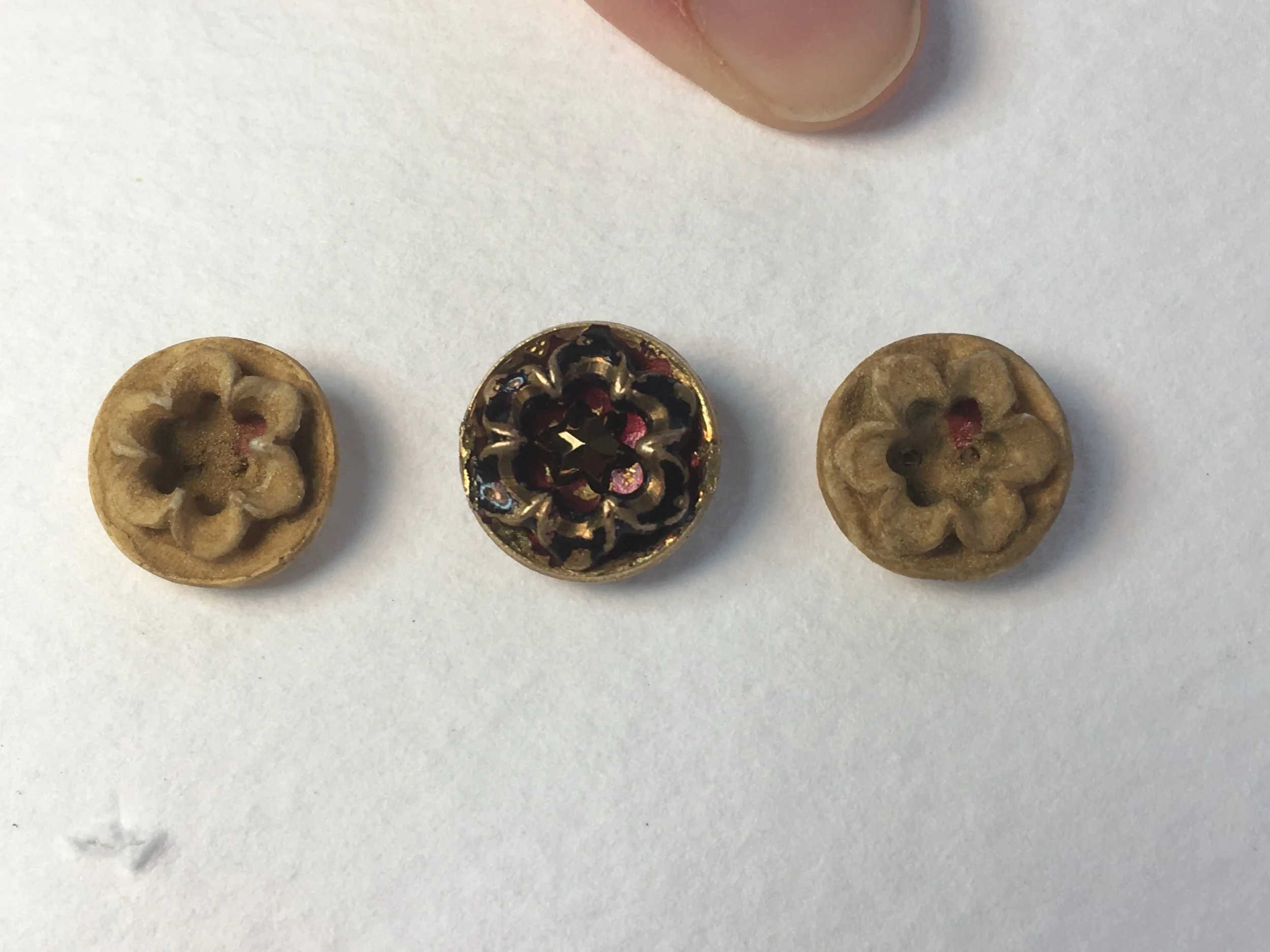
The base painting finished.
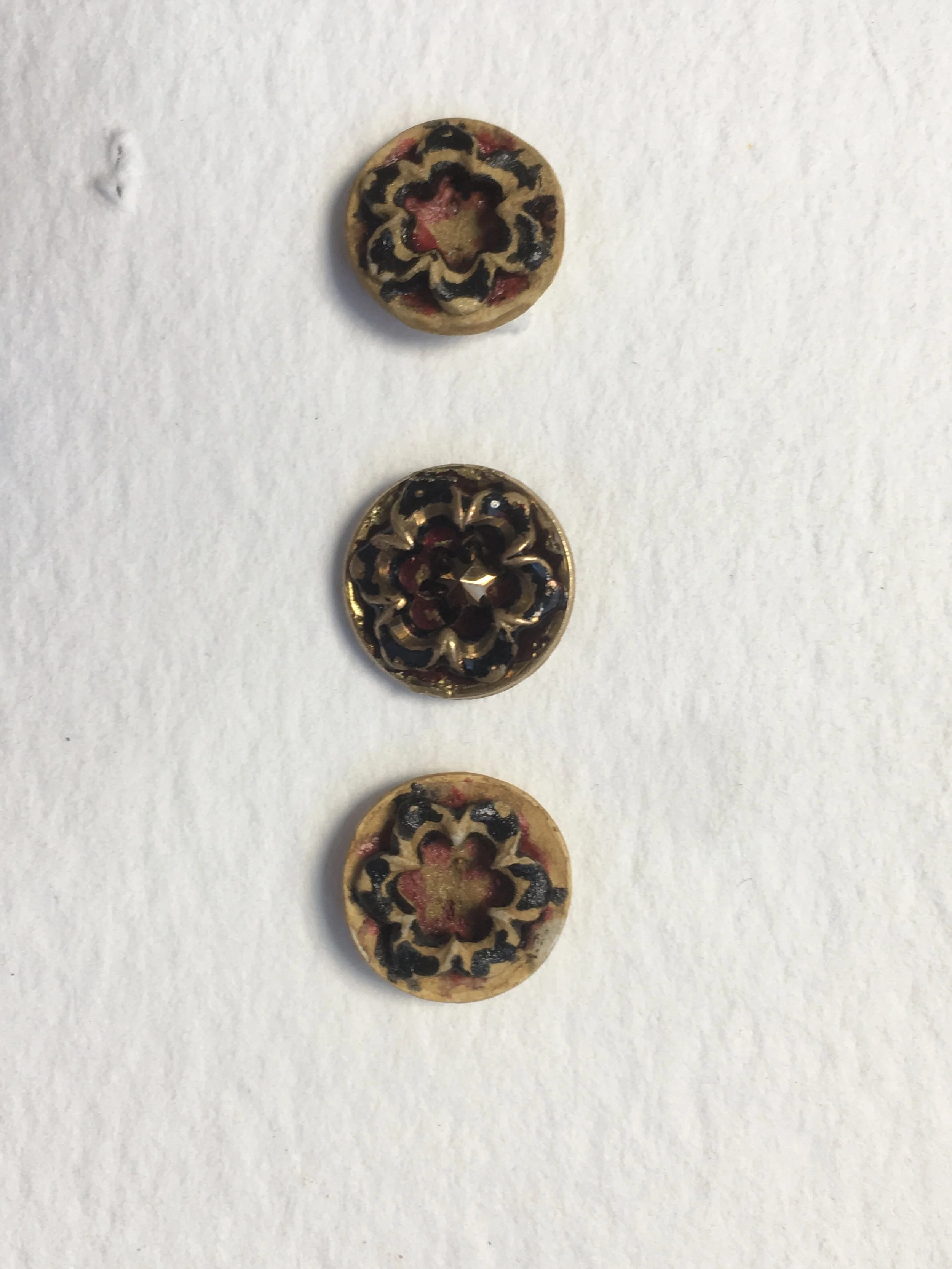
Glossy black and red paint was added to mimic the chipped enamel.
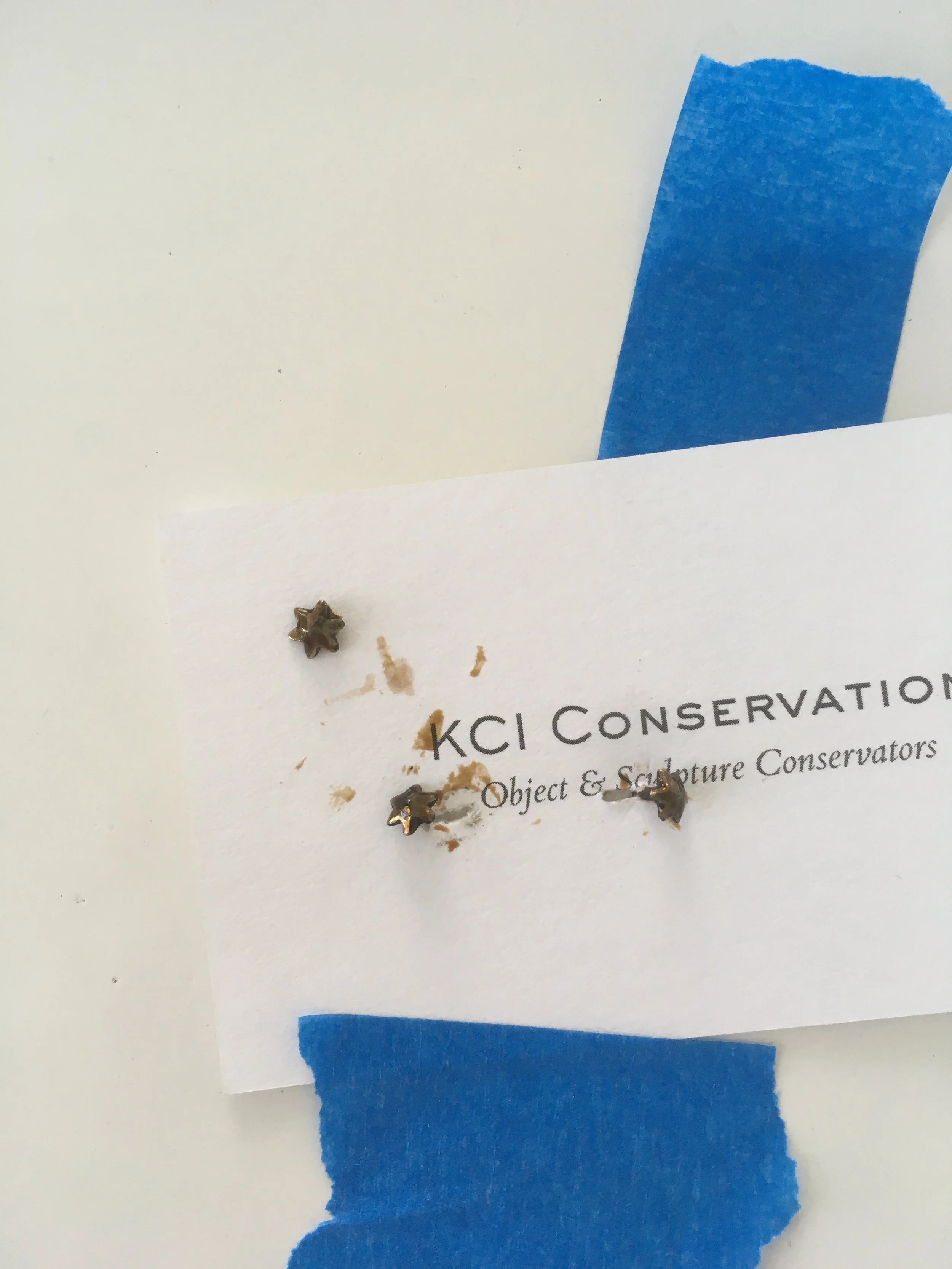
Cut steel stars were harvested from antique buttons (thank you MSBS members!) and covered with shellac.
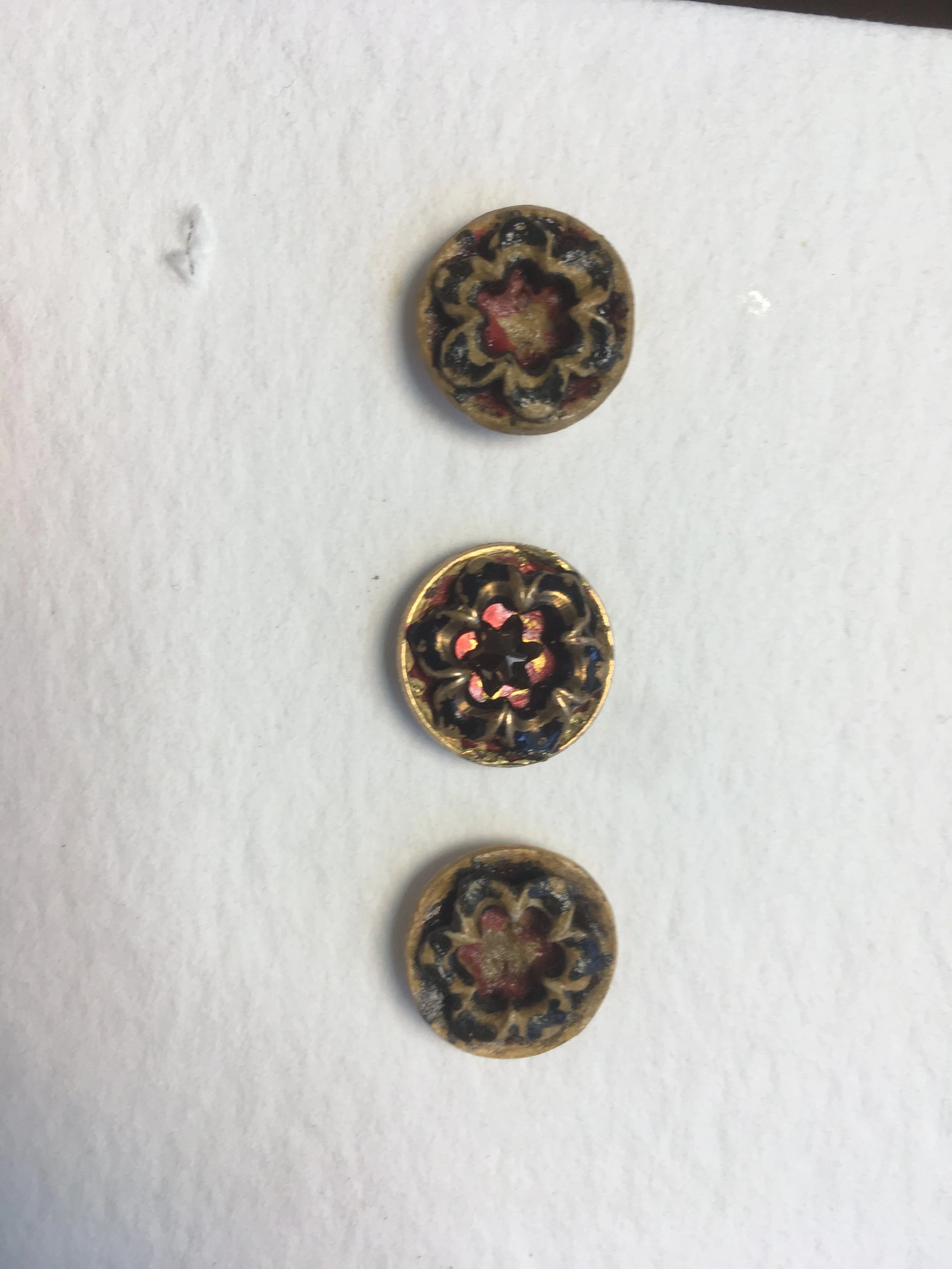
The final paint job.
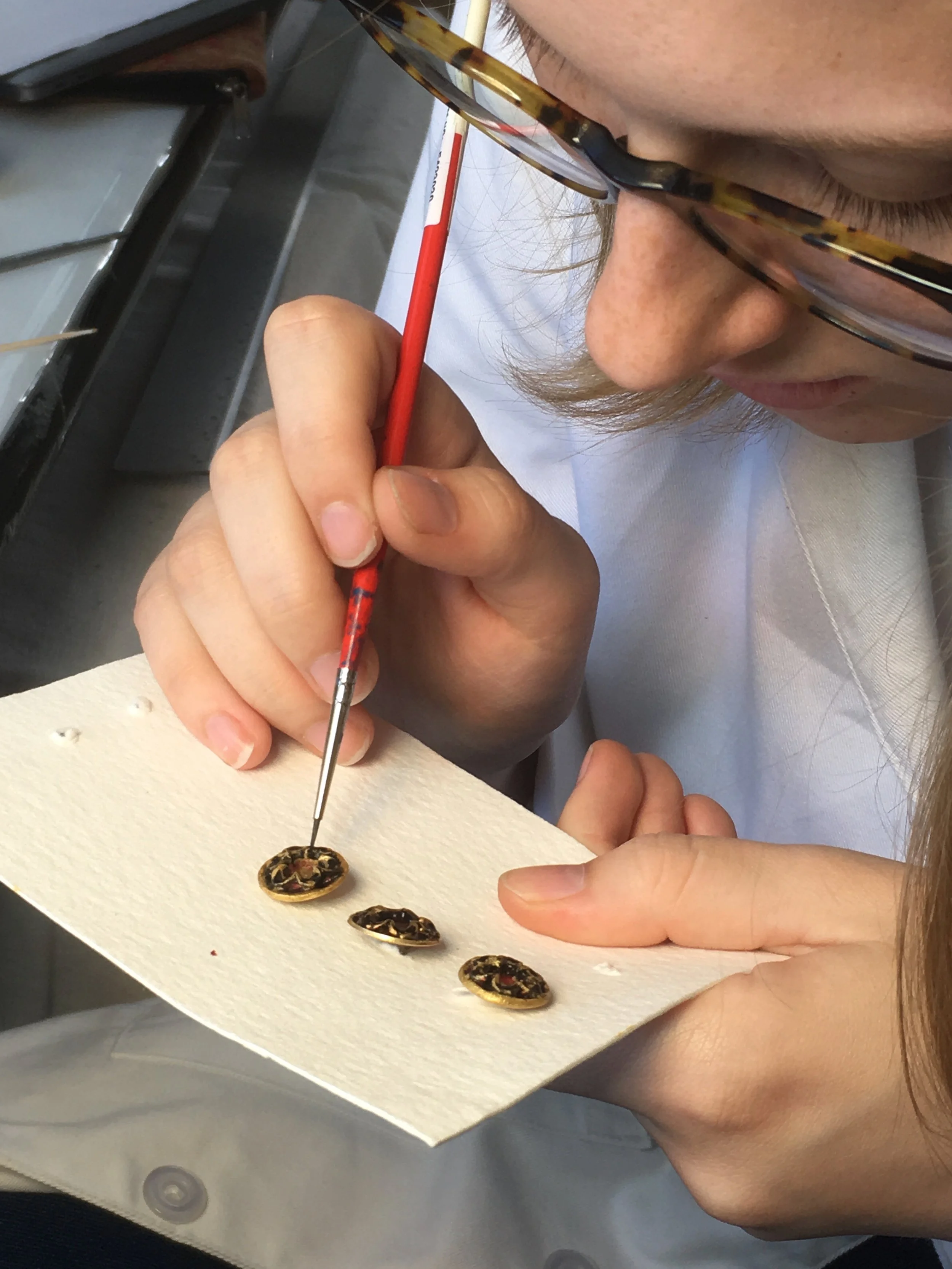
Doing last minute touch ups.
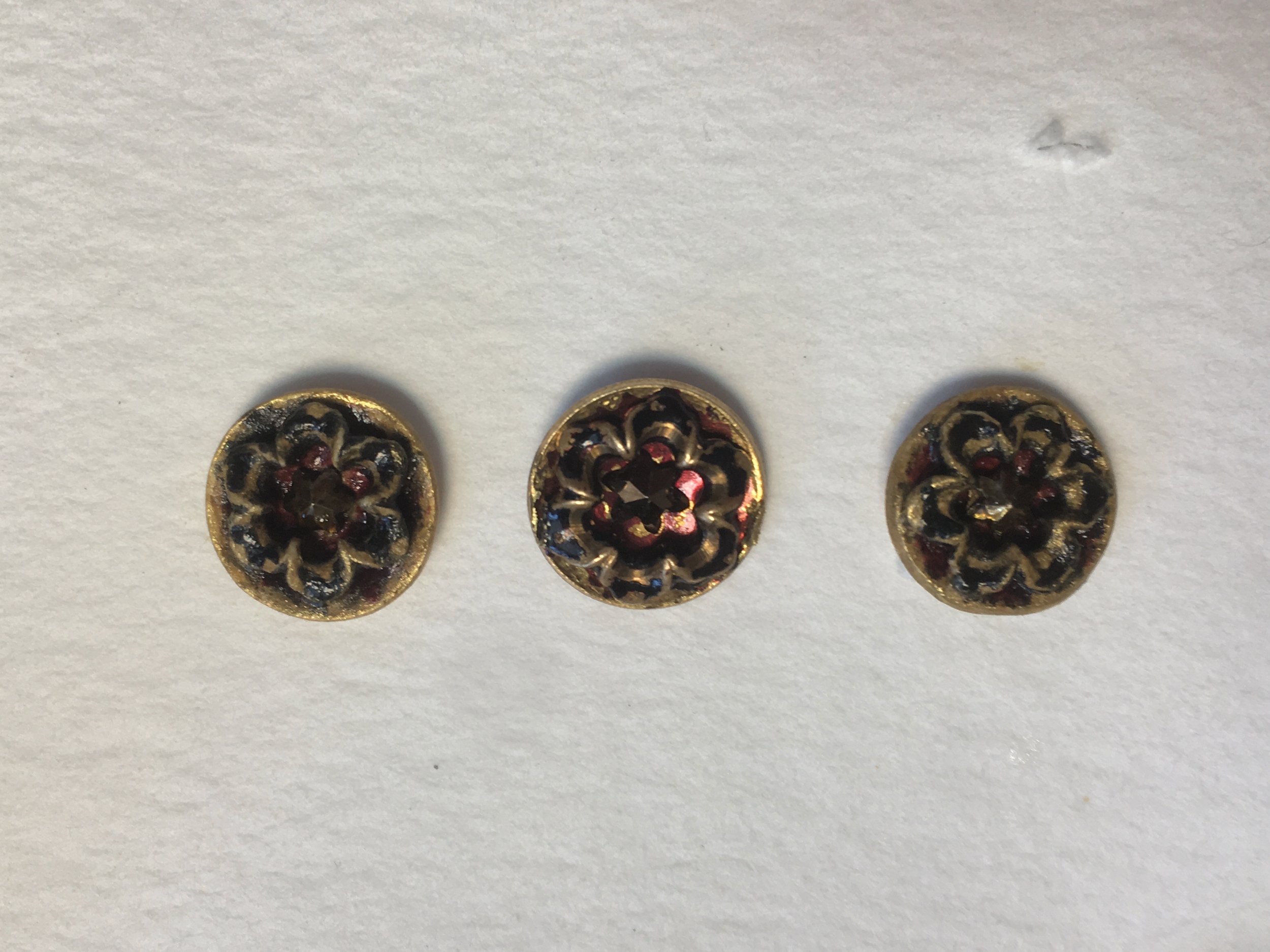
Adding the cut steel stars.
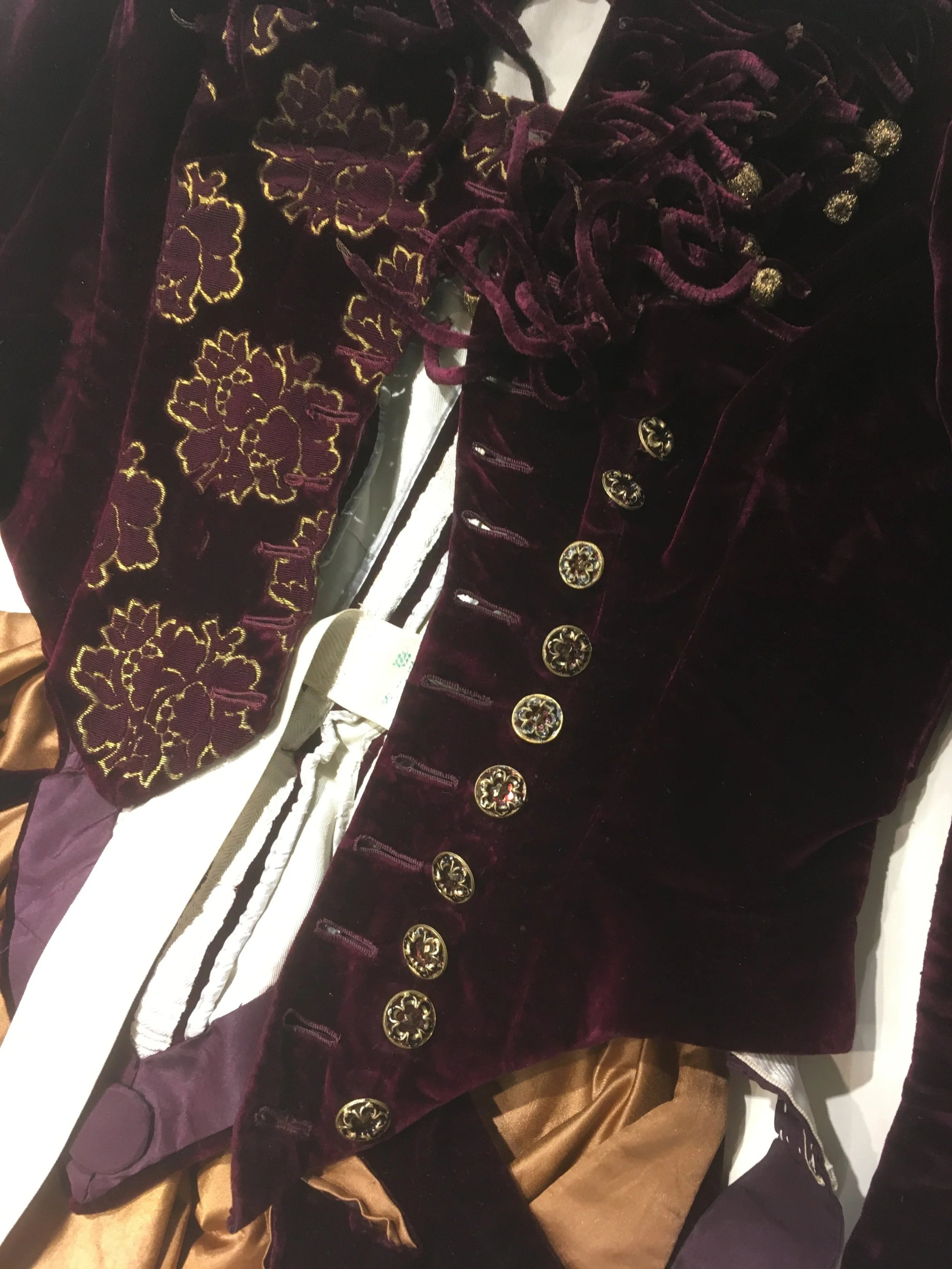
Buttons were sewn on.
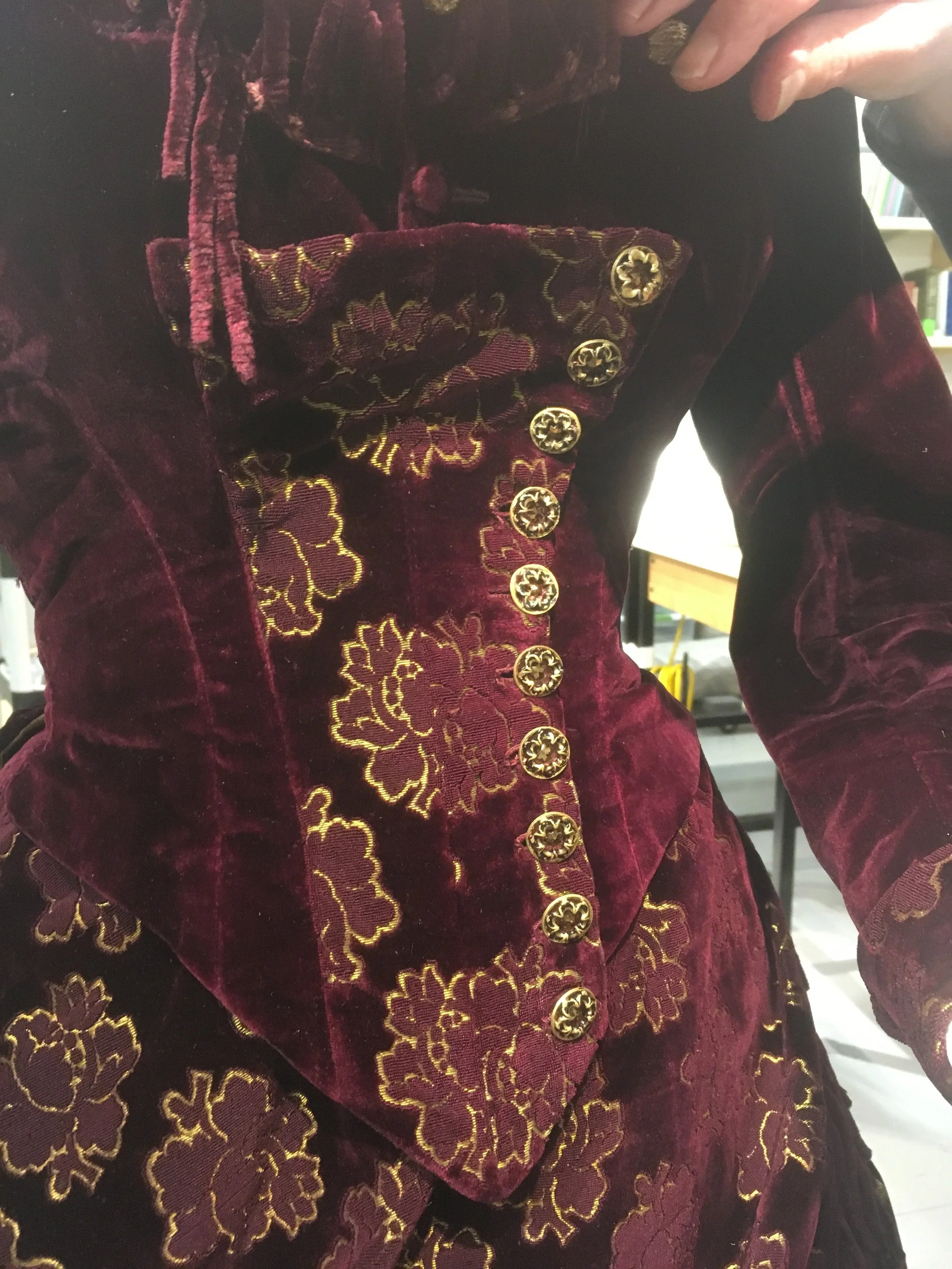
Looking good!
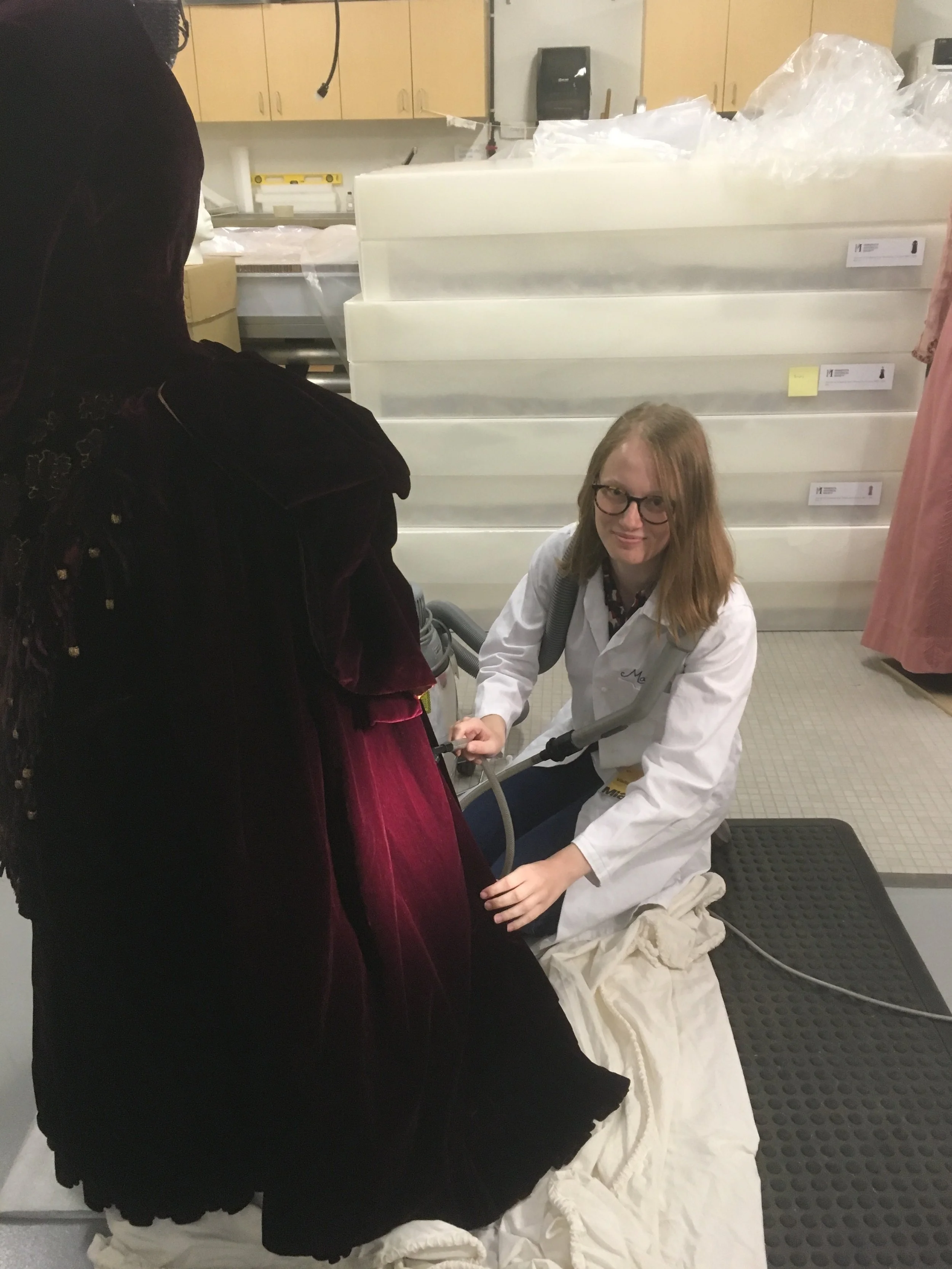
Final touches for exhibition.
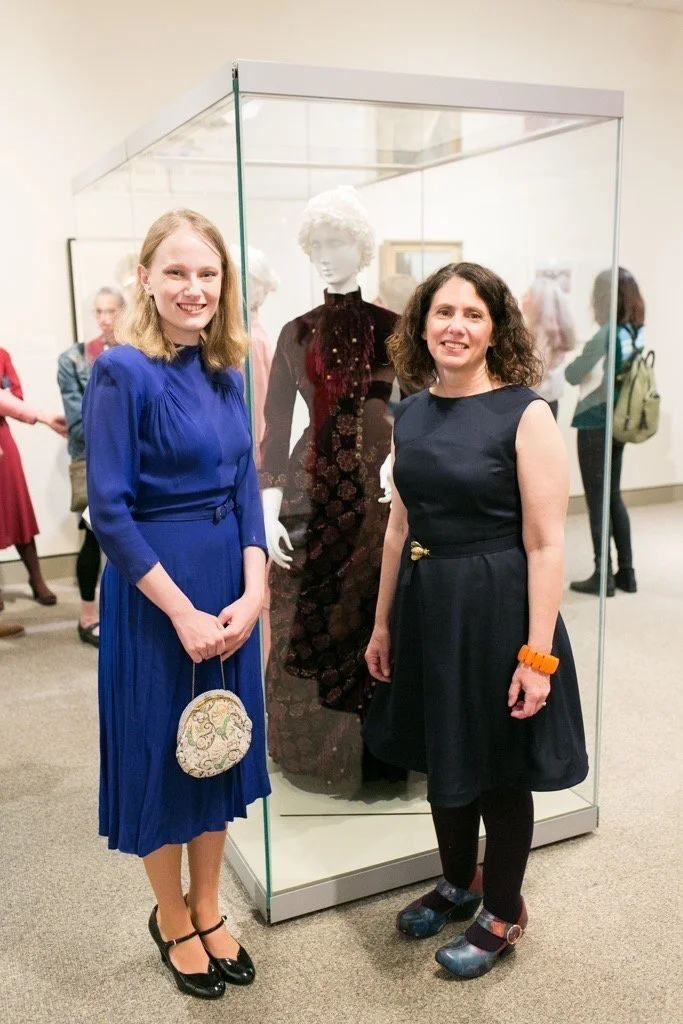
Admiring our great work at the gallery opening- feat. Ann Frisina